
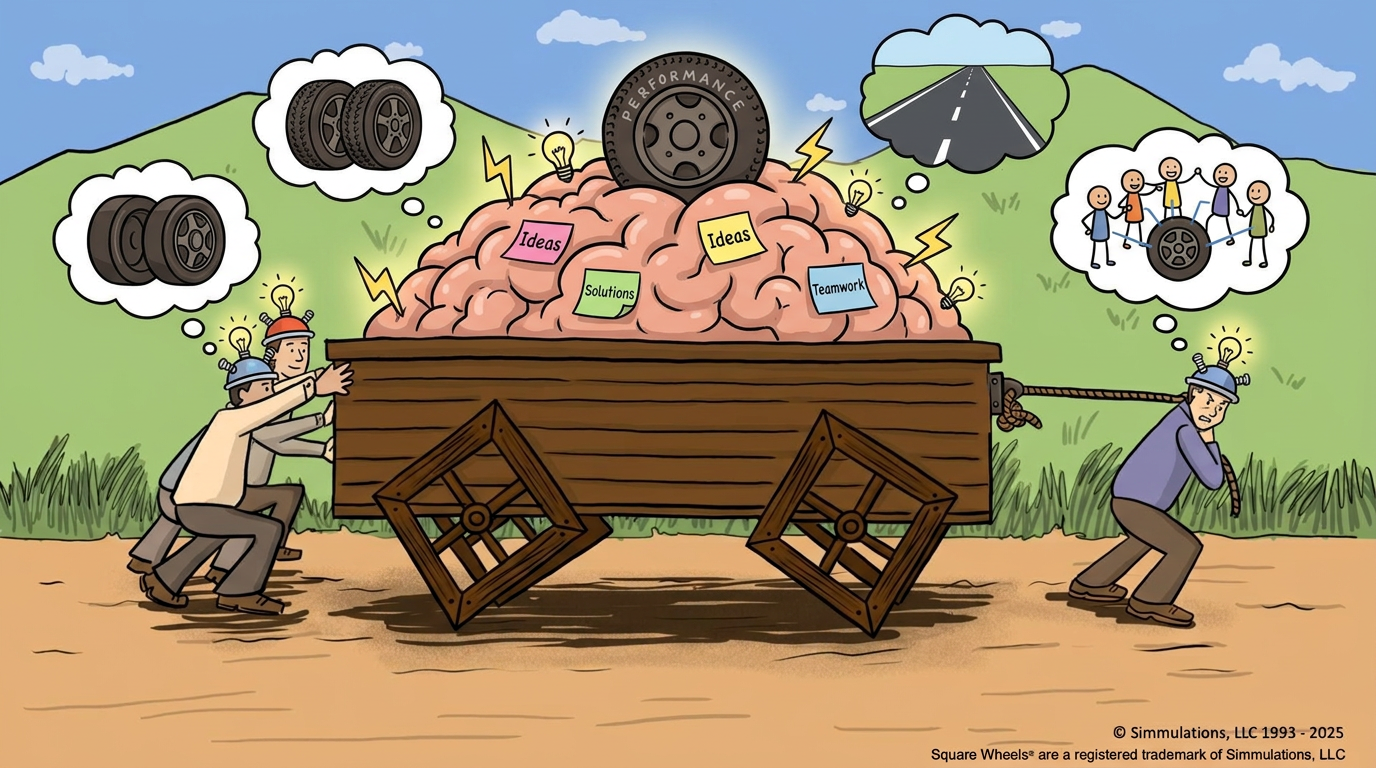
The Distributed Brain thoughts below are about how our understanding of localization of function is changing based on new info. Things change. The old ideas are no longer correct.
Many of you grew up with a very tidy story of the brain and behavior: this has one patch that does vision, another strip does movement, another chunk “doing” decision‑making and so forth. A lot of popular neuro‑leadership and neuro-learning work leans on that localization view because it’s simple and teachable. But is it true?
(Note: I am doing this article for me, researching the new ideas about brain functioning because I wanted to re-educate myself on the current findings. My doctorate on brain functioning was completed in 1976 and I have been “keeping up” in general but wanted to do a deeper dive into the new science.)
Speaking as “Scott, the old Ph.D. behavioral neurophysiologist” and business consultant who now spends his time writing about leadership, team building, innovation, thinking and collaboration, I don’t throw that old localization map stuff away, but the newer research findings from 2025–2026 push us to a much richer view of how things really work: those local “centers” only make sense as visible peaks in a much more distributed, whole‑brain landscape. Consciousness, for example, is very widely distributed with its auditory, visual and kinesthetic components. And it is this distribution that gives us plasticity.
From “where is it?” to “how does it work altogether?”
Classical localization studies—lesions, fMRI hotspots, TMS over single regions—have been invaluable in showing that some brain areas are specialists for certain kinds of information processing. That’s the backbone of a lot of what you read in the better neuro‑leadership blogs: prefrontal areas for planning and control, anterior cingulate for conflict monitoring, amygdala for threat and salience, and so on. Understandable.
Just for color! A Perplexity-generated image of a human brain.
The newer work doesn’t say that’s wrong; it says it’s incomplete in at least three ways:
-
Functions are implemented by broad distributed networks, not solitary regions. Even when we see a strong “face area” or “control area,” it sits inside a larger, coordinated pattern of neural activity spanning many regions.
-
That same region also participates in multiple networks depending on context. A patch that looks “visual” in one task may be part of a different coalition when you’re trying to think creatively, solve a problem, regulate emotion, or when one is learning from failure.
-
Brains share a common scaffold, but the fine‑grained patterns and which regions team up with which, actually vary a good bit across people and change with development and experience. The brain IS plastic and it learns. And we are discovering more and more about this. Power is in the process.
So instead of asking, “Which bit of the brain does X?” we should be asking, “How does this person’s brain recruit and coordinate different regions when they’re doing X, today, and in this context?”
What “wide‑field imaging” is teaching us
One of the big drivers of this shift in understanding is the explosion of wide‑field imaging and large‑scale network analysis using AI and other computing tools. In animals, wide‑field calcium imaging lets us watch activity unfold across essentially the entire cortex in real time while a person is behaving. When you analyze those data with modern network tools, a very different picture emerges than the tidy little hotspot view.
What we see is:
-
When even a “simple” task is performed, like making a choice, initiating a movement, or using a learned association—activity does not stay confined to a single patch of cortex. Waves and motifs of activation sweep across multiple regions in reproducible patterns.
-
The same neurons and regions show different participation patterns depending on behavioral state – resting, planning, moving, learning – highlighting flexible, distributed neuronal recruitment rather than fixed localities.
-
If you take those imaging movies and do proper network analysis, what we call a “function” is better described as a recurring pattern across many nodes, not one node’s job description. And patterns are all about learning and retention.
In consulting language, that’s like moving from a static org chart (“here are the boxes”) to a living dynamic map of project teams, alliances, and informal networks that form, dissolve, and re‑form around the work. It is in the flexibility that we gain the power of divergent thinking and problem solving.
Local peaks as the tips of distributed icebergs
There’s a nice bridge between the old and new views in recent modeling work on perception and category recognition. Papers looking at the ventral visual stream ask: if coding is really distributed, why do our scanners still see such apparently local selectivity (like face‑selective or word‑selective patches)?
The answer that’s emerging is:
-
Information about categories is widely distributed across a network.
-
Because of the way signals flow through that network, some locations show sharper tuning—these are the “hotspots” we pick up in imaging experiments.
-
Those local peaks are the visible tips of an iceberg whose base is broad, distributed computation.
So when thoughtful practitioners talk about region X being “for” Y, they are usually pointing at one of these peaks. The science I track now suggests we treat those peaks not as isolated modules, but as signatures of deeper, distributed flows.
Whole‑brain organization and intelligence
On the human side, large‑scale imaging and network studies are converging on the idea that general intelligence and complex cognition are properties of how the whole network is organized, far more than they are properties of any single “intelligence center.”
Across big datasets, the strongest predictors of performance look to:
-
How efficiently different networks integrate and share information.
-
How flexibly networks can reconfigure when you switch tasks or demands.
-
How well the system balances segregation (specialization) and integration (coordination).
That resonates strongly with what I see in organizations: success has less to do with one “genius” unit and more to do with how well the system can bring the right people, perspectives, and processes together at the right time.
Massive human brain maps: lots of parts, repeated patterns
In parallel, the new human brain atlases, that profile millions of individual neurons across the brain, are showing us that there are thousands of distinct cell types sprinkled across many regions. The patterns are nuanced and overlapping; there is not a neat one‑area‑one‑type organization.
Some of the same cellular “building blocks”—particular inhibitory neurons, projection patterns, neuromodulatory systems—show up in many places, recombined into different microcircuits. That makes localization look even less like “one box per function” and more like “many kitchens reusing the same ingredients to cook different recipes.”
What this means for teams, innovation, and collaboration
Here’s how I translate this more distributed brain science into practical insights around improving organizational performance:
-
Performance is an emergent property of networks of interaction, not star performers or single teams in isolation. You get better outcomes by improving coordination and information flow than by obsessing over one unit.
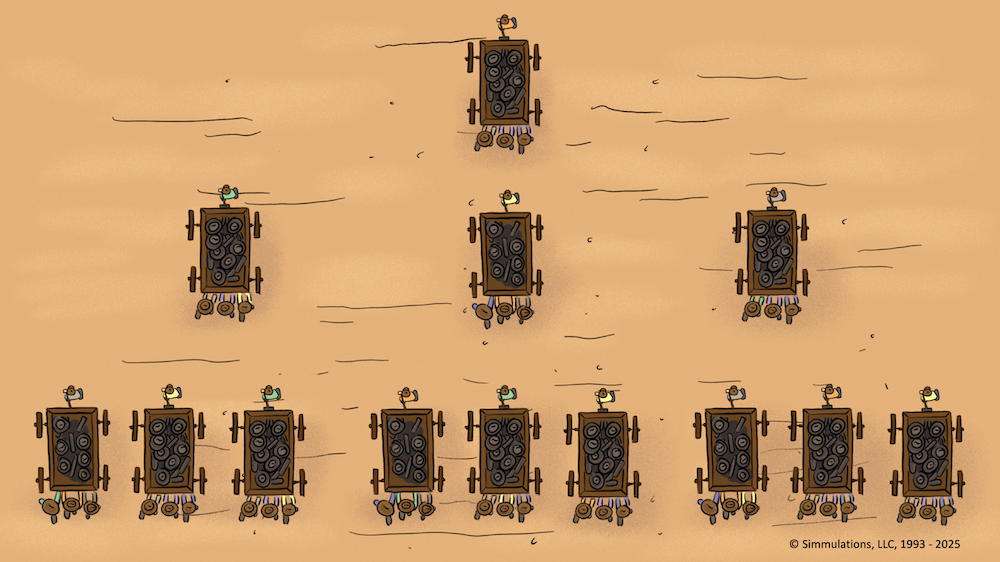
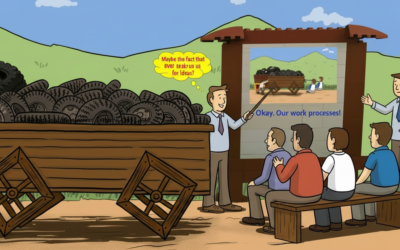
All of the wagons can be aligned to a shared mission and vision and collaborative network.
-
The same person (like the same brain region) is going to show up differently in different coalitions. Someone quiet in a status‑report meeting may be the key connector in a crisis or an innovation sprint.
-
Development is less about “installing new modules” and more about rewiring patterns of coordination and collaboration for changing habits of thinking, communication, and cooperation so more of the system can contribute to a decision or solution.
So when you read a good, localized brain story from folks, my suggestion isn’t to discard it; it’s to add a second lens:
“Yes, that region and function matters. And what’s the network it works in, for this person, in this situation—and how can we build our organizations to mirror that kind of flexible, distributed intelligence?”
That’s the bridge I’m trying to build: from a brain model of tidy spots to a brain model of dynamic, distributed coalitions and then from that model to how we design teams, cultures, and leadership practices that actually perform.
This is also a pretty readable article about some of the ideas above.
-
Her LinkedIn profile and posts – this is where she regularly shares short, practical pieces on brain states, attention, creativity, and facilitation, and promotes her neuroscience trainings:
https://www.linkedin.com/in/deescarano/ -
The “Neuroscience for Facilitators” free training – a 60‑minute video session where she walks through brain waves, networks, and the Default Mode Network in the context of workshops:
YouTube training: https://www.youtube.com/watch?v=Bl6BHdvgdMk
LinkedIn event/listing: https://www.linkedin.com/posts/deescarano_neuroscience-for-facilitators-free-60-minute-activity-7406981104563392513-I5TZ -
Her own site / Elite Facilitator materials – especially pages describing “The Elite Facilitator” and her neuroscience‑based sessions, which summarize her core brain‑function ideas for facilitators:
https://www.deescarano.com/elite-facilitator-course
Related live session: “The Brain Behind the Room: Neuroscience Secrets…”
Michael Plattis a neuroscientist who has deliberately moved his work into the leadership and business arena, with a strong focus on social decision‑making, teams, and innovation. I do not know Michael but I like his work. Michael is
-
James S. Riepe University Professor at the University of Pennsylvania, with appointments in Neuroscience (Perelman School of Medicine), Psychology, and Marketing (Wharton).
-
Founding Director of the Wharton Neuroscience Initiative, which explicitly connects brain science to business questions (leadership, consumer behavior, decision‑making).
-
Background in biological anthropology and neuroscience; former head of the Duke Institute for Brain Sciences and the Center for Cognitive Neuroscience at Duke.
His academic work has centered on how the brain makes decisions in social environments—how we evaluate others, cooperate or compete, and respond to risk and reward in group contexts.
His flagship book for business audiences is: The Leader’s Brain: Enhance Your Leadership, Build Stronger Teams, Make Better Decisions, and Inspire Greater Innovation with Neuroscience (Wharton School Press; original 2020, An updated and expanded edition brings in newer neuroscience and some AI‑adjacent insights, but the spine remains: social brain, decision‑making, and team performance.
Core themes in the book:
-
Leadership abilities (relationship building, negotiation, strategic thinking) are grounded in specific neural systems—but are trainable, not fixed traits.
-
Why two managers, given the same information, make different decisions, linked to differences in how their brains weigh risk, reward, and social cues.
-
How even visionary leaders end up making disastrous calls, and how understanding biases and neural limitations can help design better decision processes.
- “Inside the Leader’s Brain” (IEDP article): a concise review that highlights his focus on the social brain, psychological safety, and the plasticity of leadership skills.
There is a lot of interesting stuff out there. Maybe understanding the brain is useful to you. Maybe understanding the mechanisms around thinking skills and decision-making is useful to you. Maybe understand how to better involve and engage people for workplace improvements is useful to you.
Me, I find lots of things useful:
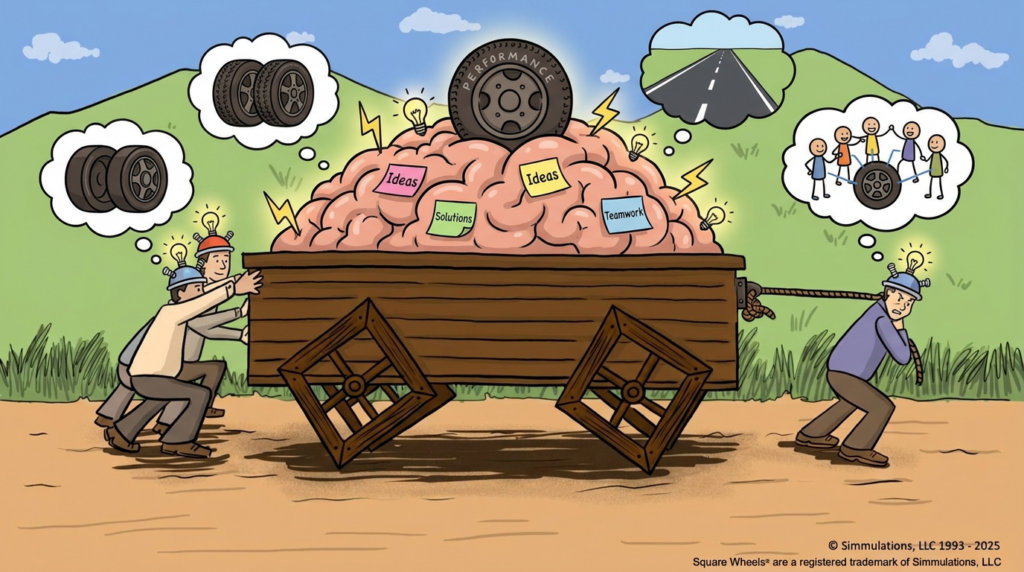
This is your brain on Square Wheels!
I hope you found it as informative as it was for me to have the excuse to modernize my thinking a little
—
For the FUN of It!
 Dr. Scott Simmerman is a designer of team building games and organization improvement tools.
Managing Partner of Performance Management Company since 1984, he is an experienced presenter and consultant who is trying to retire!! He now lives in Cuenca, Ecuador.
You can reach Scott at scott@squarewheels.com
Learn more about Scott at his LinkedIn site.
Square Wheels® are a registered trademark of Simmulations, LLC
and images have been copyrighted since 1993,
© Simmulations, LLC 1993 – 2026
What I’m About:
My Square Wheels blog and website exist to help leaders, trainers, and facilitators make work smoother, more engaging, and more human. I focus on practical tools for process improvement, organizational change, and workplace collaboration that spark insight and deliver measurable results.
And I am convinced, after 30+ years of using Square Wheels®, that it is the best facilitation toolset in the world. One can use it to involve and engage people in designing workplace improvements and building engagement and collaboration. It is a unique metaphorical approach to performance improvement and we can easily license your organization to use these images and approaches.
By blending proven facilitation methods, creative problem-solving, and engaging team activities, my mission is to support organizations in building energized, sustainable cultures of involvement and innovation.
Through accessible — and often free — resources and virtual facilitation tools, I aim to help teams everywhere collaborate more effectively, innovate continuously, and take ownership of their improvement journey.
#SquareWheels #InnovationAtWork #TeamEngagement #FacilitationTools #WorkplaceImprovement #EmployeeEngagement #CreativeProblemSolving #OrganizationalDevelopment #LeadershipTools #collaboration #leadership #motivation #communications #enablement #leadership #CreativeCommons #enablingperformance #teamwork


0 Comments