
Most feedback conversations between managers and their supervisors are not about performance; they’re about pain. And we can do better.
Most organizations talk endlessly about “employee engagement” while quietly ignoring one of the biggest disengaged populations in the system: supervisors.
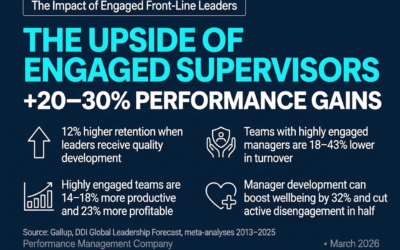
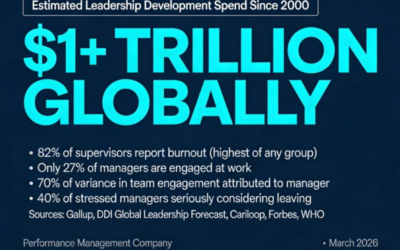
Supervisors sit in the uncomfortable Hellspace between their people and their managers, feeling squeezed from both sides and supported by neither. They know that the wagons are thumping and they understand the mud, but they often don’t feel heard when they say so. Years of Gallup data (link) show that 70% of supervisors are disengaged even with all the money spent on leadership development (but much not on them!).
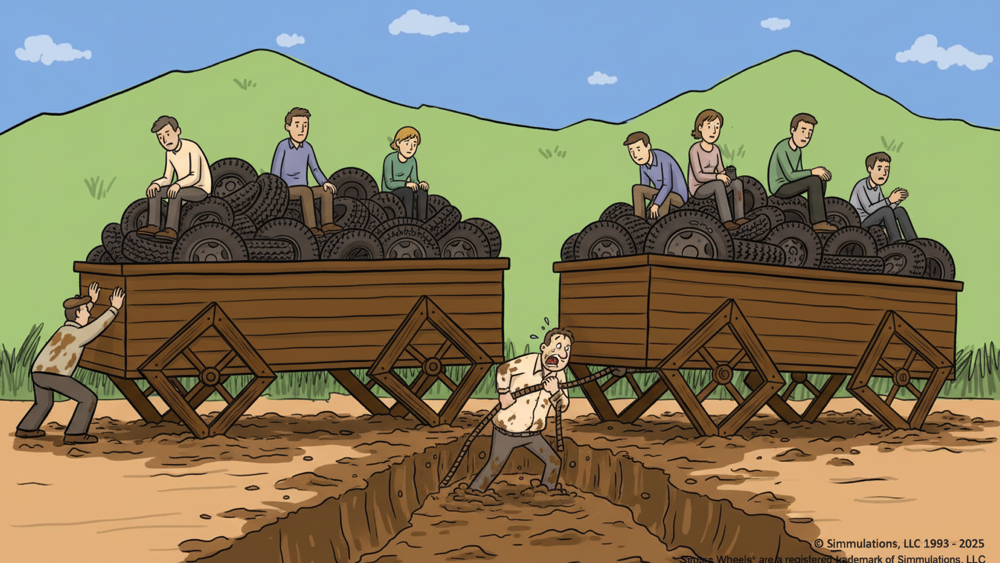
If you want to quickly improve performance, flow, and results, one of the highest‑leverage moves you can make is to improve the conversations between managers and their supervisors. When those conversations shift from pressure and reporting to problem‑solving, support and partnership, you don’t just engage supervisors; you un‑dis‑engage them.
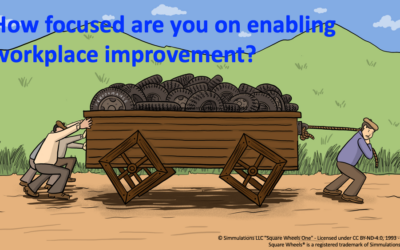
And the familiar Square Wheels / round wheels metaphor is a wonderfully simple tool to help make that shift visible, discussable, and actionable.
The Forgotten Wagon Between Wagons
We usually picture the classic Square Wheels One wagon as a leader out front pulling and a team behind pushing. It’s easy to see where to make improvements and I have dozens of blogs around how this can be accomplished. (See my best blog here)
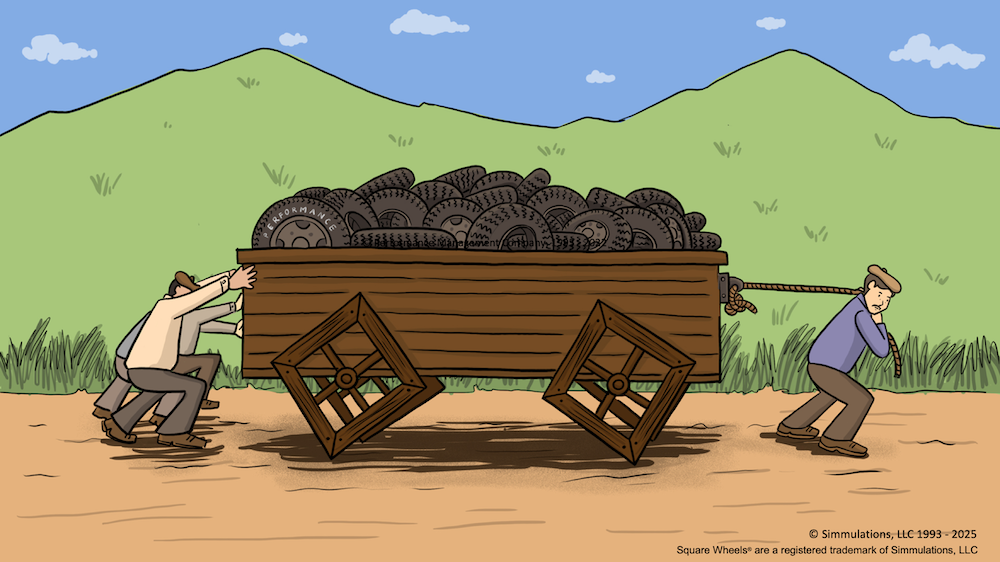
But there are actually more wagons in your organization and a manager might directly influence a dozen or more of them.
-
Top managers are hopefully pulling ALL their wagons with their strategies, mandates, dashboards, metrics and deadlines. We can call that, alignment and culture.
-
Managers are influencing a number of wagons, hopefully in alignment but likely rolling on the Square Wheels of conflicting priorities, unclear expectations, reactive firefighting, siloed communication and a bit of isolation.
-
Supervisors are pushing these wagons from behind, trying to translate those demands into reality with their operational performance needs.
-
The supervisors are pulling wagons that are likely rolling on the Square Wheels of conflicting priorities, unclear expectations, reactive firefighting, siloed communication, and little time for coaching or improvement. Addressing those issues and opportunities is really straightforward.
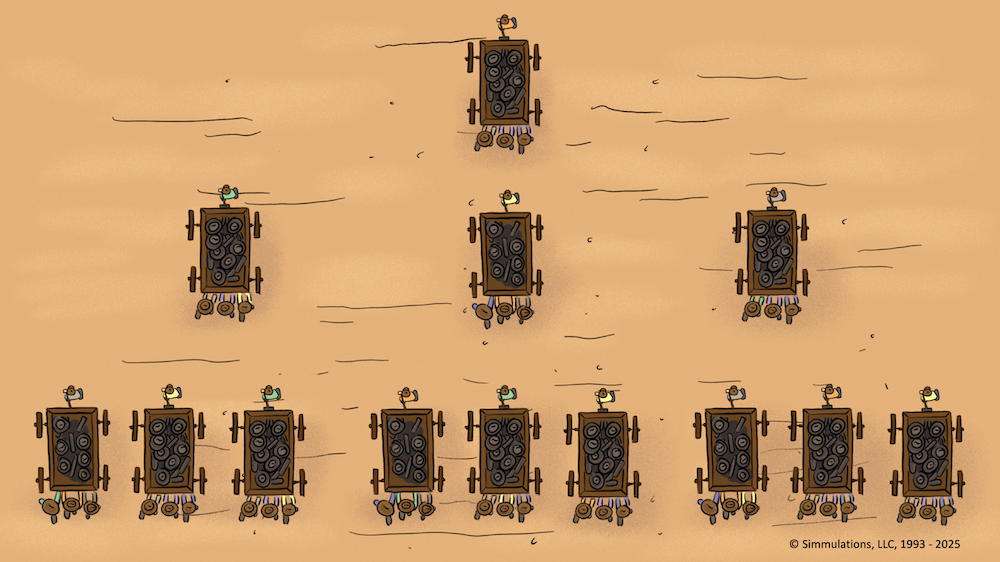
The many wagons of the supervisors can be aligned to a shared mission and vision
Anyone pushing a wagon can feel every thump and bump. And supervisors hear the complaints from their people and the pressure from their managers. Over time, if the conversations with their own managers are mostly about numbers, compliance, and “why didn’t you,” they disengage. They stop bringing up Square Wheels. They stop sharing round wheel ideas. They go into self‑preservation.
The tragedy is that supervisors are directly connected to most of the best insights in the business. They know where the processes are broken, where the tools are inadequate, where the metrics are misaligned, and where the talent is underused. But if the conversation with their manager doesn’t feel safe or useful, they simply stop talking.
The solution is not another engagement survey.
It’s a better pattern of conversations.
Redefining the Manager–Supervisor Conversation
Most manager–supervisor meetings revolve around three themes: results, problems, and compliance:
“How are you tracking?” “Why is this behind?” “Did you do what we agreed?” Useful questions, but incomplete.
If you want to enable and re‑motivate supervisors, consider that those conversations need to consistently include three different themes:
-
The wagon: clarity about goals, direction, and constraints.
-
The wheels: honest diagnosis of what’s creating drag.
-
The ideas: space for the supervisor’s round wheels to be seen, tested, and supported.
Here’s a simple reframing you can use:
Instead of “I’m here to review your performance as a supervisor,” consider “We’re here to look at how your wagon is rolling – and what we can change so it rolls better.”
That single shift moves the conversation from evaluation to collaboration.
A Square Wheels Conversation Structure for Managers
You can bring the Square Wheels metaphor directly into your regular one‑on‑ones with supervisors. Here’s a practical, repeatable structure you can use. It is not a script but a conversational framework to shift from a blame frame into a discussion of possibilities and a clarification of what support might be needed.
1. Start with Their Wagon, Not Yours
Too many manager–supervisor conversations start with the manager’s agenda: reports, metrics, and corporate initiatives. To re‑engage supervisors, flip that.
Try opening with:
-
“Tell me about your wagon right now – what are you pulling and pushing this month?”
-
“What are the two or three biggest loads you’re carrying with your team?”
You’re signaling that you see the supervisor as a leader of their own wagon, not just a conduit for your goals. You’re asking about their reality first.
2. Ask About the Thumps They Feel
Next, invite them to identify the Square Wheels that are making their role harder than it needs to be.
Questions you can ask:
-
“Where is your wagon thumping the most right now?”
-
“What feels most ‘square’ in your work as a supervisor?”
-
“If you could smooth out one big bump, what would it be?”
Let them talk without jumping immediately to fixes. Often, you’ll hear about:
-
Conflicting priorities from different managers.
-
Constant emergency work that crowds out coaching time.
-
Processes that create rework and frustration.
-
Tools and systems that don’t fit the actual workflow.
Every one of those is a Square Wheel that affects not only the supervisor, but also their team. Listening deeply here is one of the most powerful engagement moves you can make.
3. Validate the Reality, Not the Excuses
There’s a subtle but important difference between “excuse‑making” and “reality sharing.” If you treat everything a supervisor says as an excuse, they quickly learn to tell you only what you want to hear.
Instead, you can:
-
Acknowledge what’s real: “That does sound like a thump.”
-
Clarify what you can and cannot change: “We may not be able to remove that load, but we might be able to change how we carry it.”
-
Separate system issues from personal accountability: “Some of this is about our process; some of it is about how you’re managing the process. Let’s unpack both.”
Validation doesn’t mean agreeing with everything. It means communicating, “I believe that from where you sit, this is how it looks and feels.” That alone reduces defensiveness and keeps them in the conversation.
Use your own words and note that connecting to the metaphor helps to reduce the feeling that they are being attacked — you are focusing on helping them to correct the things that are not working smoothly.
4. Invite Their Round Wheels – and Take Them Seriously
Supervisors are often full of ideas they’ve probably never voiced, or ideas they voiced once and watched die quietly somewhere up the chain of command (Isn’t that a pretty horrible phrase?).
Change that pattern by explicitly asking:
-
“What round wheels do you see that we’re not using?”
-
“If you had more control, what would you change first?”
-
“What have you tried, or wanted to try, that could make things roll better?”
Then, do something vital: capture those ideas. Write them down. Reflect them back. Ask follow‑up questions. Explore impact and feasibility together. And then followup up with them a week or so later. Show them that you have been paying attention to better enable them to do things differently.
Even if you cannot implement every suggestion, the act of really working an idea shows the supervisor that their thinking matters. That’s enablement. That’s motivation. That really helps!
5. Co‑Design One Experiment, Not a Grand Fix
You don’t need to transform the whole system in one meeting. In fact, trying to do so will usually stall out, creating its own issues.
Instead, use the conversation to identify one small, realistic experiment:
-
“Of the wheels we’ve talked about, which one is most worth testing in the next 30 days?”
-
“What would a simple pilot look like?”
-
“What support or permission do you need from me to try this?”
Define a clear “experiment” with:
-
A specific change in behavior or process.
-
A timeframe (two weeks, one month, three cycles, etc.).
-
A simple measure of success (less rework, shorter cycle time, fewer complaints).
When supervisors see their manager actively supporting a wheel they helped design, two things happen: their sense of control increases and their willingness to bring up more ideas goes up. That’s the essence of un‑dis‑engaging them.
6. Make Follow‑Up a Promise, Not a Threat
Finally, build in a follow‑up conversation that focuses on learning, not blame.
You might say to help them understand that this is important to you:
-
“Let’s meet in three weeks to see how this new wheel is rolling.”
-
“If it doesn’t work, we’ll learn from it and adjust – this is an experiment, not a test.”
This takes the fear out of trying something new. It shows that you’re in it with them, and that your real interest is improving the wagon, not catching them in failure.
Language That Re‑Humanizes Supervisors
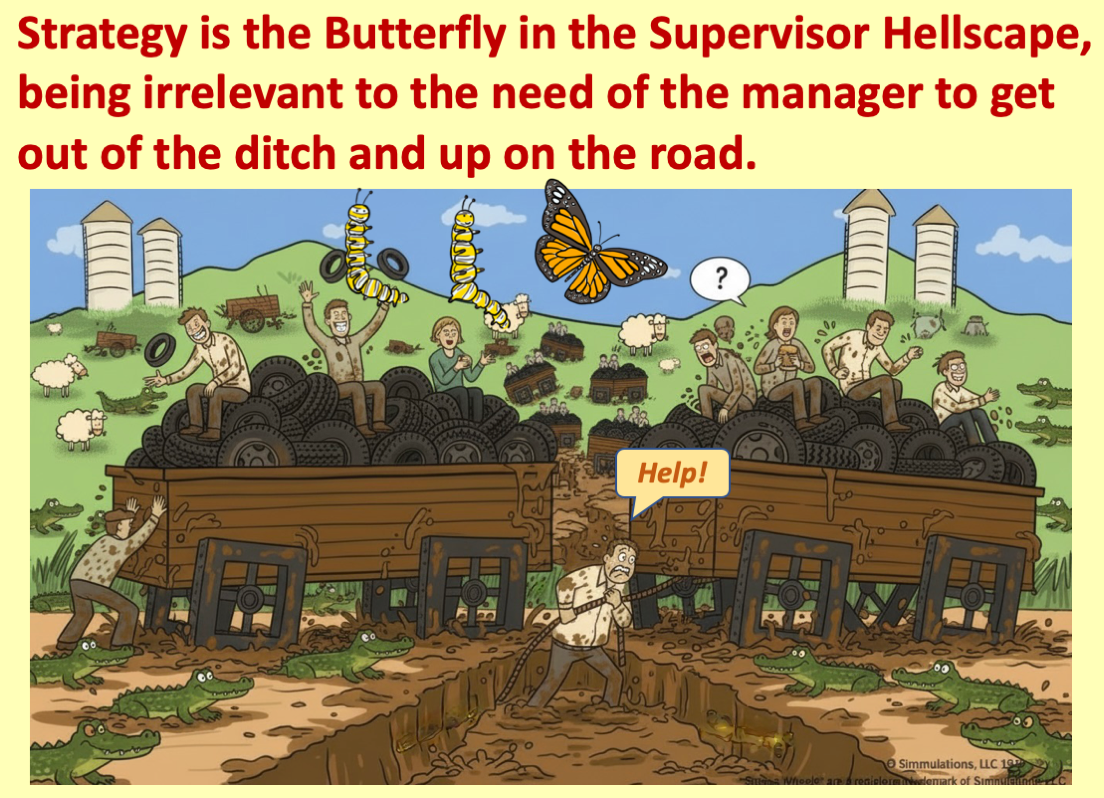
The commonly experienced reality of most supervisors in most workplaces
Supervisors are often treated as a “buffer” layer – expected to absorb pain from all sides in the Supervisor Hellscape in which they exist. They don’t need slogans about engagement and they do not need criticism; they need conversations that recognize their reality and their contribution.
Here are a few lines you can weave into your discussions:
-
“I know you’re carrying a lot of load between the team and senior leadership and expected results. I want our conversations to make that easier, not harder.”
-
“You see Square Wheels I will never see from where I sit. I need you to point them out and help fix them.”
-
“If you’re feeling stuck or boxed in, that’s a signal that our wagon design needs work, not that you’re failing.”
-
“Part of my job is to help you get more round wheels on your wagon so you can be the kind of supervisor you want to be.”
This kind of language doesn’t cost budget or headcount. It costs attention and intention. But it pays off in loyalty, initiative, and performance.
From Middle Management to Key Leverage
It’s fashionable to talk about “middle management” as a problem or roadblockers. But I really think of supervisors and mid‑level managers as key leverage points and the only way to actually make progress.
-
They translate butterfly strategy into daily caterpillar behavior.
-
They control the climate their people work in and provide the resources.
-
They are the primary source of feedback, recognition, and direction for most employees.
The Supervisors are the ONLY way to implement change.
Who else actually influences the workers?
When supervisors are frustrated and disengaged, everything slows down and thumps and bumps along. When they are enabled and heard, everything moves more smoothly.
Improving the conversations between managers and supervisors isn’t a soft extra; it’s core infrastructure for performance. The Square Wheels metaphor gives you a shared language and image to start doing that tomorrow.
A Call to Action for Managers
Here’s a simple challenge for you this month:
-
Pick three supervisors you work with regularly.
-
Schedule a 30‑minute conversation with each, explicitly framed as: “I want to understand how your wagon is rolling and where I can help.”
-
In each conversation, show them the Square Wheels One wagon image (get it for free here) and ask:
-
“What’s thumping the most for you right now?”
-
“What Square Wheels are making your job as a supervisor harder than it should be?”
-
“What’s one round wheel we could test together in the next 30 days?”
-
-
Co‑design one small experiment and commit to a follow‑up.
If you do that, you won’t just collect another list of complaints. You’ll start to build a culture where your supervisors feel seen, supported, and trusted to help redesign the wagon – not just drag it.
And when you un‑dis‑engage supervisors, you create the conditions for their people to engage more deeply, too. Better wheels under their wagon become better wheels under every wagon they lead.
—
For the FUN of It!
 Dr. Scott Simmerman is a designer of team building games and organization improvement tools.
Managing Partner of Performance Management Company since 1984, he is an experienced presenter and consultant who is trying to retire!! He now lives in Cuenca, Ecuador.
You can reach Scott at scott@squarewheels.com
Learn more about Scott at his LinkedIn site.
Square Wheels® are a registered trademark of Simmulations, LLC
and images have been copyrighted since 1993,
© Simmulations, LLC 1993 – 2026
What I’m About:
My Square Wheels blog and website exist to help leaders, trainers, and facilitators make work smoother, more engaging, and more human. I focus on practical tools for process improvement, organizational change, and workplace collaboration that spark insight and deliver measurable results.
And I am convinced, after 30+ years of using Square Wheels®, that it is the best facilitation toolset in the world. One can use it to involve and engage people in designing workplace improvements and building engagement and collaboration. It is a unique metaphorical approach to performance improvement and we can easily license your organization to use these images and approaches.
By blending proven facilitation methods, creative problem-solving, and engaging team activities, my mission is to support organizations in building energized, sustainable cultures of involvement and innovation.
Through accessible — and often free — resources and virtual facilitation tools, I aim to help teams everywhere collaborate more effectively, innovate continuously, and take ownership of their improvement journey.
#SquareWheels #InnovationAtWork #TeamEngagement #FacilitationTools #WorkplaceImprovement #EmployeeEngagement #CreativeProblemSolving #OrganizationalDevelopment #LeadershipTools #collaboration #leadership #motivation #communications #enablement #leadership #CreativeCommons #enablingperformance #teamwork

0 Comments