
Respect, Trust and Honesty. Openness. This is about how senior managers can demonstrate actionable intelligence to their people to improve organizational performance and FLOW
High intelligence in the workplace, especially among senior managers, is a far richer and more nuanced quality than many people assume. Common stereotypes might make us think of “the smart boss” as someone who is a quick-witted authority, aces trivia quizzes, or dominates boardroom debates with sharp logic and encyclopedic knowledge.
Yet, as contemporary psychological research and modern organizational theory suggest, true intelligence runs much deeper and is much more nuanced. In senior leadership roles, this intelligence becomes most visible not through academic prowess or rapid-fire fact delivery, but through openness, reflective thinking, humility, and a relentless drive to improve processes and outcomes.
The Square Wheels® metaphor and Daniel Kahneman’s System Two Thinking together offer robust frameworks for reframing what it means to be an “intelligent leader,” while a recent psychological perspective—the seven key symptoms of high IQ—invites us to appreciate intelligence as fundamentally adaptive, collaborative, and growth-oriented.
Beyond Old Stereotypes: Intelligence as Mindset and Method
The misconception that intelligence is primarily about speed and recall is persistent. “CarolArts11,” writing for The Art of Psychology, observes that real intelligence is, “about how we deal with the world, how willing we are to learn, and how we handle complicated things with humility”. This places emotional and cognitive adaptability at the heart of the conversation on leadership intelligence.
Organizations, much like individuals, get stuck. Here’s where Square Wheels theme comes in. As shown below, it pictures a team or company pushing and pulling a wagon with wooden Square Wheels, embodying cumbersome routines and pointless pain that represents ongoing reality. Yet, on the inside of the wagon are round wheels—better, more effective ideas waiting to be put into action.
Most work teams, especially if led with humility and curiosity, are well aware that things could roll more smoothly. The challenge for smart leaders is surfacing these hidden insights and encouraging a culture where constructive change can occur without blame.
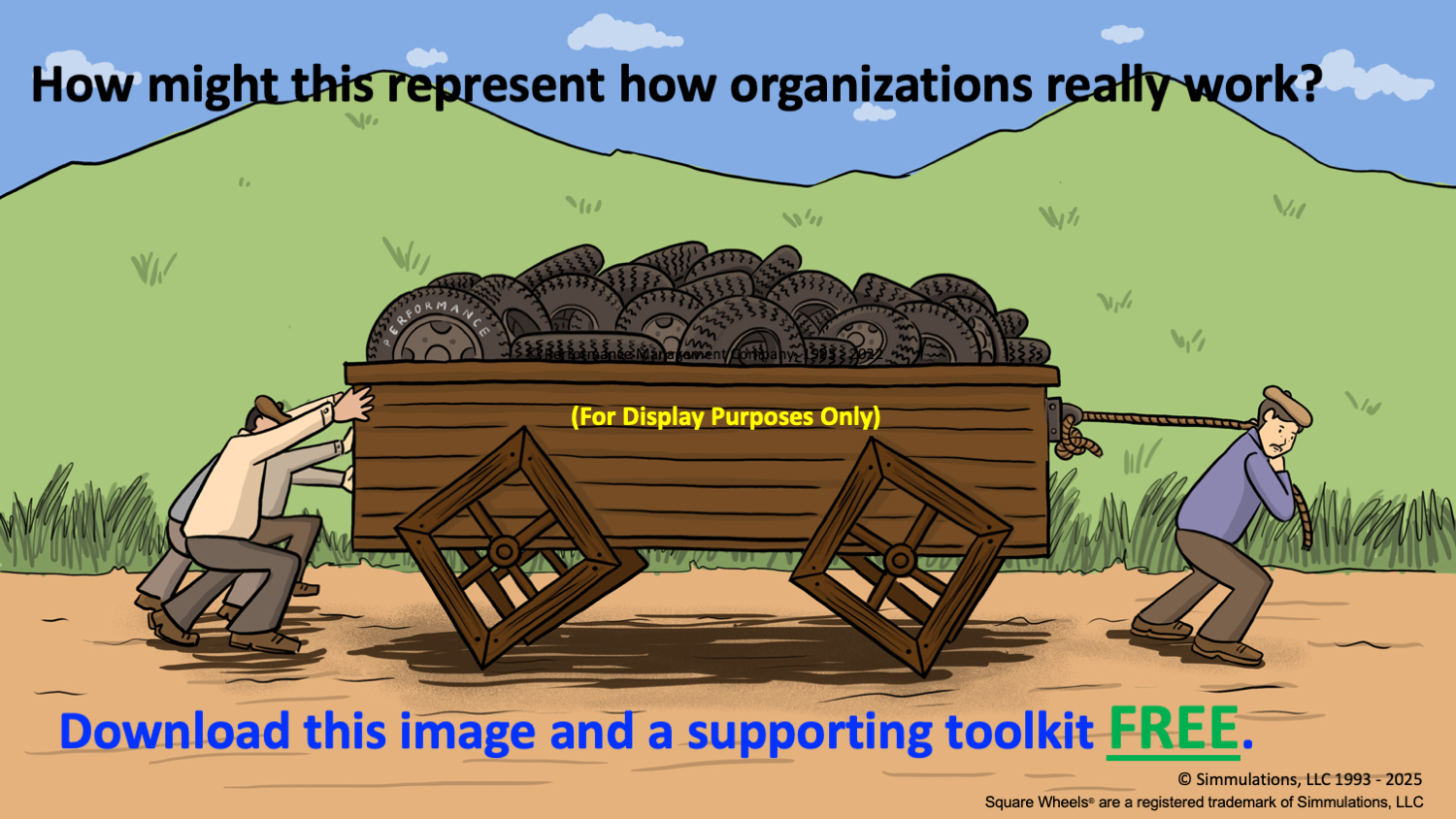
Download the FREE Square Wheels® One image and instructor’s guide under a Creative Commons license
Practicing System Two Leadership: Slow Down to Speed Up
The work of Daniel Kahneman provides a vital anchor for how intelligence should play out at the leadership level. Kahneman’s model of thinking posits two distinctive cognitive systems: “System One” is quick, automatic, and emotional; “System Two” is slow, deliberate, and analytical. Senior managers who operate primarily in System Two mode resist the easy lure of snap judgments. They pause, encourage full exploration of issues, and foster an environment where the “why” and “how” matter as much as the “what”.
This approach dovetails beautifully with the Square Wheels philosophy. Both demand psychological safety: an atmosphere where leaders model humility, routinely solicit feedback, and visibly learn from others. The effect is twofold. First, teams become emboldened to identify square wheels—those persistent workplace challenges that linger in silence when fast, authoritarian decision-making prevails. Second, options for round wheels are surfaced, debated, and adopted because more voices are genuinely invited to participate in the solution.
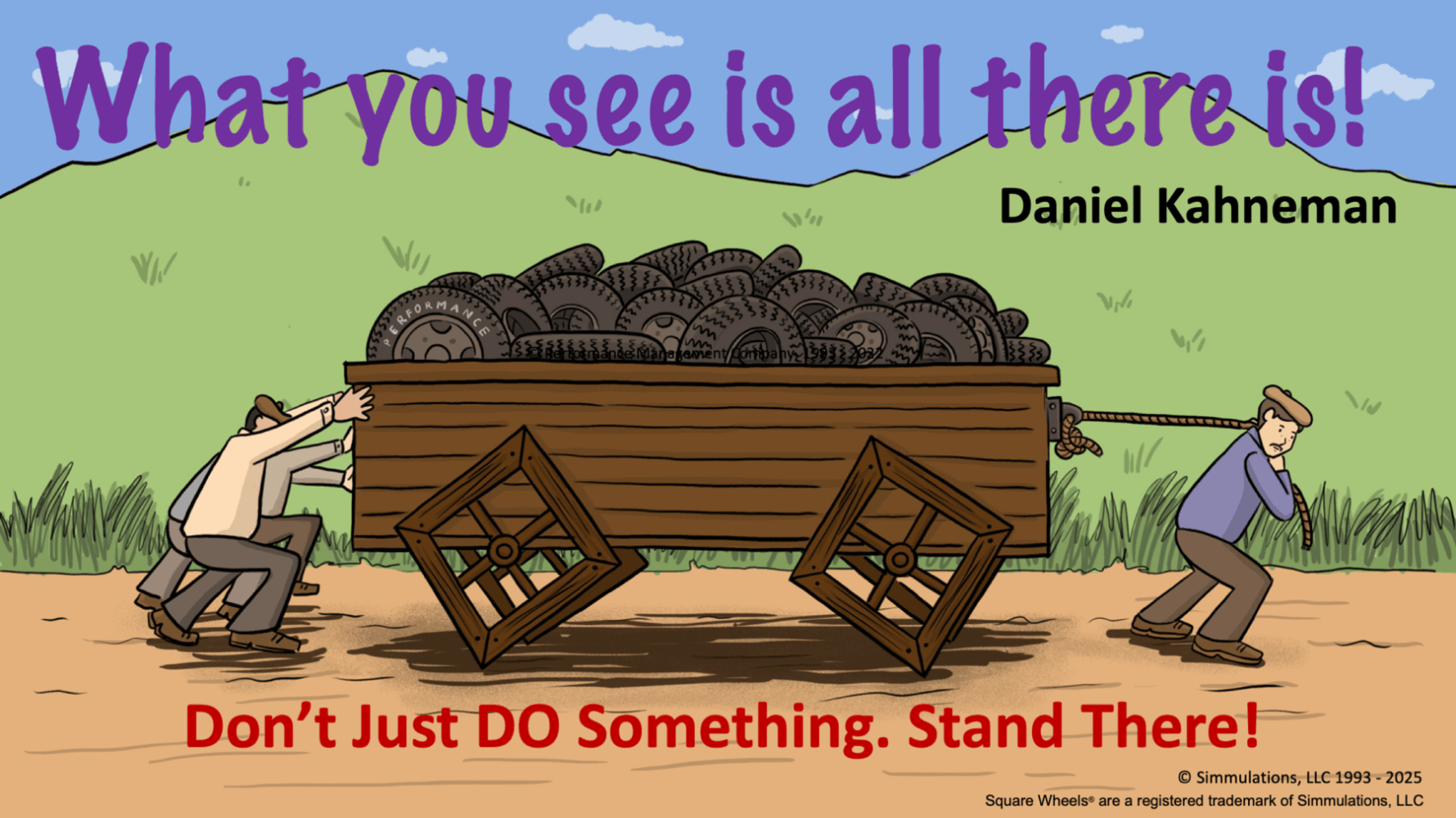
Thinking. Consider other possibilities for improvement.
Seven Markers of High-Functioning Intelligence in Leaders
Integrating the psychological perspective that “CarolArts11” shares, we come to see high intelligence not as an artifact of test scores, meeting leadership or classroom success, but as a daily habit, reflected in seven profound “symptoms”.
First, highly intelligent leaders practice humility. They have confidence in their abilities, yet never lose sight of what they still have to learn. They ask questions, admit blind spots, and honor contributions from all levels of the organization. They learn from others. This humility enhances trust—essential for the open dialogue at the heart of Square Wheels and for the broad integration that System Two thinking requires.
Secondly, they embrace uncertainty. The best managers recognize that ambiguity is part of life and leadership. Instead of rushing ahead with half-baked solutions, they welcome measured analysis and learn to live comfortably with the discomfort of not yet knowing. In Square Wheels sessions, this translates into giving people space to articulate problems before leaping to instantly “fix” them.
Third, a high-IQ manager is characterized by curiosity. The willingness to probe, explore, and generate new perspectives is a continual force in dynamic organizations. Curiosity, as both Square Wheels and System Two thinking make clear, is not just inner restlessness. It’s the strategic ability to invite and process a wide menu of possibilities. The curious manager not only asks, “What’s broken?” but also, “What brilliant workaround or overlooked idea might help?”
Fourth, these leaders show remarkable adaptability. They pivot when evidence requires it, update their mental models, and shift strategies without ego. In practice, this means switching from thumpy Square Wheels to round ones whenever data and team consensus make the change sensible. Kahneman’s System Two reinforces that such pivoting comes after careful analysis, not quick, unthinking reactions.
Fifth, emotional intelligence features prominently. Leaders who manage their own responses, read subtle group dynamics, and foster respectful exchange are the glue in successful, adaptive enterprises. Square Wheels sessions flourish when managers read the room, notice tension, and act to sustain a sense of safety and inclusion.
Sixth, great leaders demonstrate resilience in the face of setbacks. Rather than seeing mistakes as cause for punishment or shame, they become learning opportunities—raw material for better wheels and smarter planning. Both Square Wheels games and System Two reflection make room for constructive review, asking not just “What went wrong?” but “How can we make it better next time?”
Finally, a genuine commitment to collective improvement is perhaps the most vital marker of intelligence in action. Managers inspire their teams when they reward creative thinking and amplify the impact of even small improvements. Kahneman’s framework helps teams understand that the journey from default (“System One”) to deliberate action (“System Two”) is the path to true transformation—and Square Wheels offers a light, memorable language for making that journey together.
Bringing It Together: Building a Culture of Visible Intelligence
The application of these lessons is straightforward yet profound. The smart senior manager is not the loudest or the quickest, but the one who invites, digests, and implements feedback with grace. The enabled workforce learns to view leadership not as an impenetrable authority, but as an expert facilitator of group problem-solving and shared insight. This enables teams to unearth their Square Wheels, collectively design rounder alternatives, and implement those ideas in a spirit of shared accomplishment.

Feelings from these kinds of actions is what builds an amazing culture of innovation and accomplishment.
It is in this dynamic, supportive environment that the symptoms of true intelligence become palpable: Processes improve, energy rises, innovation flourishes, and engagement deepens.
The leader models curiosity by walking the floor and asking, “How might we do this better?” Humility is seen in the honest admission, “I don’t have all the answers—help me see what I’m missing.” System Two thinking shows when meeting agendas allocate time for discussion, when competing views are surfaced and integrated, and when facts, not mere familiarity or tradition, guide decisions.
Square Wheels becomes more than a metaphor; it is a practice for embedding intelligence into the DNA of the workplace. Kahneman’s insights about slow, deliberate thinking teach everyone to question first answers, resist easy narratives, and recognize the subtle ways in which bias and tradition can keep the rough ride going. And the seven symptoms of high IQ become not only a leader’s aspiration, but a tangible reality seen in every project review, every team huddle, every innovation brainstorm.
Ultimately, high intelligence in leadership is less about innate brilliance and more about sustained behaviors. It’s a dance of curiosity, humility, analysis, and emotional savvy—a dance that, when orchestrated well, transforms the culture, performance, and morale of an organization from the inside out.
And this kind of leadership can spread rapidly to generate a high-performing and innovative organizational culture,
—
For the FUN of It!
 Dr. Scott Simmerman is a designer of team building games and organization improvement tools.
Managing Partner of Performance Management Company since 1984, he is an experienced presenter and consultant who is trying to retire!! He now lives in Cuenca, Ecuador.
You can reach Scott at scott@squarewheels.com
Learn more about Scott at his LinkedIn site.
Square Wheels® are a registered trademark of Simmulations, LLC
and images have been copyrighted since 1993,
© Simmulations, LLC 1993 – 2026
What I’m About:
My Square Wheels blog and website exist to help leaders, trainers, and facilitators make work smoother, more engaging, and more human. I focus on practical tools for process improvement, organizational change, and workplace collaboration that spark insight and deliver measurable results.
And I am convinced, after 30+ years of using Square Wheels®, that it is the best facilitation toolset in the world. One can use it to involve and engage people in designing workplace improvements and building engagement and collaboration. It is a unique metaphorical approach to performance improvement and we can easily license your organization to use these images and approaches.
By blending proven facilitation methods, creative problem-solving, and engaging team activities, my mission is to support organizations in building energized, sustainable cultures of involvement and innovation.
Through accessible — and often free — resources and virtual facilitation tools, I aim to help teams everywhere collaborate more effectively, innovate continuously, and take ownership of their improvement journey.
#SquareWheels #InnovationAtWork #TeamEngagement #FacilitationTools #WorkplaceImprovement #EmployeeEngagement #CreativeProblemSolving #OrganizationalDevelopment #LeadershipTools #collaboration #leadership #motivation #communications #enablement #leadership #CreativeCommons #enablingperformance #teamwork #leadership #innovation #organizationalculture


0 Comments