
Listening to music can get one reflecting. Here’s a song about personal identity and being at the crossroad’s edge, one that got me thinking… And one that might impact YOU as you move your life forward.
When Queensrÿche performed about standing “at the crossroad’s edge,” in their song, Someone Else, it became more than a nice song for me; it’s a snapshot of mid‑life identity crisis and professional burnout that most of us can identify with.
(Find it on YouTube at https://www.youtube.com/watch?v=paKptzuzv38)
(Note – this self-reflecting post is somewhat difficult for me to generate and I will probably come back and edit it again and again as more of these messages sink in. My goal for this is to maybe help you to generate some considered alternatives in your choices and how you manage others who are also going through these kinds of reflections.)
In “Someone Else?” vocalist Geoff Tate sings about looking back at a life spent “playing by all their rules” and realizing that the person who follows the script (the right schools, right jobs, wrong self), can feel like a stranger to you. Rather than celebrating rebellion for its own sake, the song captures that quieter, more complicated moment when one finally asks: “Whose life have I been living, and who do I want to be now?”
For leaders and managers and most of us, actually, this is not just a rock‑ballad confession; it’s a mirror for reflection. Many of us hit a point where our résumés look great but our inner voice whispers that we’ve become “someone else,” shaped more by expectations of others than by our actual current values.
Below, I’ll try to unpack how this song’s imagery of chains, crossroads, and siren songs maps onto modern organizational life and how we can design work that might let us and our people become more, not less.
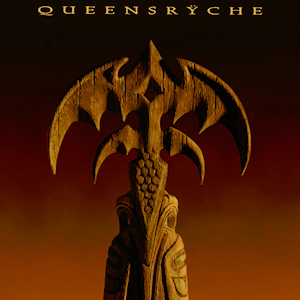
The album cover for Queensryche’s 1994 album, Promised Land
“Someone Else?” written by Geoff Tate and Chris DeGarmo, recorded by Queensrÿche on the album Promised Land (1994). All lyrics excerpted are © their respective copyright owners and used here for commentary and educational purposes.
Find the full lyrics at AZLyrics.com
“Someone Else” is about identity, burnout, and choosing to stop living the life other people scripted for you, told from the perspective of standing at a mid‑life “crossroads” and realizing the old self feels like “someone else.” It is about reflection. Why not play it and read along?
Overall, the “Promised Land” album is broadly about success, emptiness, and reevaluating life goals after fame and achievement, and “Someone Else?” functions as its introspective emotional anchor. Does it sound like the lives of most people in most workplaces?
Big Picture Meanings
- The singer (Geoff Tate) sings about having lived by others’ expectations (“I played by all their rules, went to their right schools”), only to end up exhausted, scarred, and feeling inauthentic.
- At this turning point, we look back and experience a past self almost as a different person (“they used to say I was nowhere, man… that was someone else, not me”).
- The song holds a beautiful tension between despair over wasted years and a fragile but real hope that he can still become more than what others predicted.
Key images and The Poetry
- “Fell from grace… how deep the flood was around me”: He realizes he’s already in over his head, overwhelmed by circumstances he didn’t fully grasp until it was too late.
- “A man whose life was toil… kettle left to boil… water left these scars”: Toil and constant pressure (work, expectations) have left lasting emotional scars, much like boiling water leaves marks on a pot.
- “The chains I wore were mine”: He’s not just a victim; he sees that his own choices and compliance have bound him to this path.
- “I played by all their rules, went to their right schools”: Classic image of doing what’s “supposed” to be done—career track, education, conformity—to gain approval and security.
These lines frame the first half of life as a kind of self‑betrayal under social pressure, not just oppression from outside. How many of us can reflect back on something similar? And how many of us might better mentor some of our people as they move their lives forward?
The “Crossroad’s Edge” and “Someone Else”
- “Here I stand at the crossroad’s edge”: This is the mid‑life decision point—keep going as before or change course.
- “Afraid to reach out for eternity”: He’s terrified of committing to a new, more authentic life (or even contemplating mortality and what it means to live a meaningful life).
- “One step when I look down, I see someone else, not me”: Looking at where he is and how he got here, he doesn’t recognize the person he became; he feels alienated from his own history. This is a powerful reflection on things as a personal reflection that can stimulate change.
Critics and fans often describe the track as about a man who feels he’s lived someone else’s life and is confronting that realization.
Identity, Sacrifice, and Boundaries
- “Sacrifice… is a sign of nobility. But where does one draw the line in the face of injury?”: He’s questioning the narrative that you must constantly sacrifice yourself for work, family, or society, especially when it damages your mental health or dignity.
- “Heavy with the past, but somehow keeping hope”: He feels weighed down by regret and history, yet there is still a small, stubborn belief that change is possible.
- “All my life they said I was going down, but I’m still standing, stronger proud”: He rejects the old negative labels and finds a core resilience—he has survived what others predicted would destroy him.
This is the pivot: from internalizing others’ judgments to asserting a more grounded sense of self-worth.
The ending paradox: “Someone else… me?”
- “From where I stand… there’s a path leading out to sea”: The sea suggests freedom and the unknown—leaving the familiar shoreline of his old life.
- “Sirens sing out loud, songs of doubt”: Like mythic sirens, voices of fear and temptation try to lure him back into old patterns, telling him it’s safer not to change.
- “One glance back reminds and I see someone else, not me. I keep looking back at someone else… me?”:
- “Someone else, not me”: He’s separating from the old identity.
- “Someone else… me?”: He’s acknowledging that as much as he disowns that past self, it is still him; he can’t just erase it.
Listeners and reviewers have noted that the song circles around this self‑confrontation, ending not with a neat resolution but with a complicated acceptance: he is both the damaged “someone else” and the person who finally understands what has happened and can choose differently.
If you think about your own work with your people and your teams, the song is almost a psychological case study in mid‑career re‑authoring of one’s own story—unhooking from inherited scripts and starting to act from a clearer sense of self. And about helping others to reflect, the coaching and mentoring.
Some Personal Reflections:
For me, this song works as a mirror of my own “scripted life vs chosen life” moment—professionally, creatively, and personally. I’m listening as I write this, actually.
As a mirror of my career arc
- I’ve “played by all their rules” in my education, consulting, college teaching, and corporate environments, and I’ve built my own IP and practice from all these experiences anyway; that tension is exactly what the song voices.
- “The chains I wore were mine” parallels my recognition that most of my constraints are self‑chosen—projects, clients, structures—that I can also choose to step away from now going forward..
- The “crossroad’s edge” fits my current phase: deciding what my next decade of work (books, licensing, speaking) will look like, rather than just extending the last one.
In that sense, the song is almost a soundtrack to moving from my being “a respected expert in the system” to “author of my own narrative, on my own terms.”
Identity, burnout, and flow
- The “kettle left to boil” really maps onto anyone’s chronic overwork and incremental burnout in knowledge work and consulting—exactly the phenomena I often write about today such as The Supervisor Hellscape.
- “Heavy with the past but somehow keeping hope” resonates with carrying years of projects, obligations, and so many half‑finished ideas while still believing I can do my best work now, not just reflecting in the past.
- For example, my flow‑focused writing is, in a way, my answer to that lyric: moving from boiling and scarring to designing work that sustains energy and meaning.
So the song is functioning as a personal reminder for us: don’t design a life where you become that “drowning man” — All of us should be teaching others to self-rescue. Thus this post.
(Did you find yourself replaying the song like I did when writing this?)
NOW, Re‑authoring Your Story
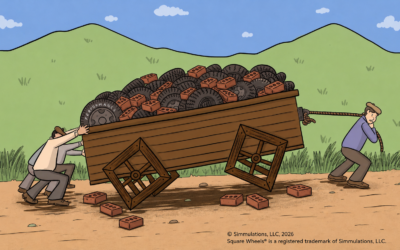
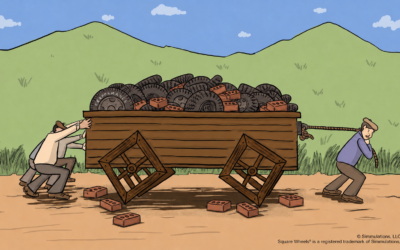
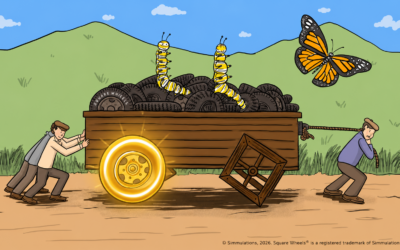
- The refrain of “someone else, not me” is about disidentifying with an old story you and others told about you; that’s very close to my caterpillar / butterfly stories (Teaching the Caterpillar to Fly) and my Square Wheels® metaphors—seeing the old form as real but not final.
- “All my life they said I was going down, but I’m still standing stronger proud” mirrors my having been underestimated or pigeonholed, then outlasting those expectations through my developing the IP and independent work.We can all make similar choices.
- The final “someone else… me?” line can mean that we can’t disown our own history, but we can integrate it—using the scars and misfits as raw material for the work I’m doing now and what you can choose to do.
Practically, that might mean deliberately writing some of my “old Scott” into my writings as a case example, acknowledging me as “someone else” and also me now and looking forward.
Note: When asked directly what “Someone Else?” is about, singer Geoff Tate has mostly sidestepped neat, literal explanations, saying in interviews that his songs come out of his own life and struggles but that he prefers to let listeners find their own meanings in them. Instead of decoding specific lines, he frames that whole Promised Land period (1993-1994) as a time of wrestling with success, materialism, and identity — what happens after you “get everything you thought you wanted” and still feel strangely disconnected.
In that sense, “Someone Else?” sits in the emotional center of that arc: a quiet, brutally honest moment of self‑confrontation where you recognize how far your current life is from who you thought you would become. Tate’s refusal to pin down a single “official” meaning actually reinforces the song’s power; it gives each of us permission to project our own story of regret, reinvention, and hoped‑for redemption into the empty spaces between the piano chords.
A tool for YOUR Work
- Personally, the song invites you to ask: “Where am I still following ‘their rules’ instead of my own design?” and “What would my new path ‘out to sea’ look like in concrete terms—time, clients, topics?”
- Professionally, anyone can use this track as a narrative device with leaders and others: mid‑career people at the crossroads, confronting their own “someone else” selves and deciding whether to keep playing by inherited rules or redesign work.
Question for Your Reflection:
If you sit quietly with with the song, (consider giving this 7 minutes of your time), what verse hits you in the gut the most right now: “chains I wore,” “crossroad’s edge,” or “sirens sing… songs of doubt”?
Choose to Change, if that works for you.
More blogs in this style:
This Queensrÿche song, “Silent Lucidity,” is about how one can help create some Lucid Dreaming among people to help them create ideas for improvement. It’s about Guiding the Dreams…
This Queensrÿche song, “Anybody Listening,” is about personal awakening and rejecting false realities, along with the loneliness of trying to live authentically:
https://performancemanagementcompany.com/2026/03/24/supervisors-is-anybody-listening/
—
For the FUN of It!
 Dr. Scott Simmerman is a designer of team building games and organization improvement tools.
Managing Partner of Performance Management Company since 1984, he is an experienced presenter and consultant who is trying to retire!! He now lives in Cuenca, Ecuador.
You can reach Scott at scott@squarewheels.com
Learn more about Scott at his LinkedIn site.
Note that I often use Perplexity AI to help research and generate ideas for my posts.
Square Wheels® are a registered trademark of Simmulations, LLC
and images have been copyrighted since 1993,
© Simmulations, LLC 1993 – 2026
What I’m About:
My Square Wheels blog and website exist to help leaders, trainers, and facilitators make work smoother, more engaging, and more human. I focus on practical tools for process improvement, organizational change, and workplace collaboration that spark insight and deliver measurable results.
And I am convinced, after 30+ years of using Square Wheels®, that it is the best facilitation toolset in the world. One can use it to involve and engage people in designing workplace improvements and building engagement and collaboration. It is a unique metaphorical approach to performance improvement and we can easily license your organization to use these images and approaches.
By blending proven facilitation methods, creative problem-solving, and engaging team activities, my mission is to support organizations in building energized, sustainable cultures of involvement and innovation.
Through accessible — and often free — resources and virtual facilitation tools, I aim to help teams everywhere collaborate more effectively, innovate continuously, and take ownership of their improvement journey.
#SquareWheels #InnovationAtWork #TeamEngagement #FacilitationTools #WorkplaceImprovement #EmployeeEngagement #CreativeProblemSolving #OrganizationalDevelopment #LeadershipTools #collaboration #leadership #motivation #communications #enablement #leadership #CreativeCommons #enablingperformance #teamwork #storytelling #storyasking

0 Comments