
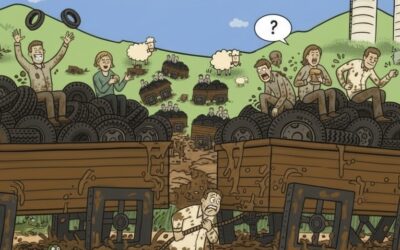
So many organizations seem to put their supervisors in The Hellscape where they are simply driven to disengage and to thus demotivate their people.
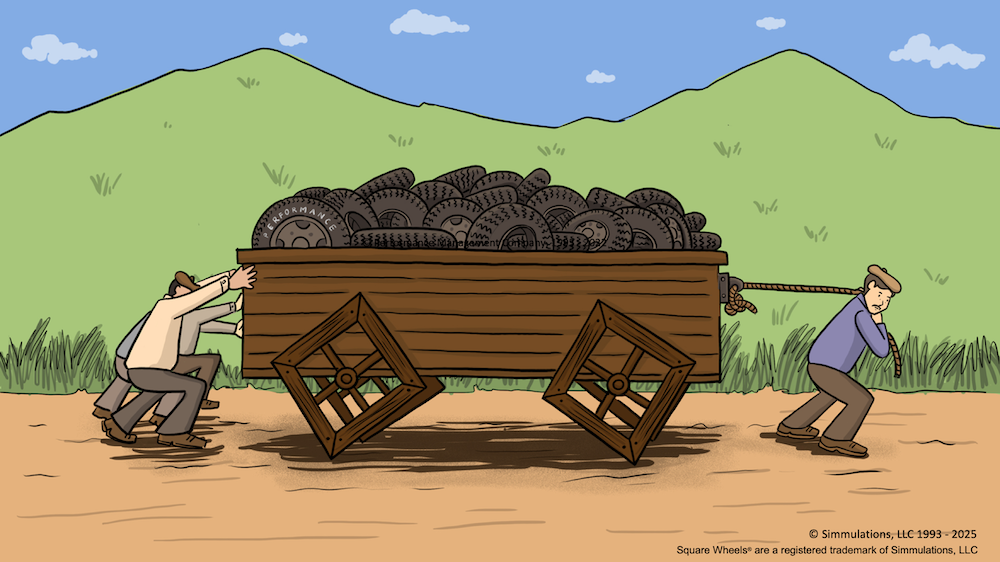
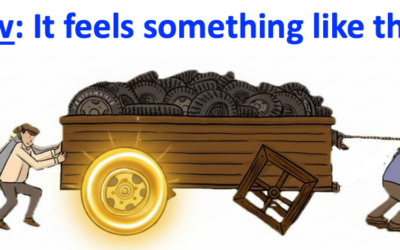
If you have not seen it, my organizational model is simple and shows a situation allowing for improvement. Click on the image to get this image, free to use.
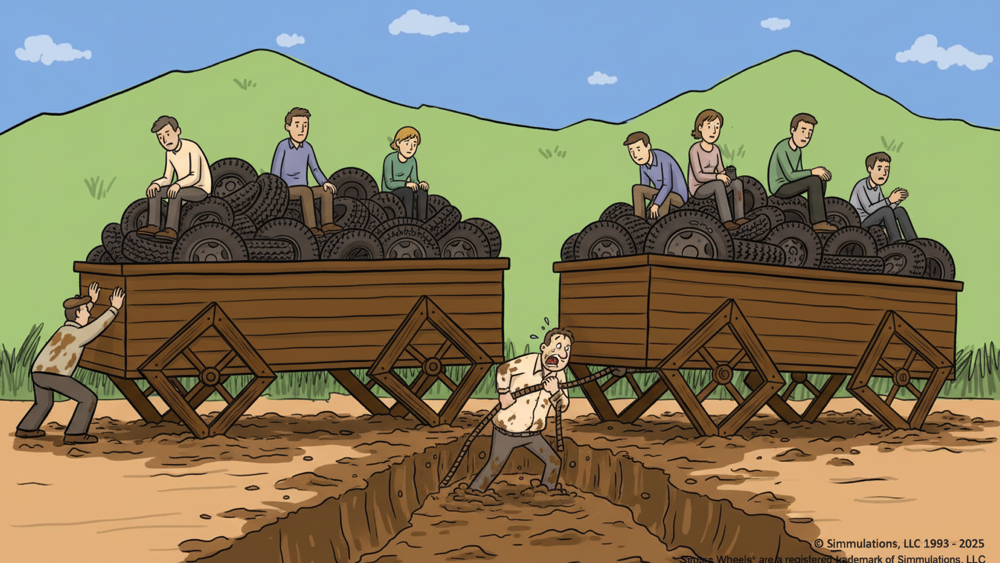
Take a moment and consider this image as a reality of the supervisor workplace. What do YOU see happening?
ADP’s global workplace study also highlights where supervisors can make the greatest impact on actual engagement and active involvement. Hybrid employees are nearly twice as likely to be fully engaged as those working entirely remotely; this is an important clue about the power of connection and shared presence. Even more striking, on‑site workers who belong to an active, collaborative team are three times more likely to be highly engaged than isolated employees.
Surveys show 93% of employees say they are part of a team, meaning almost everyone operates within a supervisor’s sphere of influence. But not every manager is a good team leader and facilitator. And it shows.
Bad managers largely erase the engagement advantages of hybrid work because ineffective supervisor behavior accounts for most of the variance in how engaged people feel, regardless of where they sit.
How bad supervisors affect hybrid / remote engagement
Gallup’s long‑running finding is that the manager accounts for about 70% of the variance in team engagement scores, meaning quality of managing has two to three times the impact of any specific remote/hybrid policy. In practice, a “bad manager” (unclear expectations, low trust, little recognition, poor support, etc.) can turn the flexibility of hybrid working into chaos and ambiguity, increasing stress and detachment instead of engagement.
How that supervisor runs meetings, communicates, welcomes ideas, addresses concerns, and recognizes contributions determines whether the team becomes a thriving “learning lab” of engagement—or a frustrating grind of unaddressed Square Wheels.
Stress makes these dynamics even more consequential. ADP’s research shows that “thriving” employees, those experiencing challenge as eustress, are 21 times more likely to be fully engaged and 20 times more likely to be highly resilient than “overloaded” employees. Yet the people most likely to feel overloaded are individual contributors, while senior leaders remain insulated from day‑to‑day strain. Unless supervisors intentionally adjust their behaviors, the employees pulling the wagon hardest will continue to face the greatest risk of burnout, disengagement, and turnover.
Thriving employees, those experiencing challenge as eustress, are 21 times more likely to be fully engaged and 20 times more likely to be highly resilient than “overloaded” employees
-
Supervisors must be facilitators, not just task‑givers. That means routinely stopping the wagon long enough to ask, “What are the Square Wheels getting in your way?” and visibly acting on those insights.
-
Recognition must be specific, fair, and connected to improvement, because “I know I will be recognized for excellent work” is a core driver of high motivation and commitment.
-
Promotions into supervisory roles must be paired with real support —coaching on involvement, skills in leading teams, and permission to change processes— so new leaders do not simply inherit a hellscape of responsibility without tools for getting out of the ditch and up on the road.
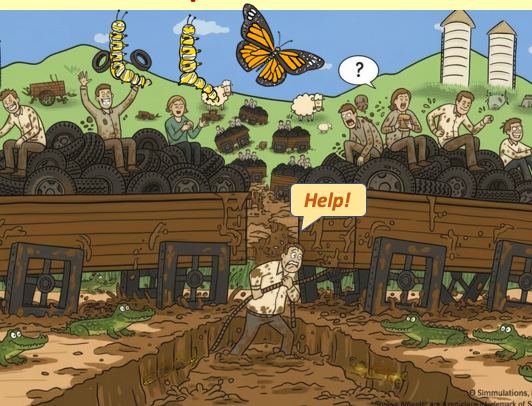
The ACTUAL workplace reality. The butterfly probably represents Corporate Strategy. Click here or on the image to read more…
—
For organizations with multiple stuck teams, book a short conversation to design a program using Square Wheels across your organization, We can easily build some really great tools and courses and support systems,
For the FUN of It!
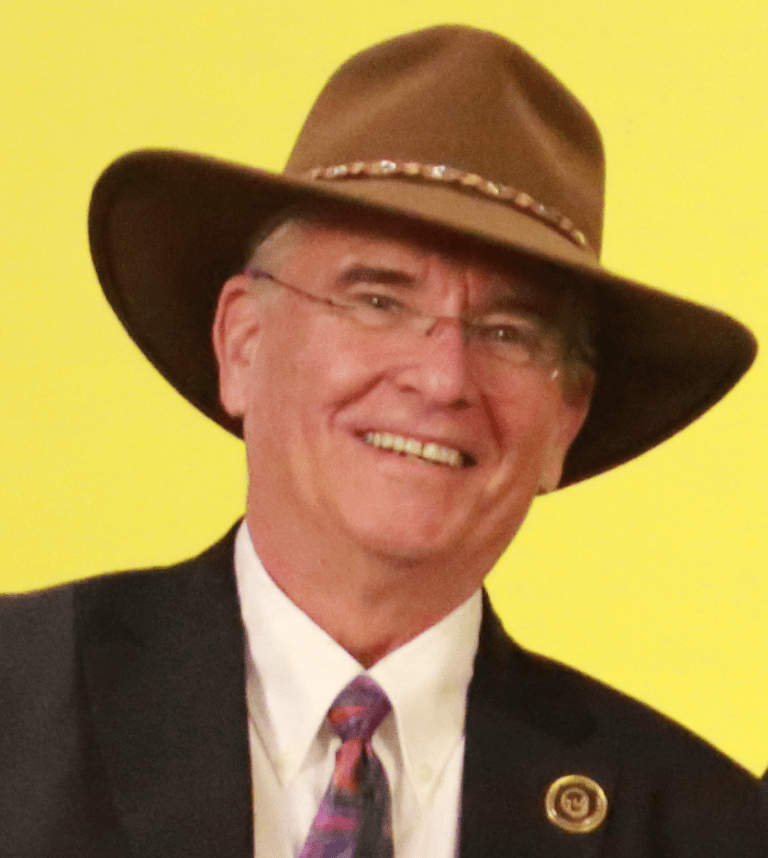 Dr. Scott Simmerman is a designer of team building games and organization improvement tools.
Managing Partner of Performance Management Company since 1984, he is an experienced presenter and consultant who is trying to retire!! He now lives in Cuenca, Ecuador.
You can reach Scott at scott@squarewheels.com
Learn more about Scott at his LinkedIn site.
Square Wheels® are a registered trademark of Simmulations, LLC
and images have been copyrighted since 1993,
© Simmulations, LLC 1993 – 2025
What I’m About:
My Square Wheels blog and website exist to help leaders, trainers, and facilitators make work smoother, more engaging, and more human. I focus on practical tools for process improvement, organizational change, and workplace collaboration that spark insight and deliver measurable results.
And I am convinced, after 30+ years of using Square Wheels, that it is the best facilitation toolset in the world. One can use it to involve and engage people in designing workplace improvements and building engagement and collaboration. It is a unique metaphorical approach to performance improvement.
By blending proven facilitation methods, creative problem-solving, and engaging team activities, my mission is to support organizations in building energized, sustainable cultures of involvement and innovation.
Through accessible — and often free — resources and virtual facilitation tools, I aim to help teams everywhere collaborate more effectively, innovate continuously, and take ownership of their improvement journey.
#SquareWheels #InnovationAtWork #TeamEngagement #FacilitationTools #WorkplaceImprovement #EmployeeEngagement #CreativeProblemSolving #OrganizationalDevelopment #LeadershipTools #collaboration #leadership #motivation #communcations #hellscape #hybrid

0 Comments