
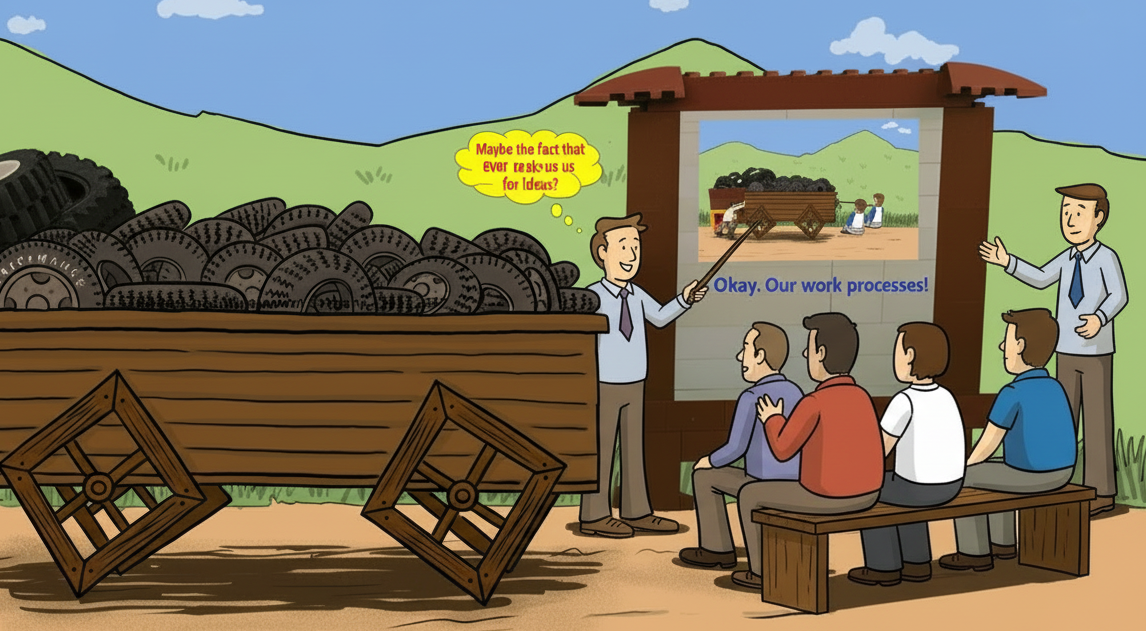
Enablement of supervisors and performance in the workplace SHOULD be of high interest to every organization; supervisors drive productivity.
But the metrics around supervisors show they are disengaged (Gallup, 2025) and untrained and generally ignored. The majority of these managers (66%) can be classified as “accidental managers” because they receive no formal training for their roles, and 35% have repeatedly asked their employers for training (Fortune Magazine, 2024). This represents a profound crisis in management development.
Supervisors aren’t just struggling—they’re actively seeking solutions and demonstrably motivated to improve when given proper support.
So, let me offer a simple solution that does not really involve “training” and one that does not require extensive HR support, to produce the enablement that comes from making these easy-to-use tools available within the organization. Basically, the approach is to give these people the tools they need to facilitate bombproof performance improvement-focused discussions with their people.

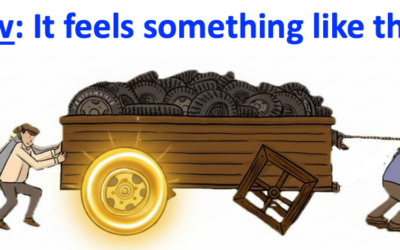
Supervisors can facilitate discussions of the Square Wheels® that are in the workplace – Round Wheels are already in the wagon!
The many Square Wheels® images and metaphors give supervisors and their teams a simple, visual way to talk about what is not working and what could be improved. When that conversation shifts from “try harder” to “let’s make the work easier and better,” engagement stops being a buzzword and starts becoming the enablement of daily behaviors.
Everyone in the workplace knows that things are not working smoothly and that ideas for improvement already exist. The round wheels are already in the Square Wheel Wagon that represents reality.
From Engagement Posters to Real Enablement
Global engagement is still stuck in neutral, with only about 23% of employees worldwide classified as engaged and roughly six in ten emotionally detached at work. In the U.S., engagement slid to a 10‑year low in 2024, with only 31% of employees engaged and 17% actively disengaged (Gallup, 2025).
The issue is not a shortage of surveys or town halls; it is a shortage of enablement. Enablement asks blunt, practical questions: Do people have clear goals, usable tools, sensible processes, skills, information, and the permission to act? Enablement involves MBWA and asking good questions to “dis-un-enable” people in their workplaces. Globally, only about four in ten employees strongly agree they have the materials and equipment they need to do their jobs effectively, which means most people are pushing a wagon that is harder to move than it needs to be.
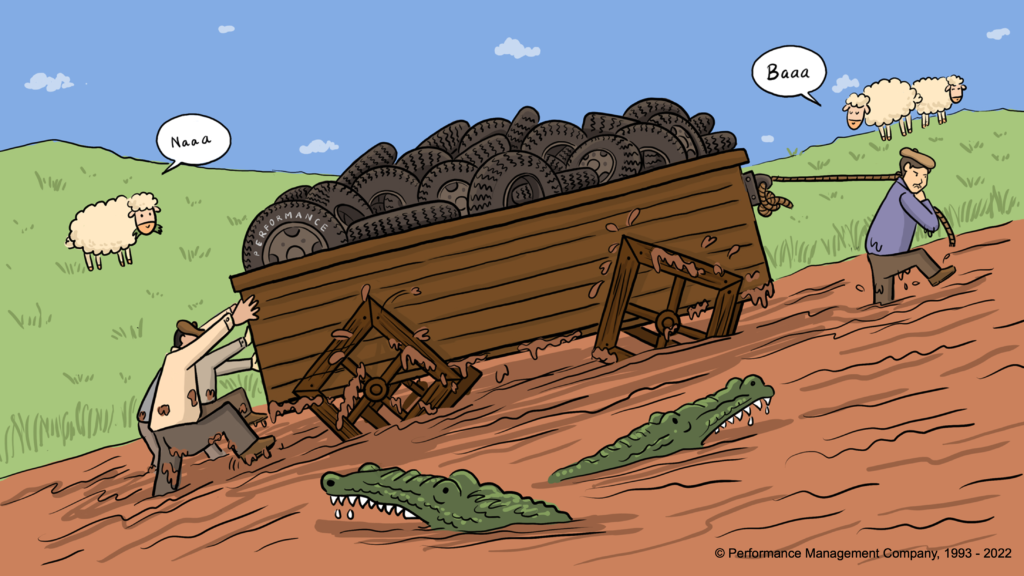
One view of workplace reality
“Engagement is how people feel about work; enablement is whether the work itself makes sense, If the wagon wheels are seen as square, motivation alone just burns people out.”
The Square Wheels® Wagon: A Picture of Workplace Reality
My classic Square Wheels® One image is simple: a wooden wagon rolling forward on Square Wheels, with perfectly good round wheels already in the wagon. The guy in front is straining to pull; the people in back are (hopefully) pushing hard, and the wagon is apparently moving forward. Yet no one seems to be talking about the obvious improvement sitting right there.
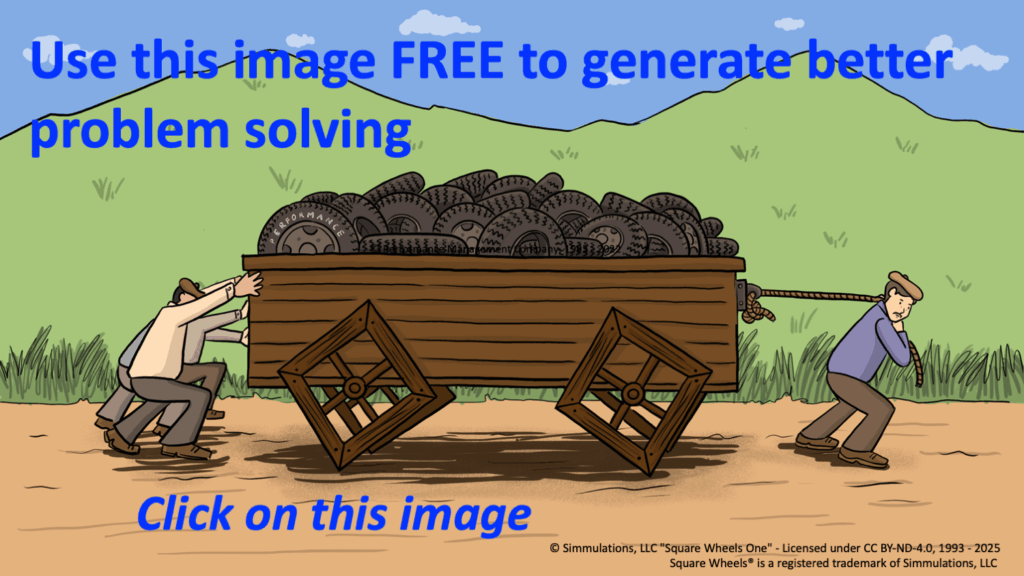
Grab this image free to use, with a Creative Commons use license. FREE, with a toolkit.
Most supervisors recognize this image instantly because it looks a lot like their real day. They are under pressure to “go faster” while dealing with clunky systems, unclear priorities, and a rotating collection of workplace apps that promise productivity but mostly add noise; 96% of employees say the tools they have are not really helping them keep up. The Square Wheels metaphor gives everyone a safe, non‑blaming way to say, “This is a Square Wheel,” and then ask, “What Round Wheels are already in reach?”
“Once people have the metaphor and image in their heads, they start seeing Square Wheels everywhere—and that is good news, because it means they are also seeing round wheel possibilities,” says Dr. Scott Simmerman.
Supervisors as Chief Enablement Officers
Research keeps confirming what experience already shows: supervisor support is a powerful driver of engagement and performance. In one study, supervisor support significantly increased the odds of employees being engaged, even when people felt insecure about their jobs.
Research keeps confirming what experience already shows: supervisor support is a powerful driver of active involvement and performance.
Yet many supervisors have been promoted for technical expertise, not for their ability to design better work. They know how to fix problems themselves, but not how to facilitate their teams in fixing the systems and processes and not for generating workplace innovation. They rely on corporate extrinsic rewards rather than working to build the intrinsic motivation that really drives change and improvement. This is where Square Wheels becomes a practical enablement toolkit:
-
Supervisors convene small groups and use the wagon image to identify their Square Wheels improvement opportunities: policies, tools, meetings, handoffs, metrics, or habits that slow people down.
-
For each Square Wheel, the team generates at least three Round Wheels, those concrete improvement ideas they can test, tweak, implement or escalate.
-
The group then selects quick wins they can implement immediately and bigger wheels that need sponsor support. They build implementation skills that can be used for continuous continuous workplace improvement.
Supervisor support is no longer a vague “I’ve got your back” belief; it becomes visible in how they listen, remove friction, and protect time and attention for improvement work. That kind of support not only raises engagement but also mediates innovative behavior: when people feel truly backed by their supervisor, they are more willing to experiment, offer ideas, and go beyond their job description.
“The best supervisors are not cheerleaders; they are impediment removers,” says Dr. Scott Simmerman. “Their real value is how quickly people can turn a Square Wheel problem into a Round Wheel experiment.”
The Workforce: Tired of Pushing, Ready to Design
Employees are not short on ideas; they are short on permission, resources, and a process to make change real. Around 65% of people say they are being asked to do work outside their job description without the clarity and support to succeed, while 95% say autonomy and flexibility are important to them (Forbes, 2023).
Square Wheels sessions flip workers from passive recipients of change to co‑designers of better work:
-
Teams define their own Square Wheels, so the conversation is grounded in their lived reality, not in abstract corporate initiatives. Square Wheels are REAL!
-
They design Round Wheels solutions to their issues, which builds ownership; as the old line goes, “Nobody ever washes a rental car.” They often build on the best practices of the exemplary performers who are already doing things differently.
-
Implementation champions come from within the team, and supervisors commit to clearing roadblocks and aligning measures so the new wheels can actually roll.
The payoff is not just happier people. Highly engaged and enabled employees drive hard business outcomes: higher productivity, lower turnover, better customer service, and improved well‑being. In fact, when engagement is high, productivity can increase by more than 20% and turnover can drop by about 50%. Those numbers are not about free snacks; they are about better operating wheels under the work.
“When people see their ideas implemented onto the wagon, they stop renting the job and start owning the journey,” says Dr. Scott Simmerman.
Building a Culture of Round Wheel Conversations
In a bombproof way., Square Wheels becomes a shared language and a simple governance system for enablement. Teams start asking, “Is this a Square Wheel?” in everyday conversations about processes, meetings, and metrics, and supervisors learn to respond with, “What Round Wheels do you see, and what would we need to test them?”
A few practical habits help this stick:
-
Regular Square Wheels huddles: short, recurring conversations where each group surfaces a Square Wheel and some Round Wheels to experiment with for the coming week.
-
Visible Round Wheel backlog: a simple board tracking ideas from “proposed” to “tested” to “adopted,” so people can see progress and not feel their input disappears into a black hole.
-
StoryAsking: supervisors and team members share quick stories they create of where a Round Wheel made a difference to customer experience, cycle time, safety, or stress.
Over time, dis-un-engagement and dis-un-empowerment show up as by‑products, not as the primary goals. When people participate in redesigning the wagon and see their round wheels solutions in motion, they naturally feel more pride, more control, and more willingness to invest discretionary effort.
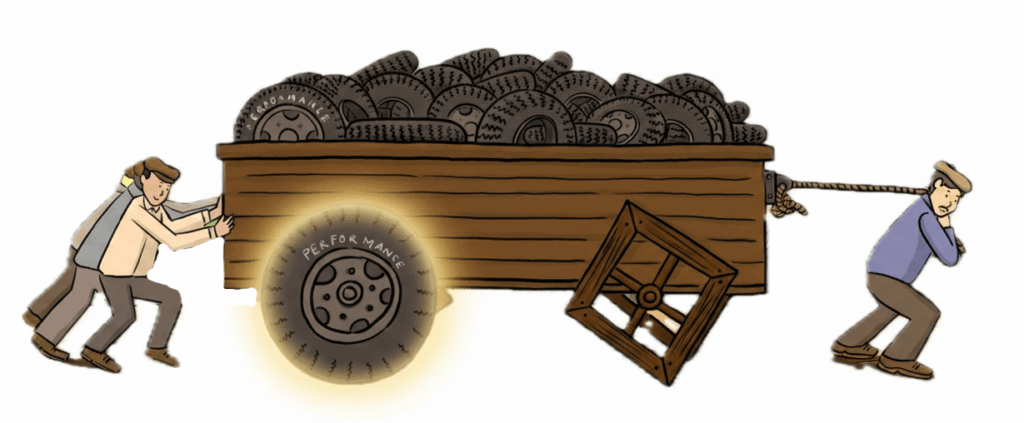
Celebrate the implementation of round wheels. Intrinsic rewards are very motivating.
“Engagement is not something you give people,” Dr. Scott Simmerman emphasizes. “It is what shows up when they can fix what’s been thumping and bumping for years. It is about their choice and choices over time.”
In a world where only a minority of employees feel engaged and most feel their tools and processes are working against them, Square Wheels tools offer a refreshingly concrete path forward. Put simply: show people the wagon, let them name the Square Wheels, give them space and support to design Round Wheels, and watch how quickly the work—and the workforce—start to roll.
Contact us and let’s build something simple and effective,
—
For the FUN of It!
 Dr. Scott Simmerman is a designer of team building games and organization improvement tools.
Managing Partner of Performance Management Company since 1984, he is an experienced presenter and consultant who is trying to retire!! He now lives in Cuenca, Ecuador.
You can reach Scott at scott@squarewheels.com
Learn more about Scott at his LinkedIn site.
Square Wheels® are a registered trademark of Simmulations, LLC
and images have been copyrighted since 1993,
© Simmulations, LLC 1993 – 2026
What I’m About:
My Square Wheels blog and website exist to help leaders, trainers, and facilitators make work smoother, more engaging, and more human. I focus on practical tools for process improvement, organizational change, and workplace collaboration that spark insight and deliver measurable results.
And I am convinced, after 30+ years of using Square Wheels®, that it is the best facilitation toolset in the world. One can use it to involve and engage people in designing workplace improvements and building engagement and collaboration. It is a unique metaphorical approach to performance improvement and we can easily license your organization to use these images and approaches.
By blending proven facilitation methods, creative problem-solving, and engaging team activities, my mission is to support organizations in building energized, sustainable cultures of involvement and innovation.
Through accessible — and often free — resources and virtual facilitation tools, I aim to help teams everywhere collaborate more effectively, innovate continuously, and take ownership of their improvement journey.
#SquareWheels #InnovationAtWork #TeamEngagement #FacilitationTools #WorkplaceImprovement #EmployeeEngagement #CreativeProblemSolving #OrganizationalDevelopment #LeadershipTools #collaboration #leadership #motivation #communications #enablement #leadership #CreativeCommons #enablingperformance #teamwork



0 Comments