
Turning Square Wheels into Serendipity: How Organizations Can Unlock Smart Luck and Innovation
Organizations often roll along on Square Wheels®—inefficient processes, rigid habits, and outdated mindsets that keep things thumping and bumping forward. The Square Wheels DO work.. Yet, within those bumpy journeys lie the sparks of innovation and serendipity—the unexpected ideas that propel progress when we notice, connect, and act.
Christian Busch’s idea of “The Serendipity Mindset” from an older article in strategy+business reframes this perfectly: serendipity isn’t random good fortune; it’s “smart luck”—the ability to spot and connect the unexpected. In essence, it’s the discipline of considering round wheel possibilities where others only notice the rumble of the ride.
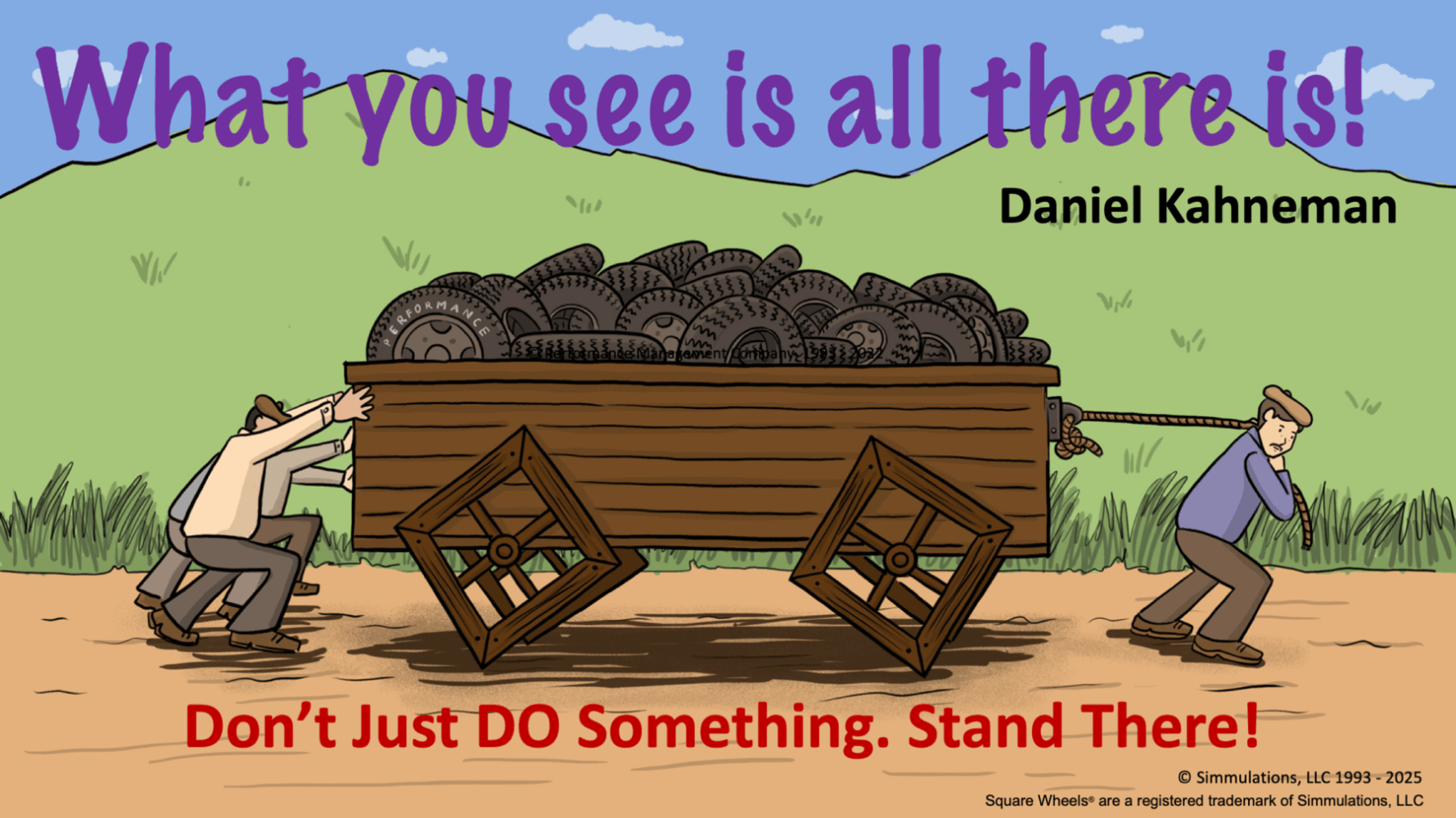
As Daniel Kahneman said in his “Thinking, Fast and Slow“ book. it is about noticing the things that might be done differently, of “stepping back from the wagon” to find things that might be done differently. (here and here)
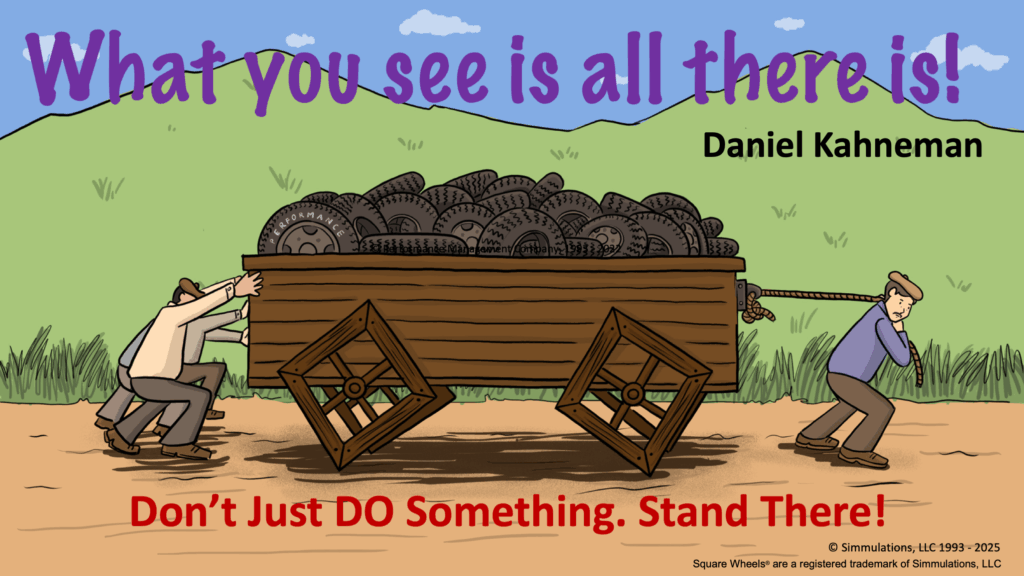
Thinking. Consider other possibilities for improvement.
Seeing the Unexpected as a Trigger
Square Wheels represent entrenched systems that people tolerate because “that’s how we’ve always done it.” Round Wheels, on the other hand, symbolize better ideas already within reach—often hidden in plain sight, waiting to be recognized. Serendipity, as Busch notes, begins with awareness. Like Percy Spencer noticing a melted chocolate bar near his radar equipment and inventing the microwave, innovators must learn to pause and ask, “What’s the opportunity hiding in this odd thing?”
Listen to a 13-minute deep dive into how the Square Wheels / Round Wheels tools really work to drive organizational improvements here
If we teach teams to talk about both what’s working and what’s not, we create visibility for these overlooked Round Wheels. That visibility is the first step toward creating a serendipity-friendly culture. And by celebrating the implementation of new ideas, we dramatically impact the culture of innovation.
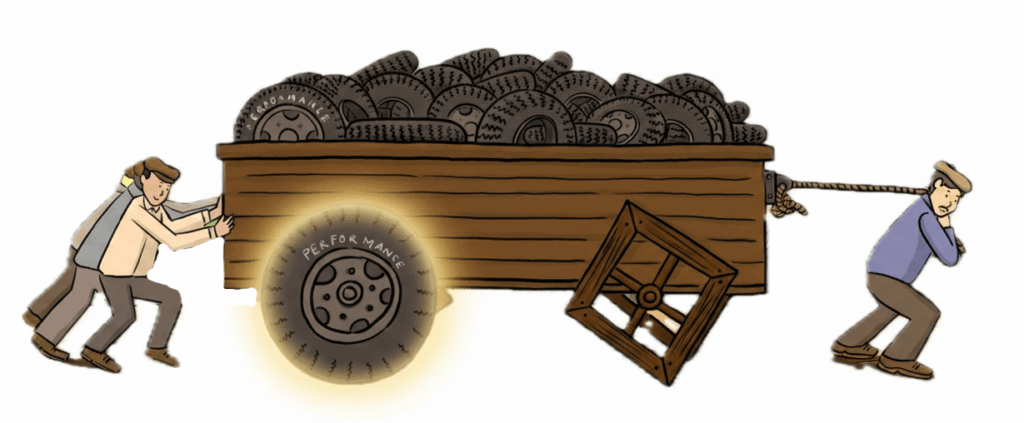
Celebrate the implementation of round wheels
Cultivating a Serendipity Mindset in Teams
Busch describes three simple organizational levers: serendipity spotting, de-risking ideas, and building trust. These align beautifully with Square Wheels facilitation processes of involving people in discussing current Square Wheels and defining round wheel possibilities.
-
Serendipity spotting mirrors the practice of exploring “What else might work better?” after identifying Square Wheels. It’s the deliberate hunt for curiosities and patterns that might connect existing efforts in new ways.
-
De-risking ideas connects to prototyping round wheels—testing ideas safely and iteratively rather than dismissing them as impractical.
-
Building trust sustains an environment where admitting “mistakes” feels safe. In a psychologically secure space, people can share half-formed insights without fear, allowing “lucky” combinations to emerge.
When employees are encouraged to discuss their “project funerals,” as Busch describes, they often find that one person’s failed experiment becomes another’s unexpected breakthrough. It’s precisely the kind of constructive friction the Square Wheels metaphor captures—the bumps that lead to discoveries, if we talk about them.
Serendipity might also describe one person’s sharing of a personal Best Practice with another individual, allowing the broader spread better ways of getting things done.
Overcoming Functional Fixedness
Functional fixedness, the belief that “our way” is the only way, creates organizational flats. Leaders who foster round wheel possibility thinking teach curiosity as a habit. They encourage teams to reframe questions, challenging assumptions, and drawing connections across silos.
One of Busch’s examples, about Kenya’s M-Pesa mobile payment system, shows the power of not being trapped by context. Instead of trying to make a “better ATM,” innovators reframed the problem and created a completely new model for financial inclusion. Similarly, facilitating improvement ideas can help teams see that replacing Square Wheels isn’t always about improving the old and that it’s sometimes about inventing something wholly different.

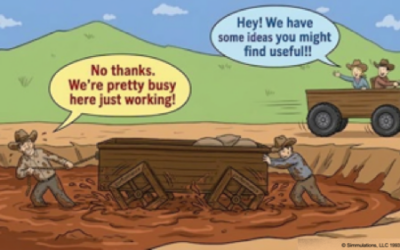
There are LOTS of ideas out there!
Building a Culture Where Serendipity Flourishes
Serendipity and the Square Wheels approach both rely on visibility, dialogue, and safety. Leaders play the key role in shaping that culture:
-
Invite teams to share surprises in regular meetings. Ask: “What did you notice this week that didn’t fit the pattern?”
-
Normalize learning from failure by modeling vulnerability—acknowledging what didn’t work and what might be learned from it. This is about continuous continuous improvement.
-
Encourage cross-functional collaboration to increase “collisions” of ideas—those unpredictable intersections that fuel innovation.
-
Reinforce a purposeful direction (the vehicle’s “North Star”) so people can connect unexpected events back to the mission, not wander aimlessly.
As Busch and Amy Edmondson both emphasize, psychological safety is the lubricant that turns intent into motion. Without it, people hide their insights; with it, they connect the dots visibly and creatively.
And note that innovation is now a smooth, seamless process:
(blog on supervisors and motivation here):

From Smart Luck to Smart Leadership
When organizational conversations shift from avoiding thumps and bumps to exploring them, leaders transform accidents into opportunities. The journey might start with Square Wheels everywhere, but serendipity turns the effort of pushing into the invitation to rock and roll.
Building serendipity into culture is, at its heart, about believing that better ideas already exist inside the wagon. The task of leadership is to make them visible and to create a workplace where people can notice, connect, and act on the unexpected.
—
For the FUN of It!
 Dr. Scott Simmerman is a designer of team building games and organization improvement tools.
Managing Partner of Performance Management Company since 1984, he is an experienced presenter and consultant who is trying to retire!! He now lives in Cuenca, Ecuador.
You can reach Scott at scott@squarewheels.com
Learn more about Scott at his LinkedIn site.
Square Wheels® are a registered trademark of Simmulations, LLC
and images have been copyrighted since 1993,
© Simmulations, LLC 1993 – 2026
What I’m About:
My Square Wheels blog and website exist to help leaders, trainers, and facilitators make work smoother, more engaging, and more human. I focus on practical tools for process improvement, organizational change, and workplace collaboration that spark insight and deliver measurable results.
And I am convinced, after 30+ years of using Square Wheels®, that it is the best facilitation toolset in the world. One can use it to involve and engage people in designing workplace improvements and building engagement and collaboration. It is a unique metaphorical approach to performance improvement and we can easily license your organization to use these images and approaches.
By blending proven facilitation methods, creative problem-solving, and engaging team activities, my mission is to support organizations in building energized, sustainable cultures of involvement and innovation.
Through accessible — and often free — resources and virtual facilitation tools, I aim to help teams everywhere collaborate more effectively, innovate continuously, and take ownership of their improvement journey.
#SquareWheels #InnovationAtWork #TeamEngagement #FacilitationTools #WorkplaceImprovement #EmployeeEngagement #CreativeProblemSolving #OrganizationalDevelopment #LeadershipTools #collaboration #leadership #motivation #communications #enablement #leadership #CreativeCommons #enablingperformance #teamwork #serendipity #enable #collaborate

0 Comments