

This post is about how Square Wheels® drives enablement, how the use of the images can facilitate changes in organizational behavior and performance.
Let me first note that I have NEVER liked the words “empowerment” and “engagement” in workplace improvement initiatives or even discussions about workplace culture because you cannot do either of them. I’ve written a dozen blogs around the reality that only DIS-un-engagement is possible. These frameworks ARE real — engagement is a thing — but you cannot do things to generate it — both are the choices others make that you might only influence. And, go ahead, DO something to empower me. See if that works.
Enablement is where Square Wheels really shine. They turn abstract talking about “empowerment” and “engagement” into concrete conversations about work processes, roadblocks, and better ways of getting the wagon rolling.
Enablement is about doing things differently:
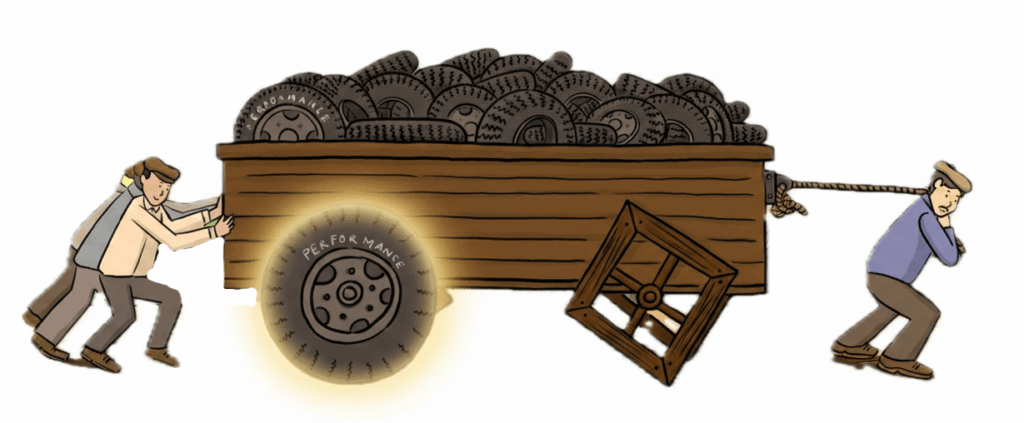
Celebrating the implementation of a round wheel is enabling the implementation of more round wheels and intrinsically motivating.
Why engagement and empowerment stalled
For 30+ years, “engagement” and “empowerment” have been framed as attitudes or feelings, not as the design of work. Research on employee engagement typically defines it as enthusiasm, commitment, and willingness to go the extra mile, and treats it as something you measure with surveys and try to influence through leadership behaviors, recognition, and communication. You CAN measure people’s attitudes but only a good performance feedback system with management support can improve their results.
“Empowerment” has often been treated as a declaration (“You are empowered!”) or a values statement, instead of actually changing decision rights, information flows, tools, and structure; as a result, many people have been called empowered while still pushing the same overloaded wagon with the same Square Wheels with nothing actually changing.
“Empowered Supervisors” is an oxymoron.
The net effect is that engagement and empowerment have frequently become posters and pulse surveys—important for information about attitudes, but weak predictors of day‑to‑day performance when the work itself is badly designed.
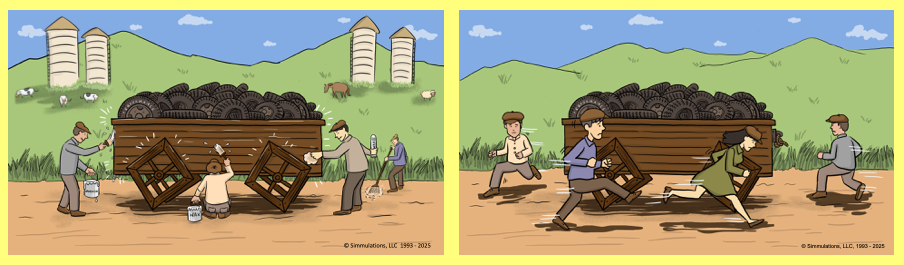
Having “Pride” is good and shows engagement while “Running Around” demonstrates empowerment but neither influences productivity.
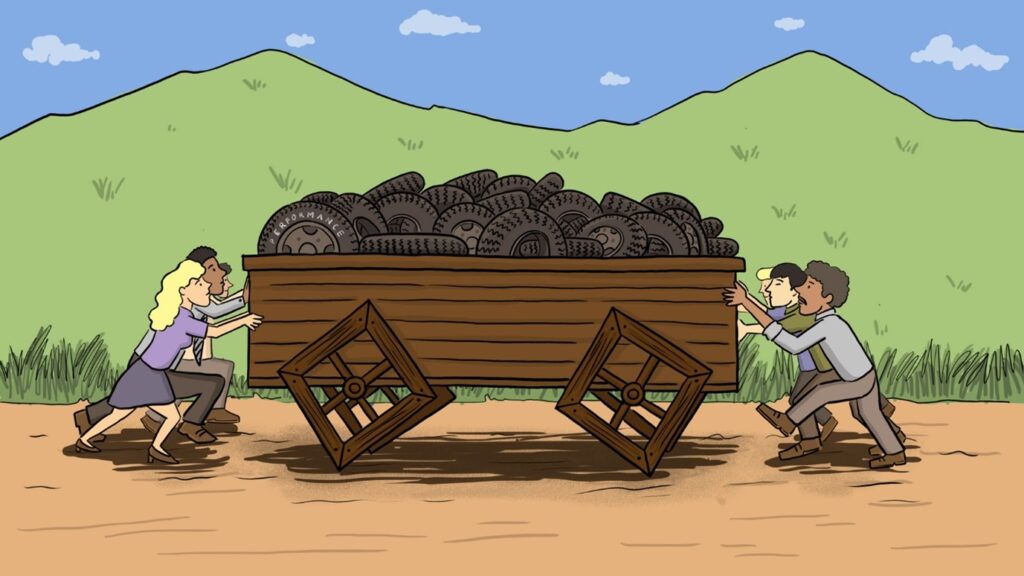
Competition is both engaging and empowering but does not influence performance in positive ways.
Enablement: shifting from feelings to friction
Enablement focuses on whether people can actually do great work: Do they have clear goals, usable tools, good processes, skills, information, and permission to act? Is the performance feedback they get helping them optimize their results? Definitions describe employee enablement as providing the resources, environment, and authority employees need to perform at their best.
Studies that distinguish engagement from enablement show that organizations high on both can see dramatically better productivity and retention than those high on only one; employees who are engaged but not enabled become frustrated strivers, while those enabled but not engaged become efficient but indifferent. (study and study)
This makes enablement the missing half of the performance equation: engagement is “I want to,” enablement is “I can,” and performance only improves when both are present.
How Square Wheels® drive enablement
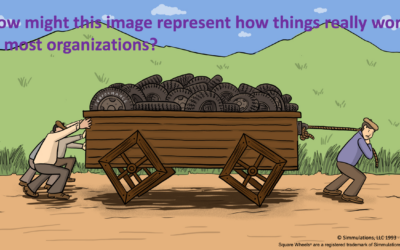
Square Wheels are highly effective visual metaphors for things that work, but do not work smoothly—processes, policies, practices, and habits that create drag.
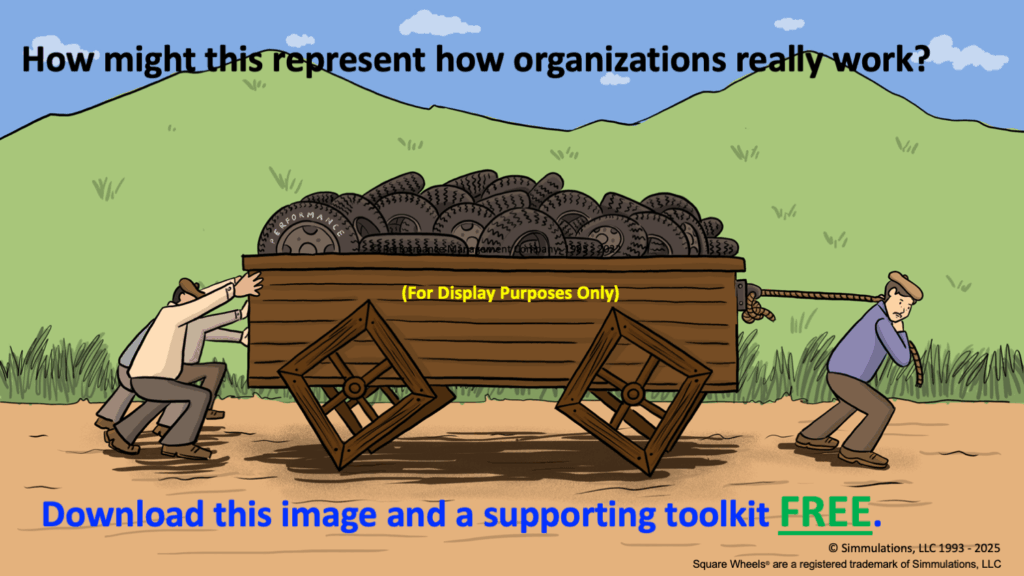
Click here to download the FREE Square Wheels One image under Creative Commons license
And everywhere, the Round Wheels are already in the wagon, representing the better ideas that people already have but are not yet using; the simple act of asking, “What are the Square Wheels we’re pushing—and what Round Wheels could we try?” forces a shift from attitudes to executable solutions.
In practical terms, Square Wheels sessions:
-
Surface specific work blockers safely
The cartoon detaches criticism from people and politics: calling something a “Square Wheel” is not an attack, it is a shared performance opportunity. That makes it safer to name bad processes, redundant approvals, missing tools, and conflicting priorities. -
Turn employees into co‑designers of better work
Facilitators ask groups to identify Square Wheels and then generate at least three Round Wheels (improvement ideas) for each one, which pushes people beyond quick fixes into real process and system redesign. Because the ideas come from the people doing the work, implementation is tied to local reality and ownership is high. Scott’s “Nobody ever washes a rental car” becomes a design principle for the session and allows people the active involvement they need to want to implement changes. -
Build an enablement mindset in supervisors
Supervisors learn to see their jobs as helping to remove Square Wheels and implement round ones, rather than pushing harder; the image reminds them that their teams’ ideas for round wheel improvements are already there, and their role is to ask, listen, and clear the path for experimentation.
Over time, the language becomes cultural shorthand (“That’s a Square Wheel; what are our Round Wheels?”), embedding continuous improvement into routine conversations about work design and workflow.
Why this is better than chasing “more engagement”
Traditional engagement efforts often end with, “How do we get people to try harder?” Square Wheels reframes the question as, “How do we make it easier and smarter to do great work?”—which is pure enablement.
Instead of telling people they are empowered, the process actually redistributes power: teams define the problems, propose Round Wheels, and often select implementation champions, while leaders commit to removing structural obstacles and aligning measures and feedback with the new way of working.
In that sense, Square Wheels makes engagement and empowerment by‑products rather than goals and objectives. When people see their ideas driving visible changes in how the wagon is built and pulled, engagement shows up as pride and effort, and empowerment shows up as real decision latitude—but the main storyline is better wheels, smoother movement, and more reliable performance.
—
For organizations with multiple stuck teams, book a short conversation to design a program using Square Wheels across your organization, We can easily build some really great tools and courses and support systems,
For the FUN of It!
 Dr. Scott Simmerman is a designer of team building games and organization improvement tools.
Managing Partner of Performance Management Company since 1984, he is an experienced presenter and consultant who is trying to retire!! He now lives in Cuenca, Ecuador.
You can reach Scott at scott@squarewheels.com
Learn more about Scott at his LinkedIn site.
Square Wheels® are a registered trademark of Simmulations, LLC
and images have been copyrighted since 1993,
© Simmulations, LLC 1993 – 2025
What I’m About:
My Square Wheels blog and website exist to help leaders, trainers, and facilitators make work smoother, more engaging, and more human. I focus on practical tools for process improvement, organizational change, and workplace collaboration that spark insight and deliver measurable results.
And I am convinced, after 30+ years of using Square Wheels, that it is the best facilitation toolset in the world. One can use it to involve and engage people in designing workplace improvements and building engagement and collaboration. It is a unique metaphorical approach to performance improvement.
By blending proven facilitation methods, creative problem-solving, and engaging team activities, my mission is to support organizations in building energized, sustainable cultures of involvement and innovation.
Through accessible — and often free — resources and virtual facilitation tools, I aim to help teams everywhere collaborate more effectively, innovate continuously, and take ownership of their improvement journey.
#SquareWheels #InnovationAtWork #TeamEngagement #FacilitationTools #WorkplaceImprovement #EmployeeEngagement #CreativeProblemSolving #OrganizationalDevelopment #LeadershipTools #collaboration #leadership #motivation #communcations #enablement #dis-un-engagement



Absolutely brilliant. The Square Wheels tools are a powerful way for organisations to see clearly what’s working and what isn’t, in pursuit of real business outcomes. The metaphor makes complex organisational dynamics tangible, helping teams uncover hidden bottlenecks and reframe their thinking in ways that stick.
What I love most is how the imagery naturally leads to reflection, dialogue, and ownership, shifting mindsets from problem-spotting to solution-shaping. These tools don’t just expose gaps; they invite people to craft better ways forward and elevate team performance collaboratively.
Huge kudos to Dr Scott for creating such a simple yet profound toolkit that drives deeper engagement, insight, and continuous improvement across teams and organisations.