

This “What Would Frederick Taylor Do” is the third in a series of posts I am doing to share about key organizational development frameworks. Sure, they are Old School ideas, but very solid and fully developed frameworks that are generally ignored. And we NEED to do things differently.
I’m frustrated. And I have felt that way for a LONG time. In my early years, I had hope we could improve organizations through training and consulting but Gallup, Arbinger, Bersin and much other research clearly shows NOTHING has really improved.
And I am waiting for AI to start culling the bad managers from the workplace after having read a LOT of different books about organizations and leadership and management over the past 50 years. We have the metrics, we just need some effective actions. This WILL happen because bad managers are so demonstrably costly to organizations.
Frederick Winslow Taylor, known as the “Father of Scientific Management,” developed principles in the early 20th century that revolutionized industrial practices by emphasizing systematic efficiency and productivity.
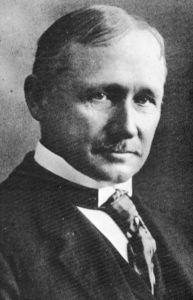
Although his approach has sometimes faced criticism for potentially dehumanizing the workforce, many of his principles remain relevant and can be adapted to improve today’s organizational performance.
Cross–functional collaboration and continued learning are part of his thinking and obviously important to impact outcomes. The approach is logical and straightforward and has many implications for the implementation of AI tools today.
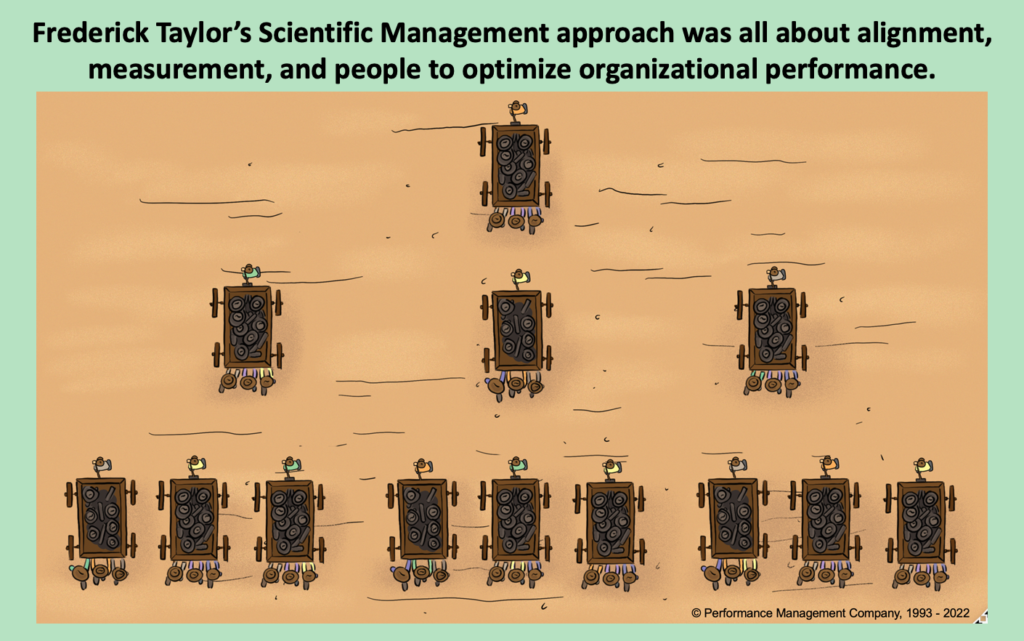
Frederick Taylor thought that people and measurements could influence organizational results when carefully implemented
Key Principles of Taylor’s Scientific Management, published in 1911
-
Science, Not Rule of Thumb:
- Application: Taylor would advocate for the use of data-driven decision-making and systematic analysis to optimize work processes. This could involve implementing advanced analytics and AI to identify inefficiencies and streamline operations.
- Example: Companies can use time and motion studies to analyze workflows and reduce unnecessary steps, thereby increasing efficiency.
-
Harmony, Not Discord:
- Application: Taylor emphasized the importance of harmonious relationships between management and workers. In today’s context, this could translate to fostering a collaborative culture and ensuring open communication channels.
- Example: Implementing regular feedback mechanisms and team-building activities to enhance cooperation and reduce conflicts.
-
Mental Revolution:
- Application: This principle involves a shift in attitude from both management and workers towards mutual respect and cooperation. Modern organizations can achieve this through leadership training and employee engagement programs.
- Example: Encouraging a culture of continuous improvement and innovation where employees feel valued and motivated to contribute their best.
-
Cooperation, Not Individualism:
- Application: Taylor stresses the importance of teamwork and collective effort over individual competition. This can be achieved by creating cross-functional teams and promoting a sense of shared purpose.
- Example: Establishing collaborative platforms and tools that facilitate teamwork and information sharing across departments.
-
Development of Every Person to Their Greatest Efficiency:
- Application: Taylor believed in the scientific selection and training of workers. Modern organizations can invest in continuous learning and development programs to enhance employee skills and capabilities.
- Example: Offering personalized training programs and career development opportunities to ensure employees are well-equipped to handle their roles efficiently.
Addressing Modern Organizational Challenges
1. Balancing Inflation and Talent Needs
- Taylor’s Approach: Implement cost-saving measures through efficiency improvements and process optimization. Use scientific management principles to streamline operations and reduce waste.
- Example: Conducting detailed workflow analyses to identify and eliminate inefficiencies, thereby reducing operational costs without compromising on employee compensation.
2. Training an Evolving Workforce
- Taylor’s Approach: Focus on systematic training and development programs to ensure employees are well-prepared for their roles. Use scientific methods to identify training needs and measure effectiveness.
- Example: Implementing robust onboarding programs and continuous professional development initiatives to keep the workforce skilled and adaptable.
3. Realizing the Full Potential of AI
- Taylor’s Approach: Integrate AI and machine learning tools to enhance productivity and decision-making. Use data-driven insights to optimize workflows and improve efficiency.
- Example: Utilizing AI for predictive maintenance, inventory management, and customer service to streamline operations and enhance performance.
4. Persistent Inclusion, Equity, and Diversity (IE&D) and Mental Health Challenges
- Taylor’s Approach: Promote a culture of inclusivity and support mental well-being through systematic policies and practices. Ensure that diversity and inclusion are integral parts of the organizational strategy.
- Example: Implementing comprehensive IE&D training programs and providing mental health resources and support systems for employees.
5. Struggles with Engaging Workers
- Taylor’s Approach: Foster employee engagement through clear communication, recognition, and opportunities for growth. Use scientific methods to measure engagement levels and identify areas for improvement.
- Example: Conducting regular employee surveys and feedback sessions to gauge engagement and implement changes based on the insights gathered.
My guess is that Frederick Taylor would “not suffer fools” and would focus on the elimination of the bad managers who are causing so much real harm to today’s workers. His workplace framework would be straightforward and fair and that people would play a primary role in his focus on results.
Perplexity wrote this:
Overall, Frederick Taylor’s principles of scientific management, when thoughtfully adapted to the modern business landscape, offer a powerful framework for addressing contemporary organizational challenges.
While efficiency and productivity remain crucial, today’s successful organizations should recognize the need to balance these goals with employee well-being, engagement, and development.
By embracing data-driven decision-making, fostering a culture of continuous improvement, and prioritizing collaboration, companies can create a dynamic and resilient workplace environment.
The key to leveraging these principles today lies in their flexible application, combining the rigor of scientific analysis with a human-centric and a data-centric approach. Organizations that successfully integrate these elements are better equipped to navigate the complexities of today’s business world, from technological disruptions to evolving workforce expectations.
By doing so, they can not only enhance their operational efficiency but also cultivate a motivated, skilled, and adaptable workforce capable of driving innovation and sustainable growth.
Ultimately, the modern interpretation of Taylor’s work emphasizes that organizational success is not just about optimizing processes, but about creating an ecosystem where both efficiency and human potential can thrive in harmony. This holistic approach positions companies to meet current challenges head-on while remaining agile and prepared for future transformations in the business landscape.
Here is a solid article on “old school” leadership about some practical insights into how to align culture with strategy and energize employees today. https://www.strategy-business.com/blog/Leaders-should-revisit-the-works-of-three-corporate-culture-pioneers
And here are some of my related What Would... blog posts, with more to come:
#1 – What would Tom Peters Do – https://performancemanagementcompany.com/2024/07/02/what-would-tom-peters-do/
#2 – What would Peter Drucker Do – https://performancemanagementcompany.com/2024/07/08/what-would-peter-drucker-do/
#4 – What would Bob Mager Do – https://performancemanagementcompany.com/2024/07/17/what-would-bob-mager-do-to-improve-organizational-performance/
#5 – What would W. Edwards Deming Do? – https://performancemanagementcompany.com/2024/07/23/what-would-deming-do/
The Truth is Out There! (so go read about it!)
—
For the FUN of It!
 Dr. Scott Simmerman is a designer of team building games and organization improvement tools.
Managing Partner of Performance Management Company since 1984, he is an experienced presenter and consultant who is trying to retire!! He now lives in Cuenca, Ecuador.
You can reach Scott at scott@squarewheels.com
Learn more about Scott at his LinkedIn site.
Here is a link to a press release about The Search for The Lost Dutchman’s Gold Mine teambuilding exercise and its 30 years of positively impacting people and performance.
Square Wheels® is a registered trademark of Performance Management Company
The Search for The Lost Dutchman’s Gold Mine is a trademark of Performance Management Company
Square Wheels images © Performance Management Company, 1993 – 2023. All rights reserved.



0 Comments