
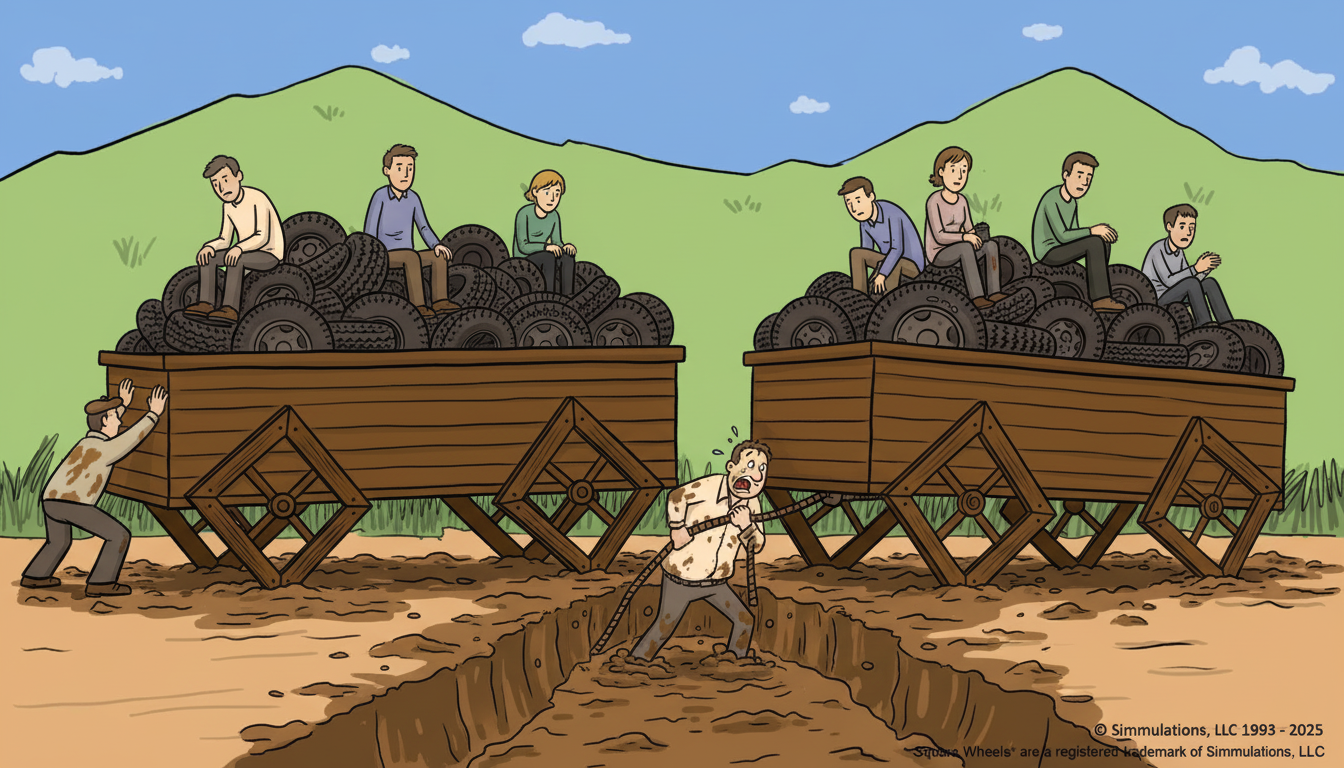
What can we do to support the many supervisors who struggle facilitating engagement and innovation, much less their focus on simple performance metrics?
Supervisors are the “lynchpin” to fixing employee engagement and solving so many other workplace performance issues. But the reality appears that we do not give them the tools they need to succeed nor develop their people. It seems illogical. They are the only people who actually manage the work required for the organization to be successful.
Supervisors and their managers are struggling badly with team engagement, but the root cause runs deeper than facilitation skills alone. Many in management are disengaged, uninvolved and simply burned out.
Only 30% of managers say they are engaged at work, and only 40% of managers say they are thriving in life overall (Gallup, 2025 and Fortune, 2024) .
This creates a cascading problem. Supervisor disengagement is a major factor playing into why employee disengagement is even more widespread among the rank and file, with only 18% of non-managers reporting feeling engaged at work.
Falling worker engagement rates cost the world economy $438 billion in lost productivity in 2024, with declining supervisory engagement as a primary cause (Workday).
Engagement is not some feel-good initiative;
it’s a business imperative.
When employees are actively involved in their work, organizations see tangible improvements in productivity, quality, and customer satisfaction. Conversely, low engagement drives up turnover, inflates operational costs, and breeds frustration that can manifest as careless errors—or even deliberate disruption. In short, engagement directly determines whether a company merely survives or thrives.
Where supervisors struggle most
When leaders don’t encourage teamwork and collaboration, people tend to focus only on their own tasks and miss out on new ideas that could improve performance results and impact others. Fewer new ideas emerge because people who don’t care about their work are those less likely to suggest improvements; when they stop caring, they stop trying to make things better (source) .
And remember when people were hired, they actually cared!
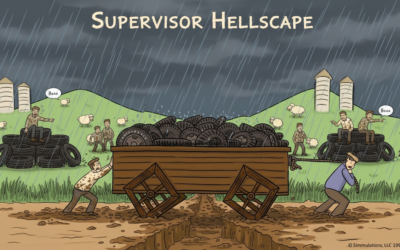
So here is a take on reality. I call this image, “The Worklife of the Supervisor”
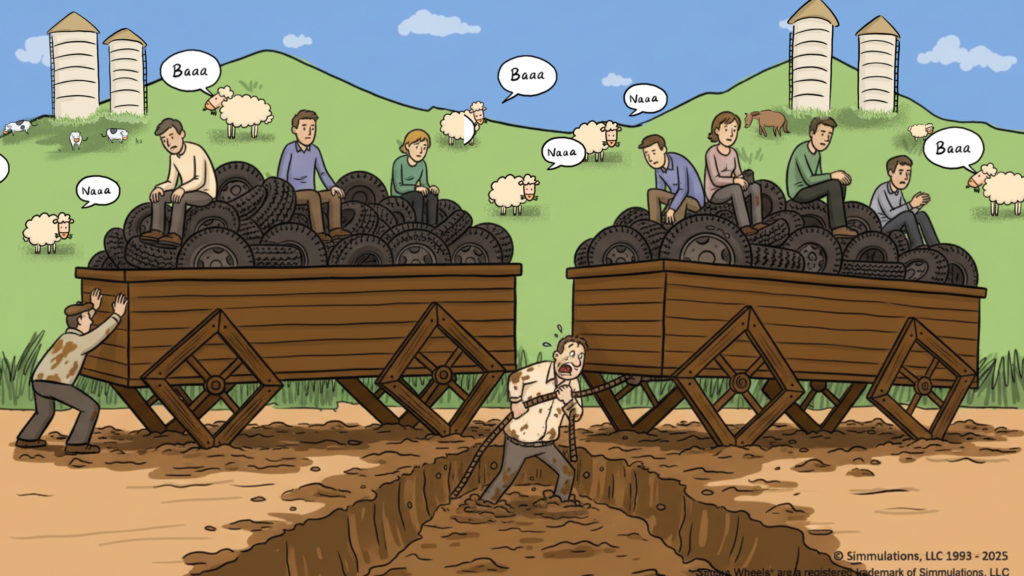
Supervisors need to deal with the mud along with spectator sheep and silos and so many other worklife realities.
The specific facilitation gaps are well-documented and bad management is typically a root cause of low employee engagement. Organizational changes designed from a desk somewhere to improve engagement generally don’t work because they haven’t reached those managing the workers directly. The active involvement issue lies at the work group level, one managed directly by supervisors.
Organizations somehow seem to believe that a weekly message from some leader person or from HR will serve to motivate the workers. How silly and unreal is that belief?
When people have at least one meaningful conversation per week with their managers, worker engagement increases. Employees report getting more recognition for their work and more constructive conversations around their goals and priorities. This clearly suggests many supervisors aren’t having these conversations currently, but that they could.
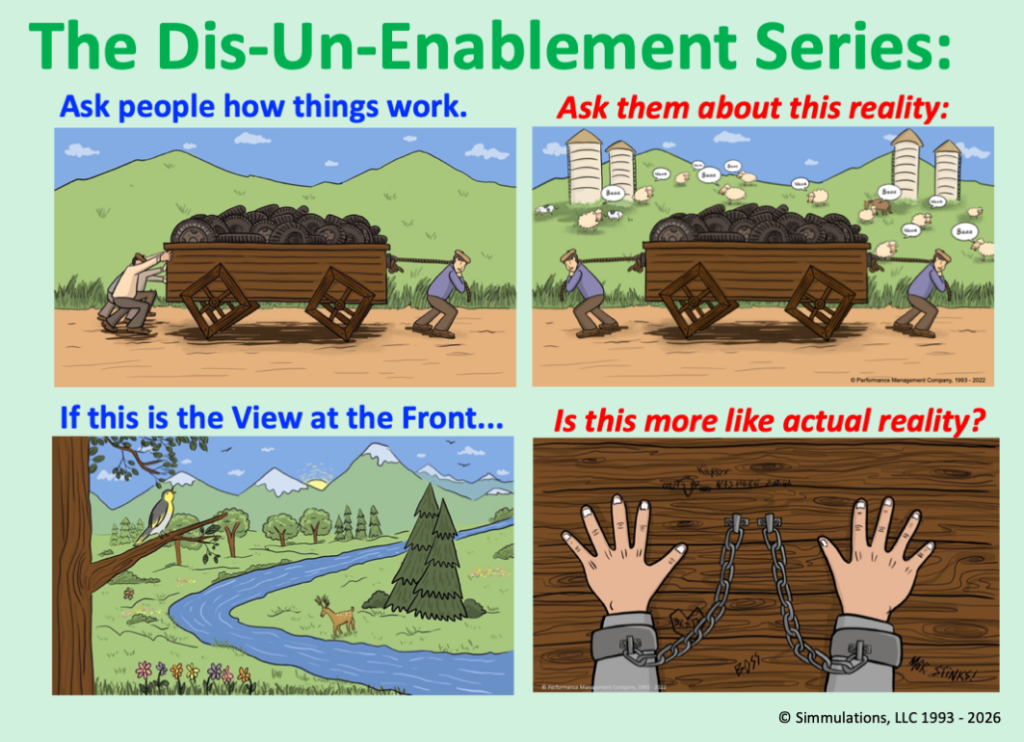
Enable them to care about the performance culture
The burnout barrier
Supervisors are dealing with more responsibilities than ever these days, including making sure employees comply with hybrid work, handling the aftermath of layoffs, and balancing demands from both workers and company leadership and so many other things . The job of managing is really difficult right now, with managers feeling negative emotions and even being more likely to be looking for a new job than the people they manage (Gallup, 2025).
Given how much is on supervisors’ plates and how it takes away from their ability to perform the “people” parts of their titles, competing priorities make it difficult to focus on managing their own responsibilities, much less finding time and bandwidth to support their teams.
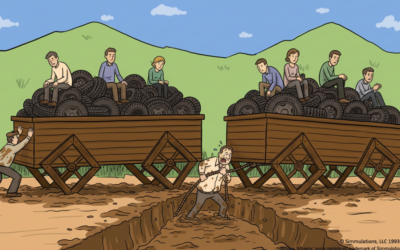
“Today’s front-line supervisors are stuck between wagons and up to their axles in mud, pulling to to hit impossible targets while dragging people using a Square Wheels wagon that they didn’t design which their managers don’t know how to fix.”

When things break, is that really an opportunity to improve or just fix what’s broken?
I separated out the statistics on Supervisors and managers as the fulcrum of engagement, wellbeing, and performance based on the extensive 2025 Gallup data. Take from this what you will but Gallup alone certainly details enough impacts to warrant more supervisory development. Note that there are many other sources with similar details. You can download the full report here.
Manager engagement levels
-
Global manager engagement fell from 30 percent to 27 percent in 2024, while individual contributor engagement stayed flat at 18 percent, making managers the primary source of the global decline.
-
Two manager segments were hit hardest: engagement for managers under 35 dropped by five percentage points, and engagement for female managers dropped by seven points.
Direct impact on team engagement and productivity
-
Seventy percent of the engagement level of a work team is attributable to its manager, making the supervisor the single largest controllable factor in team motivation and effort.
-
When managers are disengaged, their teams are significantly more likely to be disengaged as well, a pattern strong enough to show up in country-level data linking low manager engagement with low individual contributor engagement.
Manager wellbeing and burnout
-
Manager wellbeing is deteriorating faster than that of individual contributors: older managers saw a five-point drop in “thriving” and female managers a seven-point drop in the past year, even as non-managers’ life evaluations slightly improved.
-
Globally, only 33 percent of workers are thriving in life, and manager burnout is explicitly linked to declining performance, higher absenteeism, and higher turnover in their teams.
Training, coaching, and performance lift
-
Fewer than half of managers worldwide (44 percent) report receiving management training and support for their role, despite their outsized influence on engagement and outcomes.
-
Where managers completed a structured training program on management best practices, their own engagement increased by up to 22 percent, and engagement in their teams rose by up to 18 percent.
-
In the same studies, manager performance metrics improved by 20 to 28 percent within 9–18 months of training, demonstrating a measurable performance payoff from manager development.
Development, wellbeing, and retention
-
Basic manager training reduces the share of “actively disengaged” managers by about half compared with untrained managers, cutting the population most likely to work against organizational goals.
-
Manager “thriving” rises from 28 percent to 34 percent when they receive training and jumps to 50 percent when they both receive training and have someone at work who actively encourages their development.
-
Because engaged employees are about 50 percent likely to be thriving in life overall compared to roughly one-third of non-engaged employees, improving manager capability indirectly boosts overall wellbeing and resilience across the workforce.
Other research clearly shows that supervisory skill development represents a clear opportunity for massive impacts. At organizations following “best practices” for employee engagement, more than 75% of managers are actually involved and engaged with their work, as well as 70% of non-managers. And with improvements in engagement, so many other things can flow fast forward around workplace innovation and productivity.
The above clearly demonstrates the problem is solvable if leadership is committed to allocating the resources and support. To fix widespread engagement issues, organizations should develop a more simplified process for developing and selecting leaders and create a leadership development curriculum.
Conclusion
Strong validation exists for the core problem: supervisors struggle to facilitate employee engagement and generate workplace improvement ideas. The evidence is particularly strong around three gaps: managers lack bandwidth for meaningful team conversations, they’re not systematically encouraging collaboration and idea-sharing, and their own disengagement undermines their credibility. The 45-point gap between manager engagement at high-performing organizations (75%) versus current baseline (30%) suggests significant untapped potential for solutions that help supervisors overcome burnout while improving their facilitation capabilities.
There are many formal approaches and training programs to build supervisory skills, but these generally involve massive costs and the active involvement of Human Resources and training departments.
What I want to build are simple, adaptable toolkits so that managers can directly impact the active involvement and engagement of their people in workplace improvement initiatives using my Square Wheels images and simple brainstorming and idea management frameworks using templates like Stormz.
The goal is to make some powerful tools available for directly involving and engaging people for workplace improvement, with this having many positive spin-offs to other leadership improvement practices.
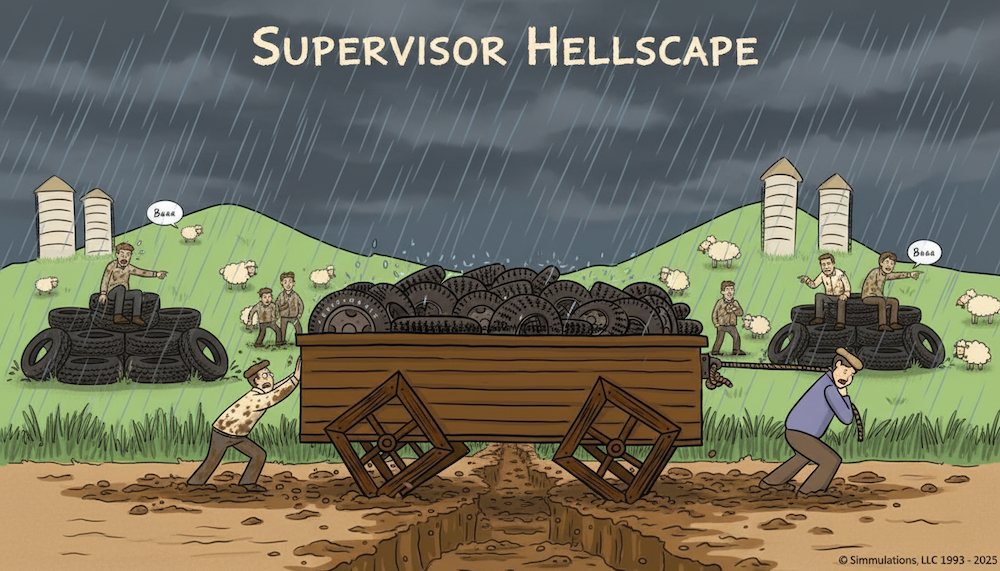
You can find an overview about the statistics on the Supervisor Hellscape by clicking on the image below
—
For organizations with multiple stuck teams, book a short conversation to design a program using Square Wheels across your organization, We can easily build some really great tools and courses and support systems,
For the FUN of It!
 Dr. Scott Simmerman is a designer of team building games and organization improvement tools.
Managing Partner of Performance Management Company since 1984, he is an experienced presenter and consultant who is trying to retire!! He now lives in Cuenca, Ecuador.
You can reach Scott at scott@squarewheels.com
Learn more about Scott at his LinkedIn site.
Square Wheels® are a registered trademark of Simmulations, LLC
and images have been copyrighted since 1993,
© Simmulations, LLC 1993 – 2026
Note that I relied on Perplexity to help me generate a lot of the statistics and some general themes, but that this document was highly edited by me and took about two weeks to publish!
Download the MAIN image, Square Wheels® One FREE with a toolkit by going to https://performancemanagementcompany.com/square-wheelsone/
What I am about:
My Square Wheels blogs and website exist to equip leaders, trainers, and facilitators with practical process improvement tools along with effective organizational change tools. My purpose is to facilitate engagement and active involvement to help make work smoother and more human.
By blending change management facilitation with proven workshop facilitation techniques, team collaboration activities, and creative problem solving activities, my mission is to support organizations in designing employee engagement strategies that are both energizing and sustainable. Through accessible, sometimes free team building resources and virtual facilitation tools, my focus is on helping teams everywhere discover better ways to collaborate together, innovate continuously, and own their path to improvement.
#SquareWheels #InnovationAtWork #TeamEngagement #FacilitationTools #WorkplaceImprovement #EmployeeEngagement #CreativeProblemSolving #OrganizationalDevelopment #LeadershipTools #collaboration #leadership #supervisorhellscape #workplacemotivation #change #innovation #leadership #supervisoryleadership


0 Comments