
An interesting discussion with an expert in the concept of Flow this morning got into a discussion about performance feedback and flow. Feedback is CRITICAL!
I started out in business consulting in 1978 doing training around “behavioral engineering” and the company I worked for was BIG on using extrinsic rewards to support performance. But in my three years of working with them, I came to the realization that it was the Performance Feedback Systems I was building that really impacted engagement and optimal results. The extrinsic rewards just confused things.
Where small rewards might influence attitudes (I will not get into that research here), they confounded things when bigger rewards were available. And there are always comparisons between people and this creates a sense of competition which can work to sub-optimize overall results. I have written extensively about that in this blog and in my posts about teambuilding and generating optimal results.
So, let me start with dis-un-engagement — Below is my Square Wheels image about how we can improve flow by discussing ideas about the working environment and looking specifically for ways to improve results: What things can we remove or change that would make a difference?
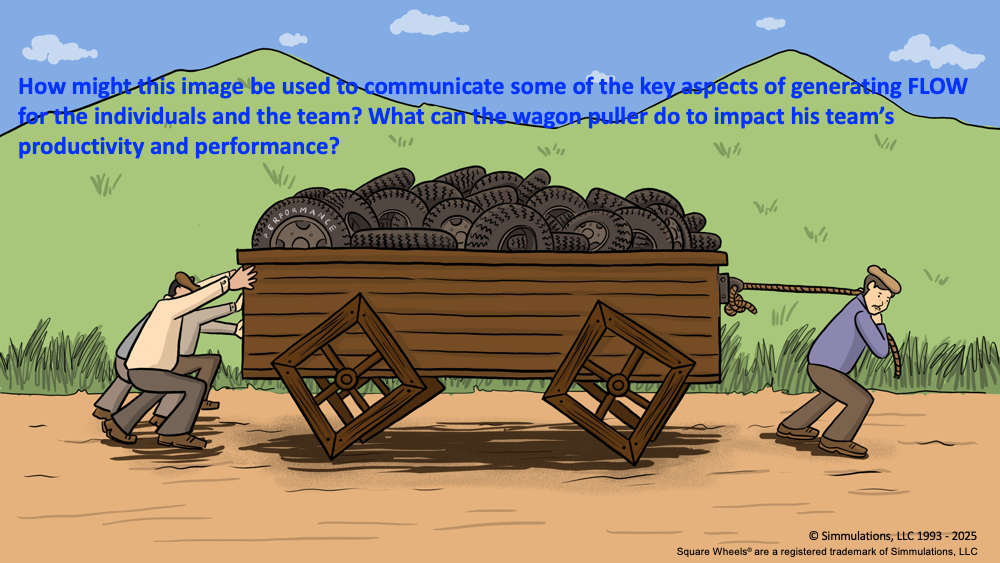
There are some obvious things about the above image but there are also some subtle ones. Let’s focus on the motivation of the wagon pushers, since they are key to organizational performance. How motivating or demotivating is their view? And how does that compare to the probable motivation and working environment of the wagon puller (the supervisor or manager)?

(Yeah, I used handcuffs to be dramatic!)
I wrote specifically about Performance Feedback in a blog called, “Feedback – Breakfast of Champions.” That blog’s core argument—that timely, specific, positively framed performance feedback fuels intrinsic motivation—lines up directly with the conditions required for Flow: clear goals, immediate feedback, and a good fit between challenge and skill. And I included a checklist for evaluation that I need to modernize.
And producing this blog pushed me to update that blog above, so here is the NEW version of the self-analysis checklist on performance feedback.
Let’s play with more Flow ideas below…
Flow basics and feedback
Classic Flow research shows that people enter Flow when they know exactly what they are trying to accomplish and can immediately see how well they are doing. The checklist in the blog is essentially a design for that kind of environment: it pushes for performance information that is accurate, timely, concrete, behavior-linked, and available to the people doing the work, not just to management.
Clear goals and meaningful metrics
Flow requires goals that feel both clear and meaningful; vague expectations or politically driven metrics push people out of Flow into anxiety or disengagement. The blog’s emphasis on measures that reflect “quantifiable value to the organization rather than more general areas of preference” is exactly this: it argues that feedback should be tied to bottom-line value, quality, and real results, not trivialities like gum chewing or minor lateness. Workgroups need improved performance and productivity.
Immediate, worker-facing feedback
In Flow, feedback loops are short and usually direct: people see the scoreboard as they play. The post’s point that “performance information routinely goes to the people who do the work, rather than mostly to management” and converts feedback from an episodic, top‑down judgment into a continuous, self-correcting information stream—the essence of Flow‑supportive design.
Positive framing and psychological safety
Flow has an emotional component: people need enough psychological safety to stay focused on the task, not on self‑protection or blame avoidance. The blog’s call to express data “in a positive way” and to highlight results and accomplishments rather than failures reduces defensiveness, making it more likely that people will engage with the information, experiment, and self‑adjust instead of hiding errors or tuning out “bad news” reports.
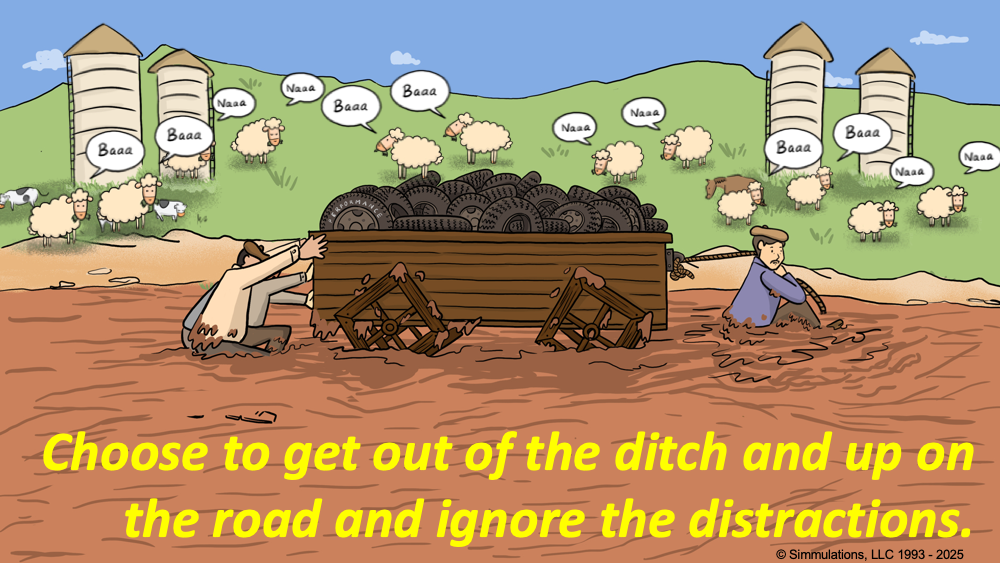
Not much flow unless we make different choices
Skill–challenge balance and self-directed improvement
Flow can appear when people are stretched but not overwhelmed, with feedback helping them calibrate effort and learning. The article explicitly links good feedback to identifying when people need coaching or training, and when they may simply be mismatched to the role, which is exactly the managerial work of balancing challenge and capability so that more people can find that high-performance “groove” at work.
Team Flow and shared practices
Finally, Flow is not only individual; teams can experience collective Flow when they share goals, tools, and performance information. The blog’s suggestion to make tools and best practices visible, use simple checklists, and summarize data upward so achievements are recognized all contribute to a shared sense of progress and competence, key ingredients for sustained team Flow and higher engagement.
I wanted this blog to be an overview of Flow but also a pointer to the reality that we really need solid performance feedback to perform at high levels. You can read that other blog and access the checklist by clicking on the image below:

Performance Feedback – Breakfast of Champions
Lastly, I truly believe that we can impact organizations by helping supervisors generate more Team Flow, that with their coaching and support, and with good feedback to help drive intrinsic motivation, we can realistically do things to generate higher levels of performance.
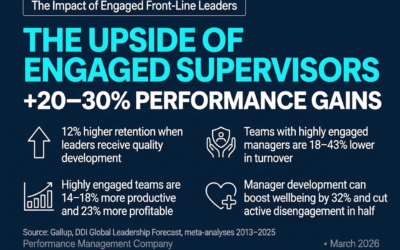
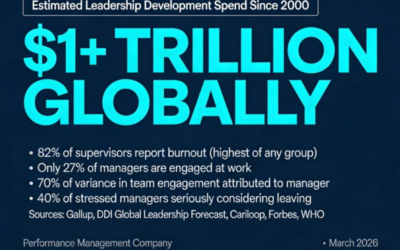
Yet Gallup suggests that 79% of workers are disengaged and that very few supervisors are truly in the game. Can we provide supervisors with some simple tools like Square Wheels to help them get out of the ditch and up on the road?
You can get a totally FREE Square Wheels One image and a simple toolkit here. Why not give it a try? Share the link with a supervisor you know and seem if things resonate. Have them use it in a meeting to generate a list of distractions which can be managed. The Truth is Out There and people ARE willing to improve their performance if it feels right.

Click to get image access, FREE
—
For organizations with multiple stuck teams, book a short conversation to design a program using Square Wheels across your organization, We can easily build some really great tools and courses and support systems,
For the FUN of It!
 Dr. Scott Simmerman is a designer of team building games and organization improvement tools.
Managing Partner of Performance Management Company since 1984, he is an experienced presenter and consultant who is trying to retire!! He now lives in Cuenca, Ecuador.
You can reach Scott at scott@squarewheels.com
Learn more about Scott at his LinkedIn site.
Square Wheels® are a registered trademark of Simmulations, LLC
and images have been copyrighted since 1993,
© Simmulations, LLC 1993 – 2025
What I am about:
My Square Wheels blogs and website exist to equip leaders, trainers, and facilitators with practical process improvement tools along with effective organizational change tools. My purpose is to facilitate engagement and active involvement to help make work smoother and more human.
By blending change management facilitation with proven workshop facilitation techniques, team collaboration activities, and creative problem solving activities, my mission is to support organizations in designing employee engagement strategies that are both energizing and sustainable. Through accessible, sometimes free team building resources and virtual facilitation tools, my focus is on helping teams everywhere discover better ways to collaborate together, innovate continuously, and own their path to improvement.
#SquareWheels #InnovationAtWork #TeamEngagement #FacilitationTools #WorkplaceImprovement #EmployeeEngagement #CreativeProblemSolving #OrganizationalDevelopment #LeadershipTools #collaboration #leadership

0 Comments