
A casual tour about how the brain really works, and why simple images like Square Wheels flip on lightbulbs for learning and behavior change. This about neuroscience and enablement.
Research keeps showing that the brain grabs, processes, and remembers visuals faster and more deeply than words alone, which is exactly why the right picture at the right moment can change how people think and act.
The idea for this article comes from me reading this post below and because of my long term interest in behavioral neurophysiology (with my doctorate in the field back in 1977).
https://neurosciencenews.com/positive-imagining-social-neuroscience-30036/
The article gives one a neuroscience anchor of “why it works” for using Square Wheels® images and metaphors as a positive, future‑focused, involvement and enablement tool rather than just a critique of current understandings.
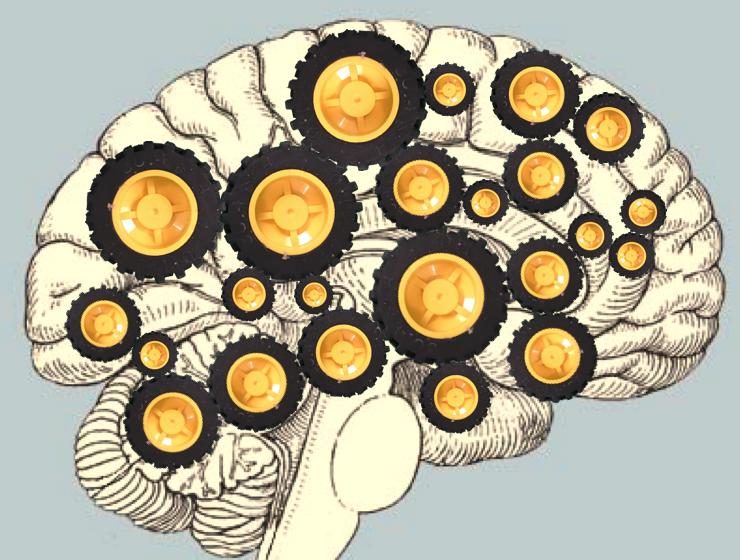
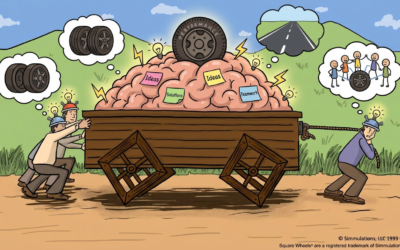
This is your brain on Round Wheels! Thinking of possibilities for improvement.
Core link: Imagination, Reward, and Square Wheels®
The research shows that vividly imagining a positive interaction with someone activates the brain’s reward‑learning circuitry (ventral striatum) and changes how the person is represented and evaluated in memory.
In workplace term-innovation terms, guided positive imagining about collaboration, problem‑solving, or change involving teams of people will literally shift how people feel about colleagues, leaders, and initiatives in just seconds. This is driven by using ink-blot-like images that have only the reality that people project on to the image.
Square Wheels discussions invite people to consider possibilities for change and to imagine a different, better wagon rolling reality; this study supports structuring that imagination so the “future wagon” feels unexpectedly pleasant and rewarding.
Square Wheels discussions generally start with Square Wheels One:
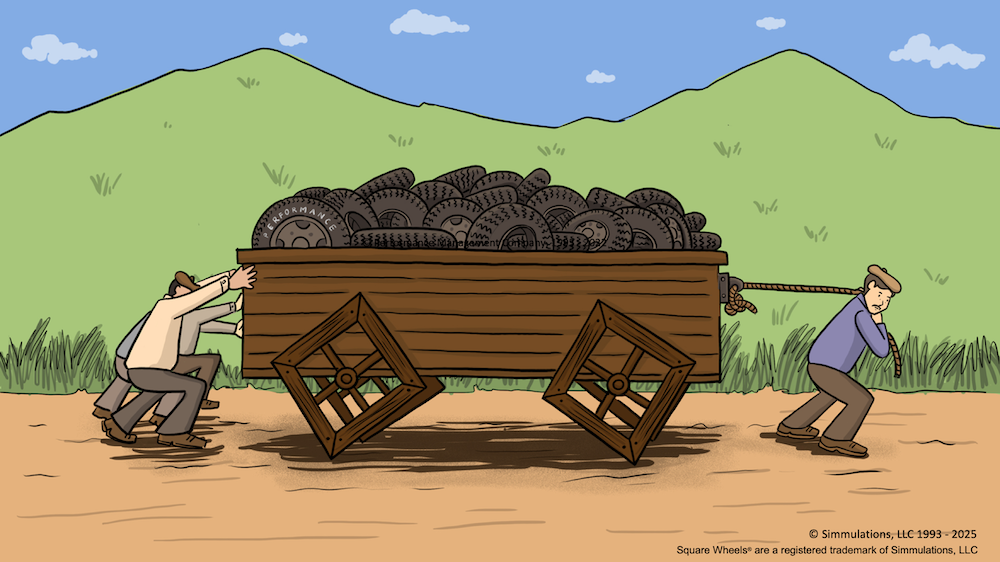
From “bad wheels” to “better journey”
In the study referenced above, people grew to like “neutral” acquaintances more after imagining positive encounters with them, with the brain responding as if to a real, rewarding experience. This is the anchor point and why imagining a more positive future is engaging and effective.
When a group uses Square Wheels One, the reality is that many peers, departments, or managers move from psychologically “neutral” or mixed to building teamwork. Having teams imagine specific positive interactions around fixing the wagon (e.g., how it will feel when support improves, or communication is smoother) will increase liking and trust toward those other players. Framing the exercise to surface “pleasant surprises” (“What would be unexpectedly good if we actually swapped in round wheels?”) taps the same prediction‑error mechanism that deepens preferences and commitment.
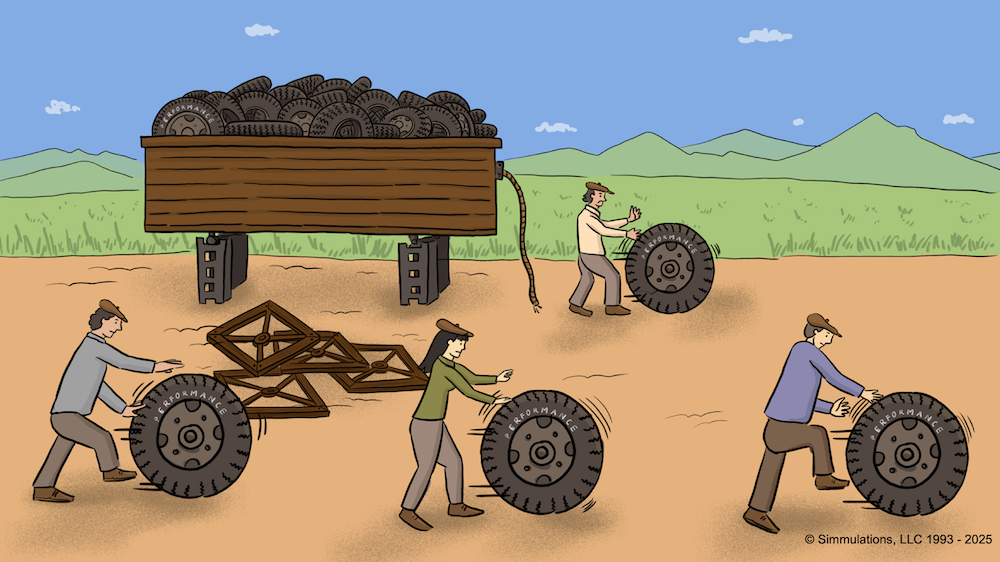
Playing with Round Wheel Ideas creates lots of cognitive dissonance about the Square Wheels
Designing stronger Square Wheels experiences
The brain data suggest that imagination changes preferences most when the positive experience beats expectations and is vivid, not vague. That implies three design tweaks for facilitations:
- Have people privately rate current situations / relationships as “neutral / mixed” first, then design positive Square Wheels scenarios around those beliefs.
- Guide them into concrete, sensory details: what they see, hear, and feel when the wagon rolls more smoothly. What will be perceived as improvements.
- Finally, ask them to notice “what’s better than you expected?” so you deliberately generate those endogenous positive prediction errors the study highlights.
Engagement, safety, and motivation to act
Because imagined positive encounters can reduce avoidance and shape later choices, structured imagery around Square Wheels images can increase psychological safety and willingness to experiment with change.
For example, imagining a constructive conversation with a difficult boss about the wagon’s “square wheels” can lower anxiety and make a real conversation more likely. Similarly, envisioning the team succeeding with a prototype round‑wheel solution recruits the same reinforcement circuits that help form new habits, making follow‑through on improvement ideas easier to sustain.
Practical applications for Square Wheels
The authors point to psychotherapy, conflict reduction, and performance enhancement as natural use cases for guided imagination, which maps cleanly to group facilitation and team‑building spaces. You can explicitly describe Square Wheels as a “guided imagination framework” that helps teams learn from imagined experiences in the same way the brain learns from actual ones.
And you can back your facilitation language with this research: “When we picture a more effective wagon and better interactions around it, your brain encodes those possibilities as rewarding, making you more likely to move toward them in real life.”
and
Square Wheels becomes even more powerful when positioned as a projective, imagery‑based tool for change and teamwork rather than just a clever cartoon about problems. The neuroscience behind positive imagining shows that when people vividly picture better interactions and outcomes, their brains treat those imagined experiences much like real ones, updating preferences, motivation, and future choices.
Square Wheels as a projective ideation device
When people project their own organization onto the Square Wheels wagon image, they are externalizing current frustrations and constraints in a psychologically safe way. The next step is to deliberately invite them to imagine specific, positive future scenarios: how the team works together, what changes, and how the “ride” feels when round wheels are in place. That projection plus vivid positive imagining engages the same reward‑learning regions identified in the research, helping participants emotionally “buy into” the improvements they are designing.
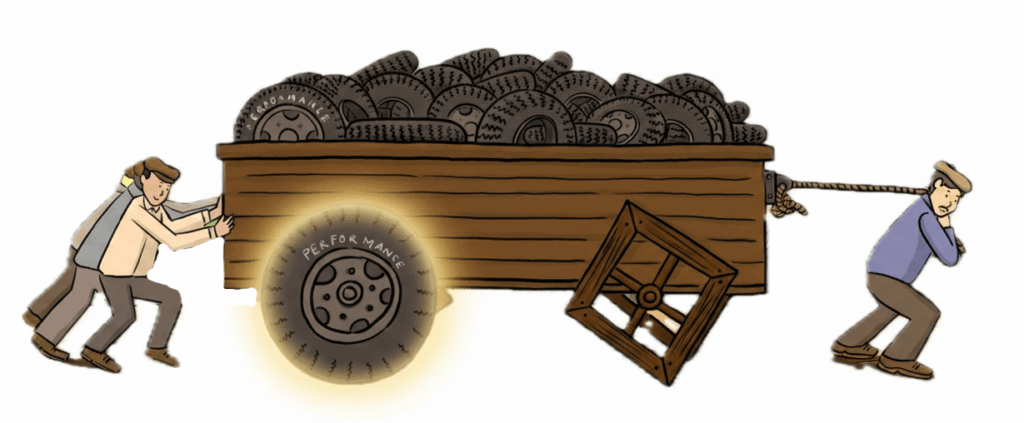
Celebrating the implementation of round wheels is rewarding
Generating change ideas through imagery
Using Square Wheels as a projective tool means going beyond, “What are the problems?” to questions such as, “Imagine this picture six months from now—what’s different and unexpectedly better?”
As participants describe smoother processes, better communication, or more helpful leadership, they are not just brainstorming; they are mentally rehearsing desirable futures that the brain encodes as rewarding possibilities. This makes their own ideas for improvement feel more attractive and attainable, which increases the likelihood of real behavioral change.
Teamwork, Liking, Cooperation and Collaboration
The study shows that imagining positive encounters makes people like others more, even when those others started as “neutral.” In a Square Wheels session, guiding people to imagine constructive, enjoyable collaboration around improving the wagon can shift how they feel about colleagues, departments, or leaders who were previously seen as indifferent or problematic.
As they co‑create stories about pulling and pushing together, sharing resources, or celebrating progress, they build more positive mental representations of one another, which supports better teamwork when they leave the room.
From imagination to implementation
Because imagination can influence both expectations and action, your facilitation should link imagery directly to concrete next steps. After teams imagine a more effective wagon and better relationships around it, ask them to convert that vision into specific behaviors, process changes, incremental improvement and cooperative agreements: “What will we start doing this week so that reality looks more like the picture you just described?”
This bridges the neural impact of positive imagining with practical implementation, using Square Wheels images and metaphors as the trigger that turns projected images into shared commitments.
—
For the FUN of It!
 Dr. Scott Simmerman is a designer of team building games and organization improvement tools.
Managing Partner of Performance Management Company since 1984, he is an experienced presenter and consultant who is trying to retire!! He now lives in Cuenca, Ecuador.
You can reach Scott at scott@squarewheels.com
Learn more about Scott at his LinkedIn site.
Square Wheels® are a registered trademark of Simmulations, LLC
and images have been copyrighted since 1993,
© Simmulations, LLC 1993 – 2026
What I’m About:
My Square Wheels blog and website exist to help leaders, trainers, and facilitators make work smoother, more engaging, and more human. I focus on practical tools for process improvement, organizational change, and workplace collaboration that spark insight and deliver measurable results.
And I am convinced, after 30+ years of using Square Wheels®, that it is the best facilitation toolset in the world. One can use it to involve and engage people in designing workplace improvements and building engagement and collaboration. It is a unique metaphorical approach to performance improvement and we can easily license your organization to use these images and approaches.
By blending proven facilitation methods, creative problem-solving, and engaging team activities, my mission is to support organizations in building energized, sustainable cultures of involvement and innovation.
Through accessible — and often free — resources and virtual facilitation tools, I aim to help teams everywhere collaborate more effectively, innovate continuously, and take ownership of their improvement journey.
#SquareWheels #InnovationAtWork #TeamEngagement #FacilitationTools #WorkplaceImprovement #EmployeeEngagement #CreativeProblemSolving #OrganizationalDevelopment #LeadershipTools #collaboration #leadership #motivation #communications #enablement #leadership #CreativeCommons #enablingperformance #teamwork #neuroscience #cooperation #collaboration #imagination



0 Comments