
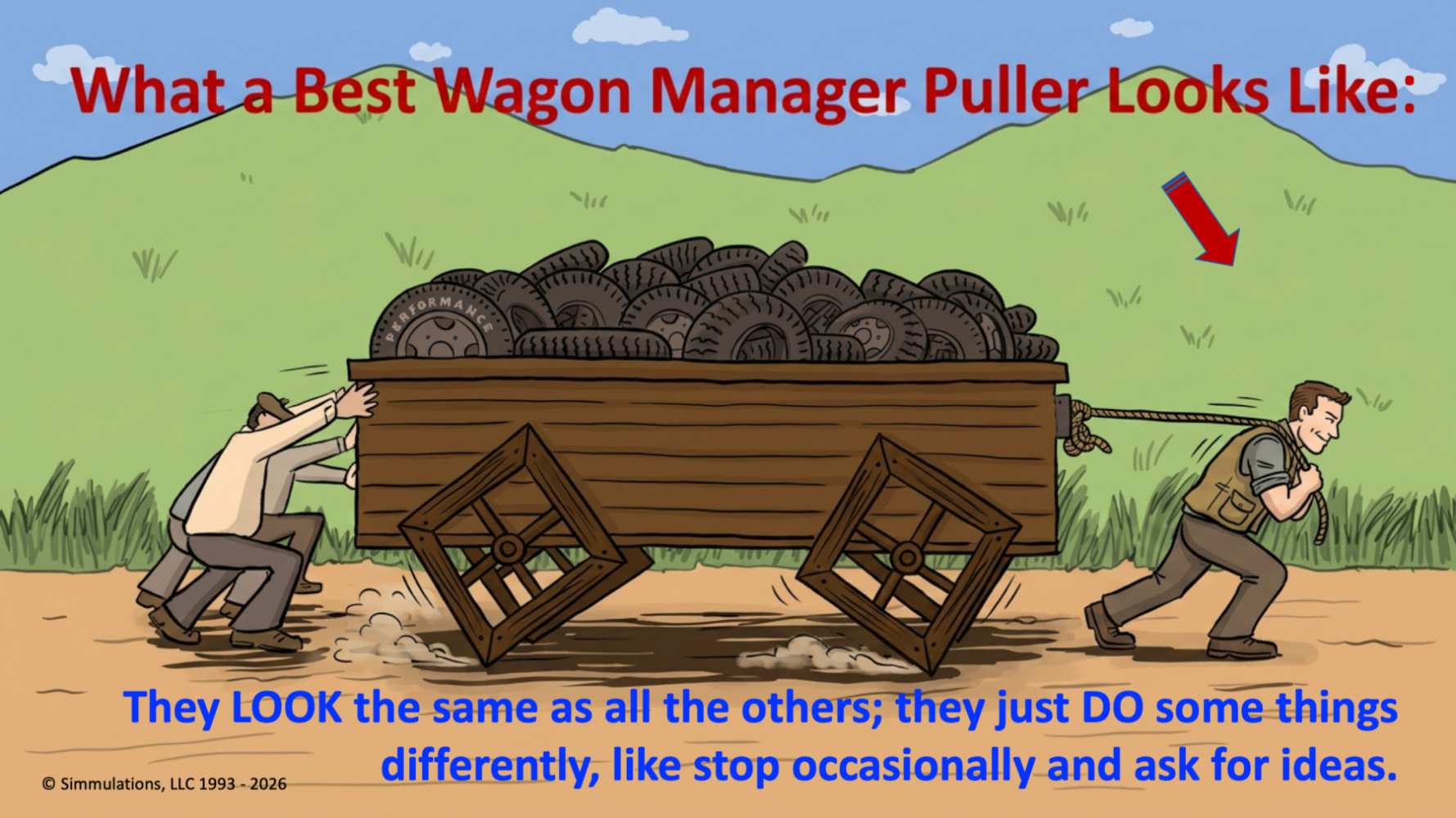
Reflection as a Management Tool: Just Do It! is the theme and here are thoughts about burnout and ideas for easily impacting it.
I watched an interview with a focus on burnout and discussions about how prevalent and systemic it is to how business is done these days. Burnout at the top and burnout at the middle and burnout at the bottom. But 35 minutes into the presentation, I was still waiting to hear about the tools and not about the services this company would provide. Talk but not tools… But tools are available.
Reflection may be the most powerful, cheapest performance tool your supervisors are seldom using — at least not deliberately, not consistently, and not well. In a world obsessed with speed, efficiency, and “more activity,” the missing 15 minutes of interaction is can be the quiet space where learning, alignment, and workplace improvement could actually happen.
A missing 15 minutes in Supervisor Leadership
Most supervisors are not short on effort or experience; they are short on structured reflection for themselves and their people even when pressed for time. Through reflection, one can identify issues and generate possibilities and considered alternatives.
It benefits the organization to occasionally stop and reflect on the issues and opportunities.
Yet most managers spend full days in actively “doing”: chasing issues, attending meetings, answering questions, filling forms, and reacting to problems as they emerge. At the end of the day, they are tired, behind on email and most everything else, and already late for tomorrow. For many, there is a real supervisor hellscape where the situation with people and performance is much worse than that, but that story is elsewhere – here is a link.
Most supervisors feel they are already late for tomorrow.
What might be missing is a simple, repeatable 15‑minute discipline:
-
5 minutes to reflect and look back: What actually happened today versus what we expected?
-
5 minutes to make sense of reality: Why did it happen that way? What patterns or surprises did we see?
-
5 minutes to decide, change and commit: What one small thing do we change tomorrow — some process, tool, conversation — to make things work better?
Those 15 minutes, done consistently with themselves and with their teams, is a powerful tool for personal growth and development and certainly not a luxury given the chaos of these times. Those 15 minutes of reflection are the cheapest and most scalable form of performance improvement any organization can deploy.
Why reflection is your cheapest performance intervention
Think about what most organizations do when performance lags. They:
-
Buy new technology or tools.
-
Rewrite processes and policies.
-
Roll out another training program.
-
Hire consultants to “fix” things.
All of those can be useful. But they are expensive, slow, disruptive and often disconnected from the granular reality of the daily work of getting things done more better faster.
Reflection, by contrast, costs:
-
A bit of time (15 minutes).
-
A bit of focus and attention.
-
The courage to be honest about what is actually going on.
It doesn’t require a capital budget. It doesn’t need IT integration. It doesn’t need another LMS module. What it does require is a deliberately created pause in the action, where people can turn experience into insight and insight into small, testable changes.
When supervisors build reflection into the rhythm of work, three low‑cost, high‑value things happen:
-
Problems are surfaced earlier, when they are still small and cheap to fix.
-
People who do the work start offering practical, low‑cost solutions.
-
Learning from yesterday turns into slightly better performance tomorrow, compounding over time.
Reflection is essentially “interest on experience.” You’ve already paid for the day. Reflection is how you actually collect the returns.
An interruption and a Reframe from Dr. Peter Vajda
(Peter very often gives me valuable feedback on my writings and frameworks and this time, his comments were so profound that I needed to simply post them into this edit of the blog. I thought they would fit here the best so here goes:)
Scott, your latest article is right to focus on onboarding, supervisors, and systems, but it still misses a deeper truth: people do not stay energized by structure alone. They stay energized when the work feels meaningful, aligned, and connected to something that matters inside them. When that connection is absent, even a highly capable employee can become flat, compliant, and increasingly disengaged because the job is no longer feeding the deeper needs that sustain human effort.
Purpose is not a soft extra. It is one of the main psychological engines of commitment, and when people cannot see why their work matters, motivation drains even if they still have the skills to perform. In that sense, the six-month crash is often not just a management failure; it is a meaning failure.
What gets in the way
People often assume low motivation means laziness, but that is usually the wrong diagnosis. More often, the real blockers are burnout, fear of failure, perfectionism, lack of recognition, low autonomy, or a sense that their uniqueness is not welcomed. When those conditions pile up, the person may still show up, but inwardly they begin to withdraw energy from the work.
This is why the conversation has to move beyond hierarchy and supervision alone. Good management matters, but it cannot fully compensate for a work environment that ignores meaning, belonging, agency, and growth. If the system repeatedly tells people, “Just comply,” people eventually stop bringing their best selves to the table.
Five practices that help
1. Connect the work to a real purpose.
Help people answer: “Who does this help, and why does it matter?” When employees can connect daily tasks to a larger contribution, motivation becomes more internal and durable.
2. Name the real obstacle, not the symptom.
If someone is struggling, ask whether the issue is confusion, overload, fear, perfectionism, lack of recognition, or loss of meaning. That kind of inquiry shifts the conversation from blame to diagnosis.
3. Increase autonomy in visible ways.
Let people shape how they do the work, not just what they are assigned to do. Autonomy supports intrinsic motivation and helps people feel like authors of their contribution rather than instruments of the system.
4. Make growth and progress tangible early.
People need early evidence that they are learning, improving, and becoming more effective. Clear feedback, small wins, and visible development help protect momentum during the vulnerable first months.
5. Build belonging, not just inclusion.
Belonging means people feel their uniqueness is accepted, valued, and safe in the group. When people feel seen as whole human beings, they bring more energy, honesty, and commitment to the work.
A deeper framing for your piece would be this: employee engagement is not only a management problem, it is a spiritual-psychological one.
People need more than tasks, policies, and supervision; they need meaning, agency, connection, and a sense that the work reflects something true about who they are. When organizations neglect that inner dimension, they should not be surprised when morale falls after six months, because the work may be technically organized but existentially empty.
The real issue is not that people arrive disengaged. They usually arrive hopeful. What changes is that many workplaces fail to sustain purpose, belonging, autonomy, and growth, so the person’s energy slowly gets drained away.
If organizations want lasting engagement, they must do more than manage performance; they must help people experience meaning in what they do, dignity in how they are treated, and a living connection between their work and their deeper sense of purpose.
Square Wheels: Stopping to see the wagon
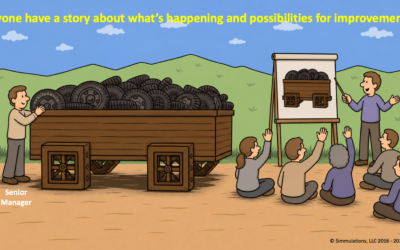
The Square Wheels® metaphor might help to make improvements more visible.
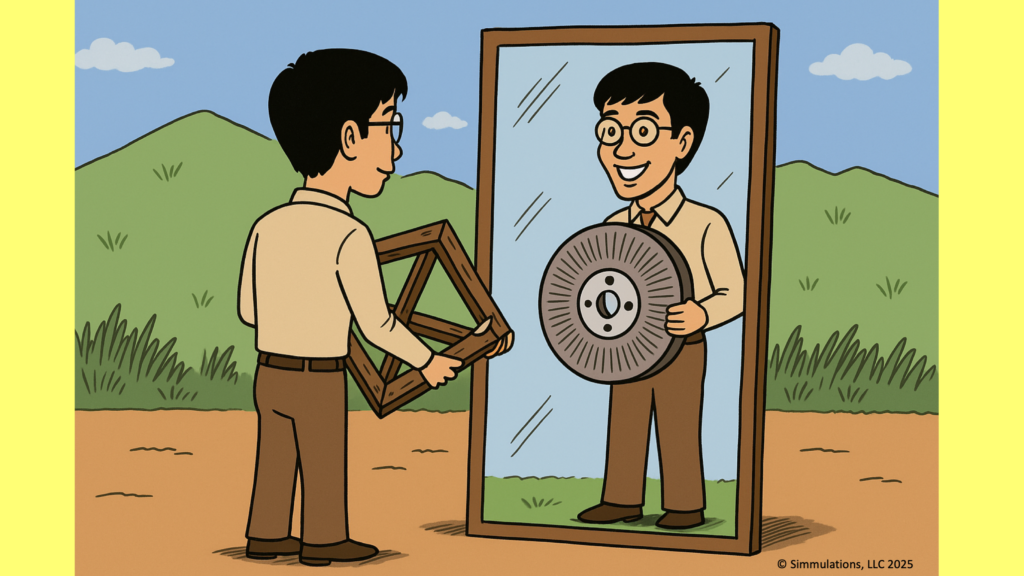
Reflection might help one to identify things that can be done differently.
Here is a simple Reflective Quiz about enabling performance.
We picture the wagon rolling along on Square Wheels®, with round wheels already in the wagon. Work is getting done, but it’s hard, inefficient, and frustrating. People at the back are pushing. People at the front are pulling. Everyone is busy. The Square Wheels thump along as usual.
Without reflection, here’s what happens:
-
People normalize the bumpiness. “That’s just how it is around here.”
-
Energy goes into pushing harder, not into asking if the wagon could roll differently.
-
Leaders misread complaints and frustration as “resistance” instead of as data.
A short, structured reflection is simply this: a moment where people stop pushing the wagon long enough to look at it.
A supervisor might simply and regularly ask:
-
“Where did it feel especially ‘square’ today?”
-
“What made the work harder than it needed to be?”
-
“If we could swap out just one square wheel for a round one tomorrow, what would that look like?”
That’s not a big program. It’s a simple conversation. But it changes the game:
-
People feel heard, because their pain becomes visible and discussable.
-
The team shifts from complaining about the wagon to co‑designing round wheels.
-
The supervisor stops being the person who “has all the answers” and becomes the person who “asks better questions and acts on the answers.”
Fifteen minutes of Square Wheels reflection can unlock improvements that no external initiative would ever find as quickly or as cheaply. And you can get the MAIN Square Wheels One image for free by clicking here.
UN‑dis‑Empowerment: reflection as permission to think
Most employees are not truly “unempowered” in the classic sense that we see in the Gallup data on the workplace. They are not chained to their chairs. They are not forbidden from thinking. They simply report being unenabled.
They are dis‑empowered and unenabled by:
-
Systems that punish small experiments.
-
Leaders who don’t ask for ideas or don’t act on them.
-
Habits of silence built on years of “why bother?”
UN‑Dis‑Empowerment is about removing those dampers and constraints so that energy and ideas can actually flow. Reflection is one of the simplest ways to do that.
In a 15‑minute reflection, a supervisor can:
-
Ask, “What got in your way today?” and listen without defending.
-
Ask, “What could we try tomorrow that is within our control?”
-
Ask, “What should I take up or escalate that’s beyond us?”
Three powerful things happen:
-
People see that their insights drive real changes, even small ones.
-
The boundary between “their work” and “our system” becomes discussable.
-
The supervisor models psychological safety by admitting they don’t see everything and they need input.
This is not about motivational posters or speeches. It is about removing the everyday friction that keeps people from doing their best work, and inviting them to help redesign the work itself.
When reflection becomes routine, UN‑Dis‑Empowerment is no longer a workshop—it is a weekly habit.
Moneyball for supervisors: reflection as data, not drama
The Moneyball story in baseball was about one big idea: stop making decisions based on gut feel, charisma, and anecdotes, and start using data about what actually predicts wins. (I blog about Moneyball for Supervisors here.)
Supervisors can do their own organizational improvement version of Moneyball without becoming statisticians. Reflection gives them the raw material and key outputs.
In a simple reflection rhythm, supervisors can:
-
Track a few leading indicators:
-
How many small improvements did the team test this week?
-
How often did we remove a meaningless step, fix a small bottleneck, or clarify a handoff?
-
How many issues did we catch early before they became escalations or customer complaints?
-
-
Connect those to outcomes:
-
Fewer errors or rework.
-
Shorter cycle times.
-
Higher employee energy and lower turnover.
-
Over a month or a quarter, patterns emerge:
-
Teams that reflect regularly and test small changes will outperform teams that don’t.
-
Certain changes have outsized impact, so they can be replicated across performers and teams.
-
Certain problems recur because they are systemic, not local, so they need to be escalated for help in resolution across an organization.
Reflection turns messy daily experience into something observable and improvable. It lets supervisors move from “I feel like things are chaotic” to “We tried 12 small experiments this month; 5 improved cycle time; 3 reduced errors; 4 didn’t work and we learned why.”
That is Moneyball. It is not high theory; it is grounded in a notebook, a whiteboard, or a simple tally sheet. And it can start with a simple 15‑minute reflection ritual supervisors can do.
To make reflection a true performance intervention and not just a good idea, you need a repeatable practice. Here is one you can adopt as‑is and teach to supervisors:
One – Set the rhythm
- Daily (5 minutes) for you alone.
- Weekly (15 minutes) with the team.
Two – Use a consistent question set
- “What worked well since we last met?”
- “Where did it feel ‘square’?”
- “What did we learn?”
- “What one thing will we change next?”
Three – Capture it simply
- A flipchart with three columns: Square Wheels, Round Wheel Ideas, Actions.
- Or a simple digital board with the same structure.
Four – Close with commitments
- Assign owners and timeframes to 1–3 micro‑changes.
- Decide how you’ll know whether each change helped.
Five – Feed the system
- Share patterns and wins upward.
- Share good ideas sideways with other teams.
No extra budget. No special software. No external expert required. Just 15 minutes of structured attention that turns lived experience into better ways of working.
—
For the FUN of It!
 Dr. Scott Simmerman is a designer of team building games and organization improvement tools.
Managing Partner of Performance Management Company since 1984, he is an experienced presenter and consultant who is trying to retire!! He now lives in Cuenca, Ecuador.
You can reach Scott at scott@squarewheels.com
Learn more about Scott at his LinkedIn site.
Note that I often use Perplexity AI to help research and generate ideas for my posts.
Square Wheels® are a registered trademark of Simmulations, LLC
and images have been copyrighted since 1993,
© Simmulations, LLC 1993 – 2026
What I’m About:
My Square Wheels blog and website exist to help leaders, trainers, and facilitators make work smoother, more engaging, and more human. I focus on practical tools for process improvement, organizational change, and workplace collaboration that spark insight and deliver measurable results.
And I am convinced, after 30+ years of using Square Wheels®, that it is the best facilitation toolset in the world. One can use it to involve and engage people in designing workplace improvements and building engagement and collaboration. It is a unique metaphorical approach to performance improvement and we can easily license your organization to use these images and approaches.
By blending proven facilitation methods, creative problem-solving, and engaging team activities, my mission is to support organizations in building energized, sustainable cultures of involvement and innovation.
Through accessible — and often free — resources and virtual facilitation tools, I aim to help teams everywhere collaborate more effectively, innovate continuously, and take ownership of their improvement journey.
#SquareWheels #InnovationAtWork #TeamEngagement #FacilitationTools #WorkplaceImprovement #EmployeeEngagement #CreativeProblemSolving #OrganizationalDevelopment #LeadershipTools #collaboration #leadership #motivation #communications #enablement #leadership #CreativeCommons #enablingperformance #teamwork #storytelling #storyasking

0 Comments