
Square Wheels: a belief system as an Egregore of Organizational Change you can change to create a more productive workforce.
An egregore (EGG‑ri‑gore) is a collective “thought‑form” or group mind: a semi‑autonomous psychic pattern that anchors to shared beliefs, emotions, rituals, and attention of a group. This in turn shapes how that group thinks and behaves.
Square Wheels becomes your deliberately designed ‘group mind’ for organizational change: a shared framework of how work really gets done that helps people name their Square Wheels, discover round wheel possibilities already in the wagon, and build a culture where everyone sees themselves as responsible for making work roll more smoothly.”
So let’s choose to manage our egregores. And while we are here, let’s take a whack at The Supervisor Hellscapes we create for our frontline managers to generate alignment and productivity. More on that in a bit…
Most organizations already exist inside powerful egregores: the invisible, collective “group realities” that shape how people think, feel, decide, and behave at work. These entities are not on the org chart, but they are generally more powerful than any formal strategy, structure, or slogan.
1 – What is an Egregore at Work?
An egregore is simply a collective thought‑form, an autonomous psychic frame made up of and influencing the thoughts of a group that is anchored to the perceptions of workplace reality. If you ask people to draw an image of their workgroup, you will see some common themes and ideas.
You can consider it a “group mind” or “thought entity” born from shared beliefs, emotions, and attention, which over time gains its own tendencies and self‑preserving behaviors. It is how people believe how things operate and it exists prettymuch everywhere.
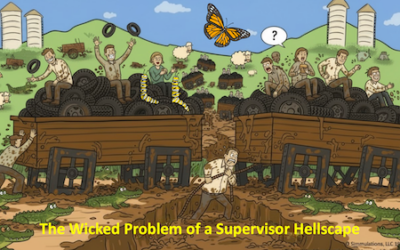
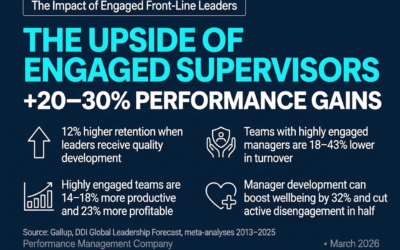
Let’s take The Supervisor. I have written extensively about this job function and the reality that underlies 70% of front-line managers to feel disengaged and burned out. I’ll skip the details here but you can find a lot more information at this link or by clicking on the image. But the reality is pretty rough:
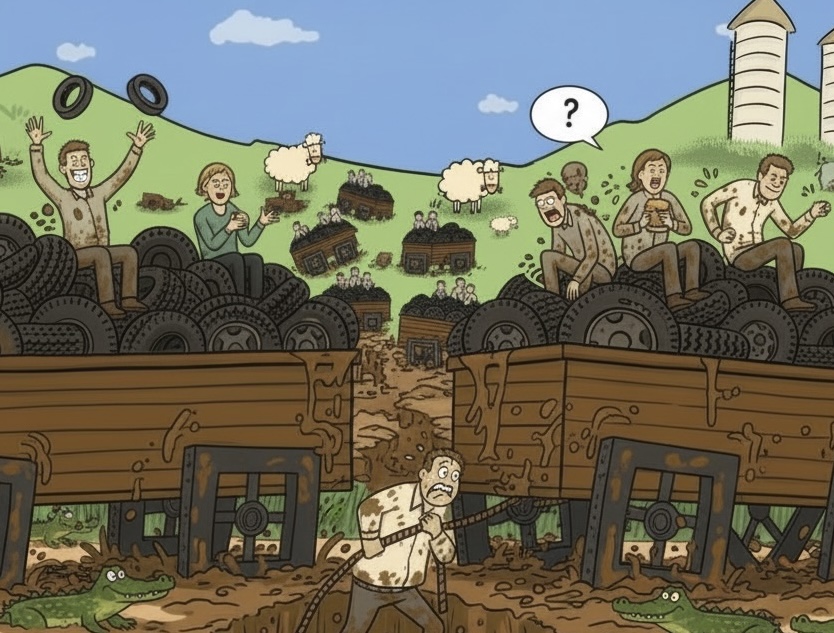
There are many beliefs and realities in the Hellscape workplaces of our supervisors
In organizations, egregores are:
-
The “way we do things around here” that no one wrote down but everyone feels. The believed reality.
-
The culture that outlives supervisors and management teams, survives reorganizations, and resists change.
-
The brand, identity, or ethos that shapes uniforms, language, tone, and standards of behavior.
Every sustained group have egregores, whether by design or by accident. These exist as realities.
Square Wheels, as images and a metaphor, can be used to create a deliberate, constructive, actionable egregore: a shared mental image that captures how work really rolls and one that invites people to co‑create a better future together. Let’s talk about how:
2 – Square Wheels as a Designed Thought‑Form for Change
Square Wheels® began as a simple metaphor: a wagon rolling on Square Wheels, laden with round wheels as its cargo. People see immediately that current processes are clunky and frustrating, that better ideas exist, and that the people closest to the work often know precisely where the “round wheels” are hiding.
Using the image, you generate a shift from “complaint to curiosity” and your explicit call to channel frustration into constructive insight are emotionally resonant and align tightly with enabling work
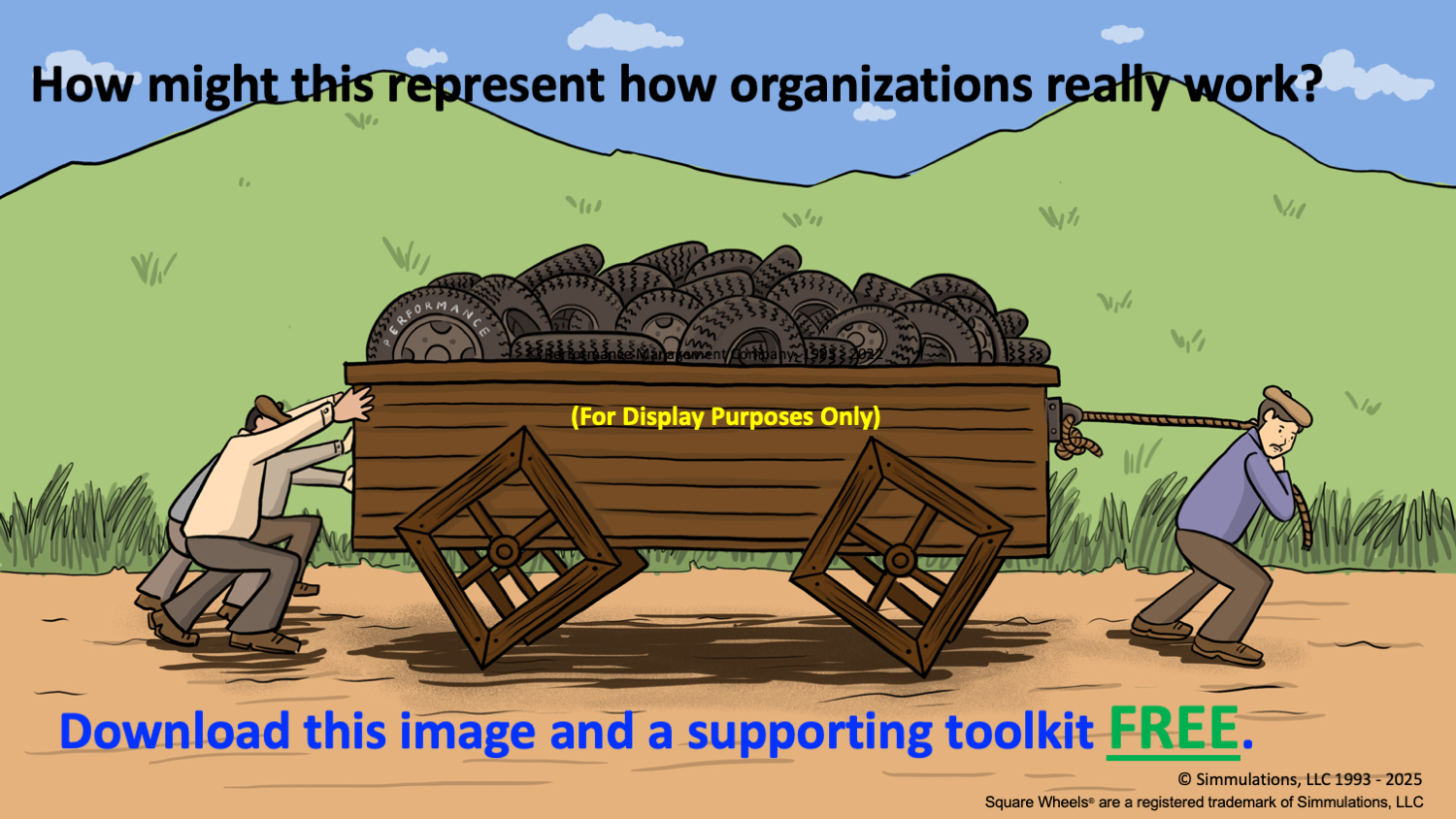
Download the FREE Square Wheels One image under a Creative Commons license
“The problems are real, improvements are possible, and ideas for improvement already exist within your wagons.”
By sharing the image and engaging people to talk about this as an organizational reality, we embed the model and the metaphors into their thinking about their workplaces and their challenges. We make this image into a real visual anchor for how things really work as well as the possibilities for improvement that already exist in the wagon.
When leaders and teams repeatedly discuss Square Wheels:
-
They create a shared image of reality that is honest, non‑blaming, and ironically funny.
-
They anchor conversations about things that do not work smoothly and possibilities for improvement in a neutral, external picture that avoids blame and personal responsibility.
-
They build a common language for continuous continuous improvement: “What are our Square Wheels? Where are our round wheels?” and “The round wheels of today are the Square Wheels of Tomorrow.”
And when senior managers build on the metaphor and involve and engage their middle managers to talk about issues and opportunities and address the corporate silos that exist but can be managed, they can create that wagon train of continuous continuous improvement. It is about what egregores we look to consciously build to generate the corporate cultures we really want.
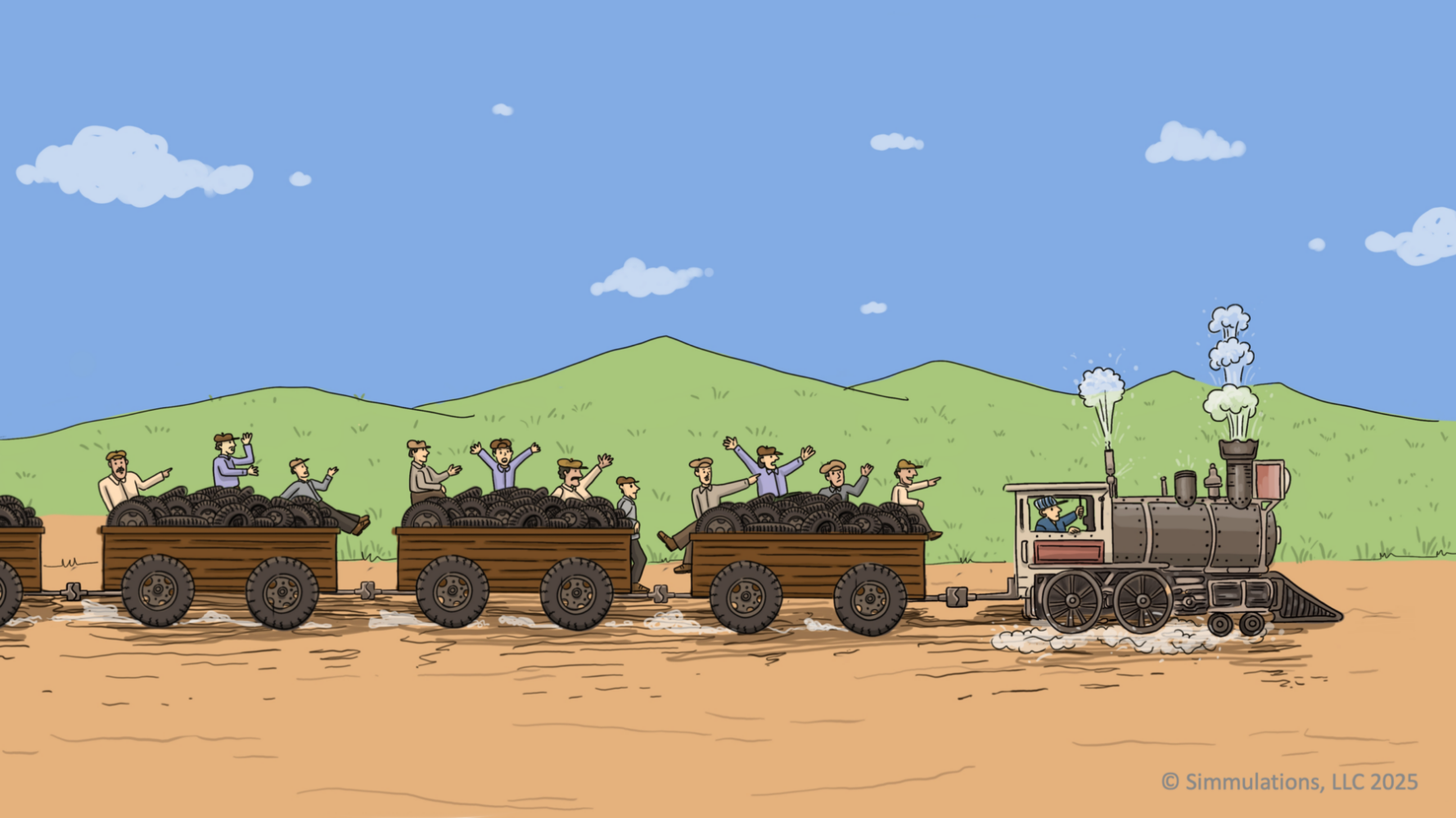
In egregore terms, by using Square Wheels you can create a stable, energized, actionable thought‑form that:
-
Encapsulates the group’s aspirations for smoother, smarter work.
-
Channels frustration into constructive insights.
- Engages the Spectator Sheep into discussions about what they think should be improved in the workplace.
- Generates the cognitive dissonance needed to motivate change, to replace the Square Wheels with round ones.
-
Reinforces the identity of the team as capable problem‑solvers rather than victims.
Square Wheels is not just some cartoon; it quickly becomes your deliberately cultivated visual catalyst anchored on current reality and improvement possibilities.
3 – Feeding your Square Wheels Egregore
Egregores grow stronger as people focus attention, emotion, and repeated action on them. To make Square Wheels function as a healthy egregore inside an organization, leaders and facilitators can “feed” it in specific, structured ways:
• Ritualized Reflection Moments:
• Build regular Square Wheels moments into meetings: “What Square Wheels did we hit this week? What Round Wheels did we discover?What did we improve?”
• Repetition and rhythm turn a one‑off meeting discussion into a living practice.
• Shared Visuals and Language:
• Use the image on walls, slides, digital dashboards, and internal communications. Distribute coffee cups and refrigerator magnets.
• Language like “Let’s find more Round Wheels” helps crystallize the identity of the group as a learning, experimenting team.
• Emotional Charge: From Complaint to Curiosity:
• Invite people to vent, but always convert complaints into opportunities for discovery. Square Wheels are simply things that need improvement.
• The emotional energy of frustration becomes “fuel” for the egregore of constructive change rather than for cynicism. (See more on Cognitive Dissonance here)
• Participation and Co‑Ownership:
• Let teams investigate their own wagons and how things work, target their own Square Wheels for improvement, and name their round wheels possibilities. They can also discuss issues such as silos, spectator sheep and the mud that slows progress.
• The more voices involved and engaged in developing their metaphor, the more the egregore reflects the real collective mind of your workplace (rather than tops‑down messaging).
Over time, this repeated, emotionally charged, group‑wide engagement solidifies Square Wheels as an internal entity that “reminds” people: problems are real, improvement is possible, and ideas live within the wagon.
Remember: “Nobody ever washes a rental car.” Facilitate ownership involvement to generate the intrinsic motivation for your people to choose to do something differently.
4 – How the Square Wheels Egregore Behaves
Once the Square Wheels thought‑form idea is anchored and stable, it starts exerting a gentle but persistent influence on behavior.
Some of its emergent behaviors:
-
Pattern Recognition
• People spontaneously notice clunky processes and bottlenecks and describe them as Square Wheels. They are things that are not working smoothly.
• The organization develops a reflex and a language for spotting frictions. -
Psychological Safety for Truth‑Telling
• Critique will be framed around the wagon rather than some person: “This process is a Square Wheel” instead of “You are the problem.”
• The egregore protects honest conversation by depersonalizing criticism. -
Bias Toward Experimentation
• Teams become more willing to test Round Wheels, knowing that not every wheel will fit perfectly the first time.
• Small experiments become normal, not exceptional. They represent the possibilities of continuous continuous impovemement. -
Collective Identity as Improvers
• People begin to see themselves as co‑drivers responsible for upgrading the wagon, not just passengers pulled along by management.
• The culture shifts from compliance to contribution.
As people begin to frame issues, Square Wheels is no longer just a tool; it is a living, guiding presence in your culture.
5 – Choosing Your Organizational Egregores
Every organization already hosts multiple egregores: the heroic founder myth, the “we’ve always done it this way” ghost, the fear of failure, the pride of craftsmanship, the obsession with quarterly numbers. Some are supportive; some are parasitic; most are unconscious. And they can be changed and made actionable.
Square Wheels offers leaders and supervisors a chance to consciously design and install positive egregores around round wheels and change:
-
Grounded in reality but hopeful.
-
Simple enough to be remembered and reused.
-
Safe enough to invite honest critique.
-
Strong enough to resist the pull of blame and helplessness.
By repeatedly inviting people into a Square Wheels world, leaders help the organization build a collective mindset that normalizes talking about problems, discovering possibilities, and pushing the wagon forward together.
In an era when invisible forces already shape work—algorithms, brands, cultures, memes, and stories—creating your egregores around issues and opportunities may be one of your most practical acts of leadership. You can create a culture of dis-un-engagement and enable more people to become actively involved and more productive.
Square Wheels, understood as a deliberate group collective thought‑form, can become one of the most useful “spirits of the workplace” your teams ever collaborate around.
Note that you can readily use the image below to easily engage your people in a discussion around performance improvement and you can get it FREE.

(Thanks to Geoff Wolinar for turning me on to the concept of egregores.)
6 – Next Steps
Grab the image and the user guide and consider how you might use these simple ideas for managing and leading change.
-
If you lead a business unit: pilot a 60‑minute Square Wheels session with your leadership team this quarter. We have many tools to help you succeed.
-
If you are a facilitator/consultant: contact me for licensing the images and a starter facilitation guide or for building out some customized tools.
- If you are an author of business improvement books, let’s talk about a collaboration.
—
For the FUN of It!
 Dr. Scott Simmerman is a designer of team building games and organization improvement tools.
Managing Partner of Performance Management Company since 1984, he is an experienced presenter and consultant who is trying to retire!! He now lives in Cuenca, Ecuador.
You can reach Scott at scott@squarewheels.com
Learn more about Scott at his LinkedIn site.
Square Wheels® are a registered trademark of Simmulations, LLC
and images have been copyrighted since 1993,
© Simmulations, LLC 1993 – 2026
What I’m About:
My Square Wheels blog and website exist to help leaders, trainers, and facilitators make work smoother, more engaging, and more human. I focus on practical tools for process improvement, organizational change, and workplace collaboration that spark insight and deliver measurable results.
And I am convinced, after 30+ years of using Square Wheels®, that it is the best facilitation toolset in the world. One can use it to involve and engage people in designing workplace improvements and building engagement and collaboration. It is a unique metaphorical approach to performance improvement and we can easily license your organization to use these images and approaches.
By blending proven facilitation methods, creative problem-solving, and engaging team activities, my mission is to support organizations in building energized, sustainable cultures of involvement and innovation.
Through accessible — and often free — resources and virtual facilitation tools, I aim to help teams everywhere collaborate more effectively, innovate continuously, and take ownership of their improvement journey.
#SquareWheels #InnovationAtWork #TeamEngagement #FacilitationTools #WorkplaceImprovement #EmployeeEngagement #CreativeProblemSolving #OrganizationalDevelopment #LeadershipTools #collaboration #leadership #motivation #communications #enablement #leadership #CreativeCommons #enablingperformance #teamwork #egregore #culture #organizationalchange

0 Comments