
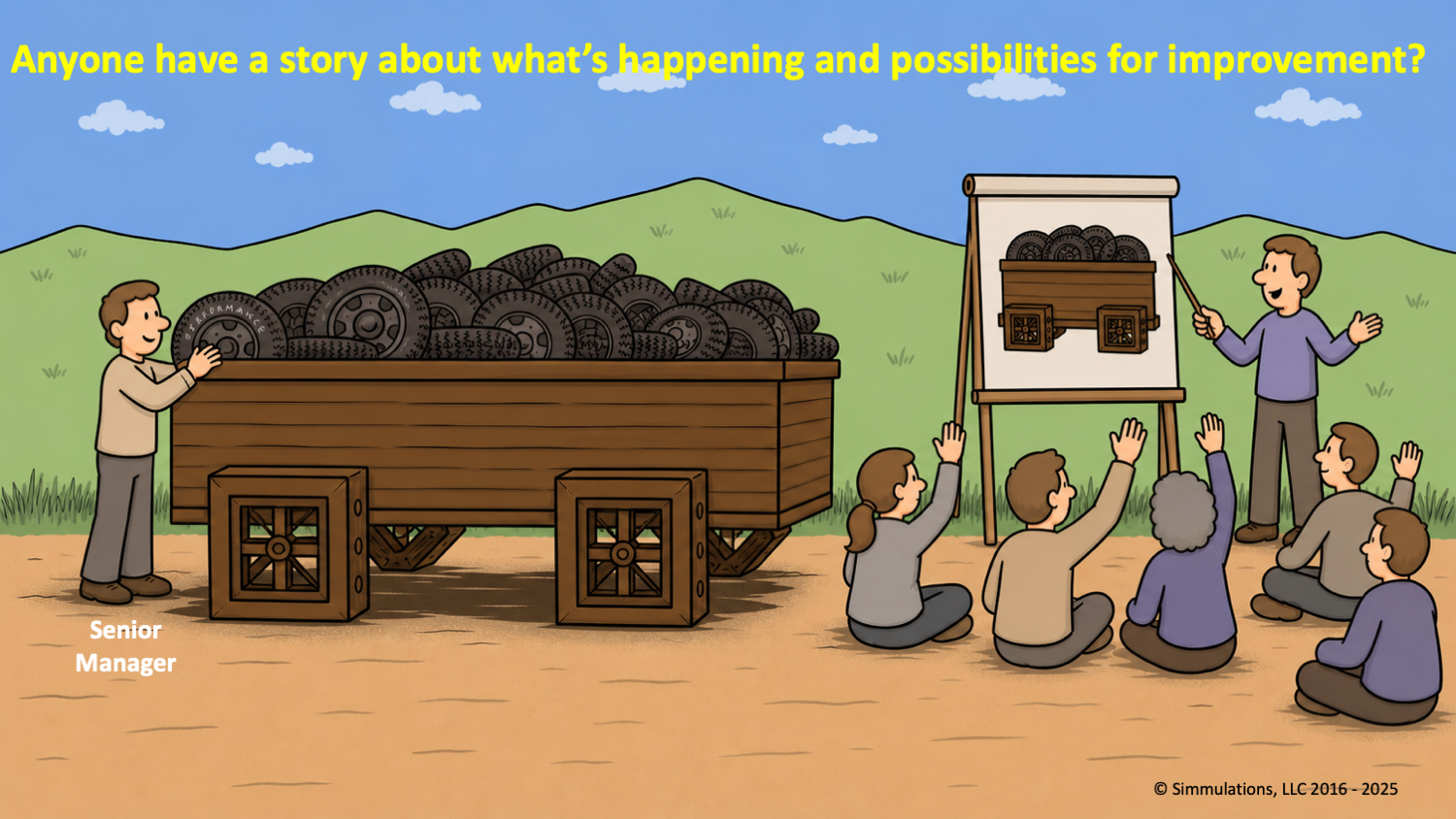
Why Gallup’s Engagement Numbers Matter — and how to enable people in the workplace with Square Wheels One and active involvement.
Most leaders have heard the Gallup engagement numbers, but too many treat them as interesting statistics instead of useful prompts for action. That is a mistake, because Gallup defines engagement as the involvement and enthusiasm of employees in their work and workplace, and its Q12 questions translate that big idea into practical, observable workplace conditions. When those conditions are weak, performance drifts, energy drops, and managers often blame attitudes when the real problem is the design of the work experience.
And the Gallup numbers are supported by a wide variety of different international surveys and other tools showing we have huge problems in the workplace, expected to get even worse as more companies are implementing different AI tools that directly affect the supervisors and workers. There will be even more distrust in leadership and demotivation (and sabotage) from the workforce. This is expected and we need our managers to pro-actively address these issues!
Key global sources for data on worker disengagement and related mental health issues include Gallup, Perceptyx, the World Health Organization (WHO), national and regional statistics/health agencies, and major professional and advocacy organizations such as the American Psychological Association (APA) and Mental Health America. among others. Essentially, all point to the same issues and pending future problems.
And here are just a few of the numbers, looking at the differences between the top organizations and the bottom ones. These are “Median percent differences” between top-quartile and bottom-quartile units:
-
10% in customer loyalty/engagement
-
23% in profitability
-
18% in productivity (sales)
-
14% in productivity (production records and evaluations)
-
21% in turnover for high-turnover organizations (those with more than 40% annualized turnover)
-
51% in turnover for low-turnover organizations (those with 40% or lower annualized turnover)
-
63% in safety incidents (accidents)
-
78% in absenteeism
-
28% in shrinkage (theft)
-
58% in patient safety incidents (mortality and falls)
-
32% in quality (defects)
-
70% in wellbeing (thriving employees)
-
22% in organizational citizenship (participation)
All the above issues and data are reasons why the Gallup numbers remain worth using in conversations about workplace performance. The other reason is that they are actionable. Better yet, they pair naturally with active learning tools such as Square Wheels One, where people can safely explore assumptions, communication, process friction, and improvement opportunities in a way that gets them involved instead of lectured.
Why Gallup’s numbers deserve a place in the discussion
Gallup’s Q12 Survey has become one of the most widely recognized engagement frameworks because it links employee experience to outcomes leaders care about, including productivity, profitability, safety, quality, turnover, and customer results. Across Gallup’s meta-analytic work, business units with stronger engagement scores consistently outperform those with weaker scores, which gives leaders a practical reason to take the numbers seriously. Even critics who argue that the Q12 measures conditions that drive engagement more than engagement itself still concede that the questions point to important workplace realities.
That nuance matters. The Q12 may not be a pure emotional thermometer, but it is a strong operating dashboard for workplace environment’s that support involvement, commitment, and discretionary effort. In plain language, Gallup’s instrument asks whether people have clarity, resources, recognition, voice, purpose, relationships, accountability, and growth. Those are exactly the kinds of conditions that enable people to become more fully engaged in doing meaningful work. And more engagement is more profitable in many ways.
Why this works for managers and teams
One strength of the Gallup framework is that it moves the conversation away from vague statements like “people need to be more motivated.” Instead, it asks specific questions managers can influence: Do people know what is expected of them, have what they need to do quality work, receive recognition, believe their opinions count, and see opportunities to learn and grow? That makes engagement less of an abstract morale issue and more of a practical leadership and team design challenge.
Most people want to participate in discussions about the things that impact them and might be improved if they believe things can be changed. And managers asking for ideas generates active involvement and ownership..
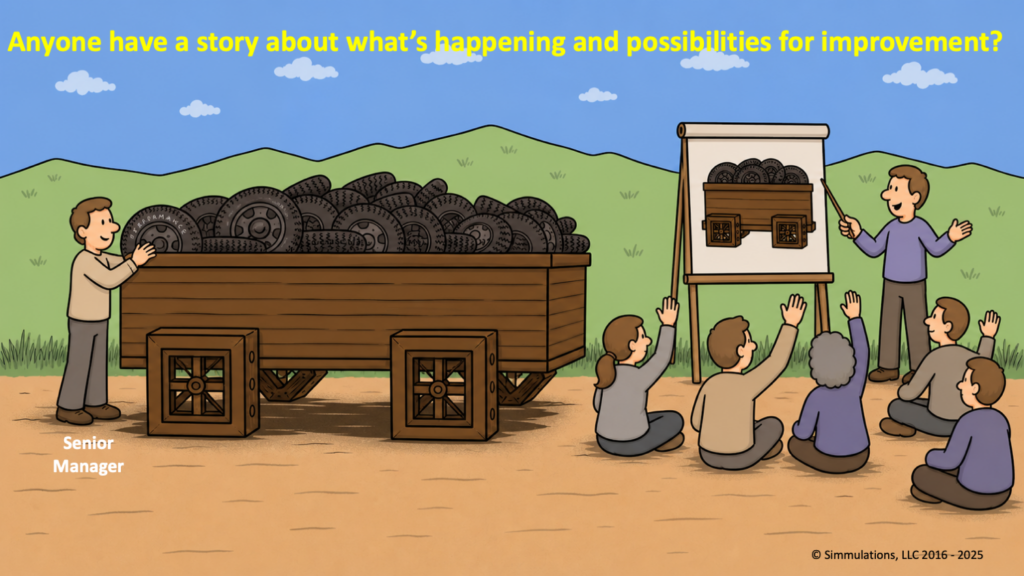
Consider using Story ASKING as a tool to actively generate ideas about issues and opportunities for improvement.
This is where experiential learning and active involvement becomes especially powerful. Teams rarely change because they heard another presentation about engagement statistics. They change when they experience the reality of communication breakdowns, assumptions, process waste, and the need for collaboration in a way that is immediate, memorable, and safe enough to discuss honestly. That is precisely why engaging, simulation-based tools like Square Wheels can help translate Gallup’s questions into team insight and action.
Where Square Wheels® One fits
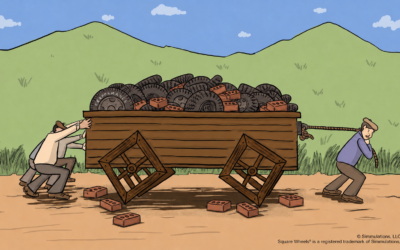
Square Wheels® One creates a fast, shared experience in which participants confront barriers, coordination issues, and the consequences of old assumptions, then reflect on what helped or hindered better results. In that sense, it meshes naturally with Gallup’s view that engagement grows when people have clarity, useful tools, recognition, voice, quality-minded teammates, and opportunities to learn. Rather than talking about engagement in the abstract, teams can examine how engagement is supported or blocked in the way they actually work together.
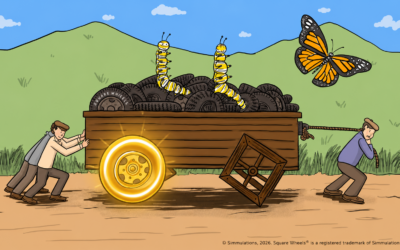
The image becomes a doorway into a stronger engagement discussion. It gives managers and teams a neutral experience they can reference without becoming defensive. People can say, “We saw this in the exercise,” before they say, “We do this in our real meetings, our handoffs, or our customer work.” That shift matters because defensiveness blocks improvement, while shared discovery creates momentum.
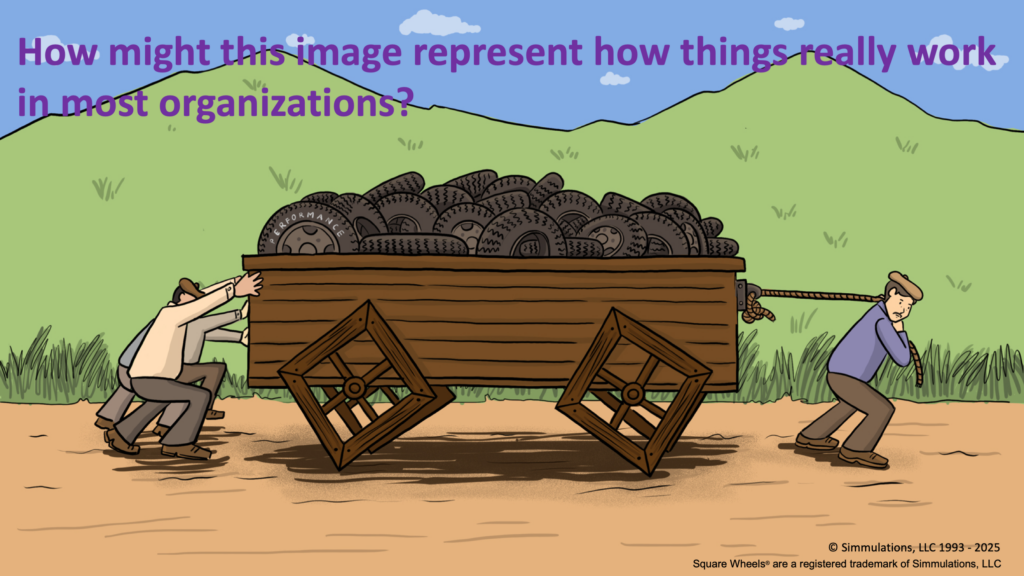
Click on this image to download Square Wheels One (plus a toolkit) for FREE
Linking Square Wheels One to Gallup’s Q12
Several Q12 items connect especially well to the learning possibilities in Square Wheels One:
-
I know what is expected of me at work. The simulation can surface role ambiguity, uneven instructions, and the cost of unclear priorities, which opens a strong conversation about clarity and accountability.
-
I have the materials and equipment I need to do my work right. Participants quickly see how tools, systems, and process design affect performance, making it easier to talk about friction in the real workplace.
-
At work, I have the opportunity to do what I do best every day. Debrief discussions can highlight mismatches between talent and task assignment, as well as the gains that come from using people’s strengths more intentionally.
-
In the last seven days, I have received recognition or praise for doing good work. The exercise creates visible contributions in real time, which lets facilitators explore how recognition shapes energy and willingness to contribute.
-
At work, my opinions seem to count. Simulations naturally expose whether teams listen, invite ideas, and adapt based on input, making this a concrete debrief topic rather than a slogan.
-
My associates or fellow employees are committed to doing quality work. Because performance is visible in the activity, teams can discuss standards, rework, ownership, and how peers influence quality norms.
-
This last year, I have had opportunities at work to learn and grow. The simulation itself models learning through experimentation, reflection, and adaptation, which creates a bridge to broader growth conversations.
Using Square Wheels One in group discussions and building a language around Square Wheel-opportunities and possible round wheel solutions helps drive the active involvement of your people in the workplace. Sharing ideas can create “disruptive engagement” and the “cognitive dissonance” necessary to drive workplace innovation.
These are not theoretical connections. They are practical entry points for facilitated discussions that help people connect the experience of the “idea game” to the realities of leadership, process, teamwork, and customer value. The result is that Gallup’s engagement questions shift from being survey items and to starting to become operational improvement questions about how work gets done.
A simple way to get things rolling
Any manager or facilitator can use Gallup’s framework and can get the Square Wheels One image (and a toolkit, FREE) and wrap things together in a very simple sequence:
One – Introduce three to five Q12 items that matter most for the team right now, such as clarity, voice, recognition, quality, or growth.
Two – Run the Square Wheels One interactive experience and ask participants to watch for examples of those themes as they work.
Three – Debrief the activity with questions such as: Where was work unclear? What helped performance? What got in the way? Whose ideas improved results? Where did recognition or frustration show up?
Four – Shift the conversation to real work by asking, “Where do we see the same patterns in our daily operations?”
Five – Agree on one small change to test in the next 7 to 30 days, then revisit the relevant Gallup item afterward and keep the innovation ideas rolling. There are always a number of things that the people want addressed and improved and they often have the power to change things themselves. (Read about improving Roadblock Management here)
This leading interactive engagement approach works because it combines data, experience, and action. Gallup provides the language and evidence base.Square Wheels One provides the energy, involvement, and emotional reality that make the discussion stick. Together, they help managers move from “engagement is important” to “here is what we are going to change next week.”
The practical case for using Gallup in workplace conversations
There are good reasons to keep using Gallup’s numbers when discussing workplace engagement. They are widely recognized, backed by extensive research, tied to performance outcomes, and framed around conditions leaders can influence. That combination makes them useful for consultants, leaders, and facilitators who want to move beyond opinion and into disciplined conversations about people and performance.
Adding Square Wheels One strengthens that conversation because it turns engagement from a survey topic into a lived team experience. People do not just hear about clarity, recognition, teamwork, and growth; they feel the presence or absence of those conditions in action. That is often the spark that gets real change rolling.
And connect with me if I can offer any ideas or help you build a better, company-wide toolkit to help enable improvement,
—
For the FUN of It!
 Dr. Scott Simmerman is a designer of team building games and organization improvement tools.
Managing Partner of Performance Management Company since 1984, he is an experienced presenter and consultant who is trying to retire!! He now lives in Cuenca, Ecuador.
You can reach Scott at scott@squarewheels.com
Learn more about Scott at his LinkedIn site.
Note that I often use Perplexity AI to help research and generate ideas for my posts.
Square Wheels® are a registered trademark of Simmulations, LLC
and images have been copyrighted since 1993,
© Simmulations, LLC 1993 – 2026
What I’m About:
My Square Wheels blog and website exist to help leaders, trainers, and facilitators make work smoother, more engaging, and more human. I focus on practical tools for process improvement, organizational change, and workplace collaboration that spark insight and deliver measurable results.
And I am convinced, after 30+ years of using Square Wheels®, that it is the best facilitation toolset in the world. One can use it to involve and engage people in designing workplace improvements and building engagement and collaboration. It is a unique metaphorical approach to performance improvement and we can easily license your organization to use these images and approaches.
By blending proven facilitation methods, creative problem-solving, and engaging team activities, my mission is to support organizations in building energized, sustainable cultures of involvement and innovation.
Through accessible — and often free — resources and virtual facilitation tools, I aim to help teams everywhere collaborate more effectively, innovate continuously, and take ownership of their improvement journey.
#SquareWheels #InnovationAtWork #TeamEngagement #FacilitationTools #WorkplaceImprovement #EmployeeEngagement #CreativeProblemSolving #OrganizationalDevelopment #LeadershipTools #collaboration #leadership #motivation #communications #enablement #leadership #CreativeCommons #enablingperformance #teamwork #storytelling #storyasking

0 Comments