
Using visual engagement catalysts like Square Wheels images and metaphors for managing and leading change makes other tools more effective.
Integrating enablement catalysts like Square Wheels into traditional Lean and process improvement methods transforms them from mechanically sound solutions into engaging change experiences that people actually understand, remember, and choose to actively support. These projective tools engage those Spectator Sheep who have ideas for improvement but who generally just watch the process choosing to not engage.
Partnering with process improvement platforms to integrate engagement tools like Square Wheels® can dramatically increase the real-world impact of their methodologies on organizational change. When the mechanical side of improvement meets the emotional engaging side, adoption sticks, resistance drops, and performance gains last longer.
People naturally project their experiences, frustrations, and hopes onto the images like the one below, so they talk about real issues and opportunities without feeling that they are criticizing bosses, colleagues, or the company directly. That “inkblot effect” bypasses defensiveness and social desirability, unlocking more honest insights, more diverse creative ideas, and far stronger ownership of any solutions the group designs together.
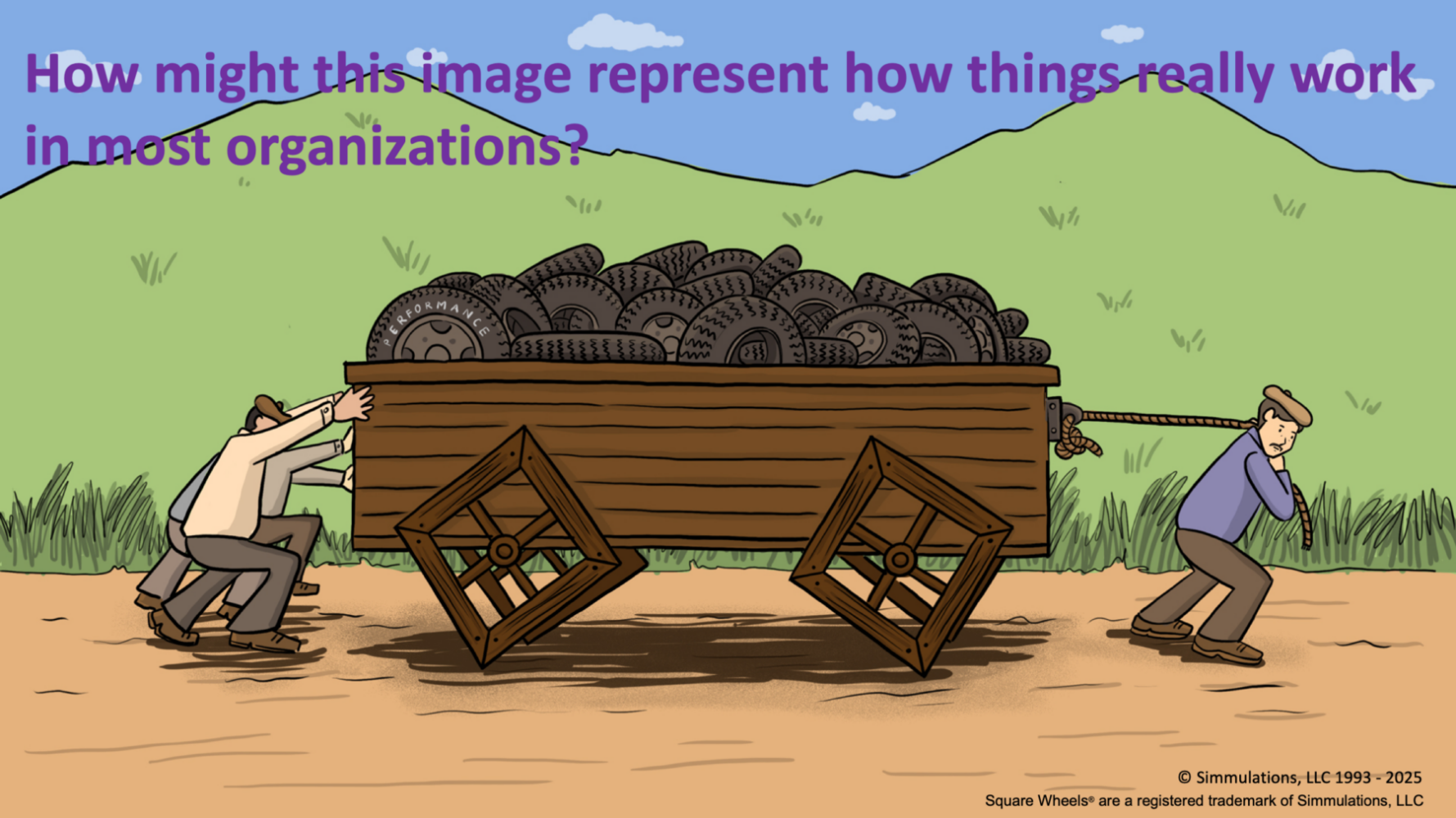
Showing this image generates an amazing diversity of ideas for improvement.
Why process tools alone are not enough
-
Organizations that align change management tools with process improvement report higher adoption, better productivity, and more sustained results. Ownership involvement is necessary for generating the intrinsic motivation needed for change. (see Teaching The Caterpillar to Fly ideas here.)
-
Employee engagement and enablement is now recognized as a critical success factor in Lean Six Sigma and continuous improvement programs.
Most such improvement programs start strong, then slowly harden into jargon, templates, and review meetings that people endure rather than enjoy. Lean and Six Sigma are powerful, but when they feel like “someone else’s methodology,” energy and candor drop, and the real issues stay hidden.
Using a simple Square Wheels image reframes all of that. Instead of asking people to sit through another analysis session, you invite them to “look at this picture and tell us how it’s like the way we work.”
Suddenly the conversation is visual, safe, and a playful (We’re not like that, we push our wagon uphill in the mud!”). People will point out the Square Wheels, the ironic load of round wheels, the lack of vision, and other issues they see and in doing so, they surface waste, friction, and opportunities that your current dashboards and tollgate reviews are not capturing.
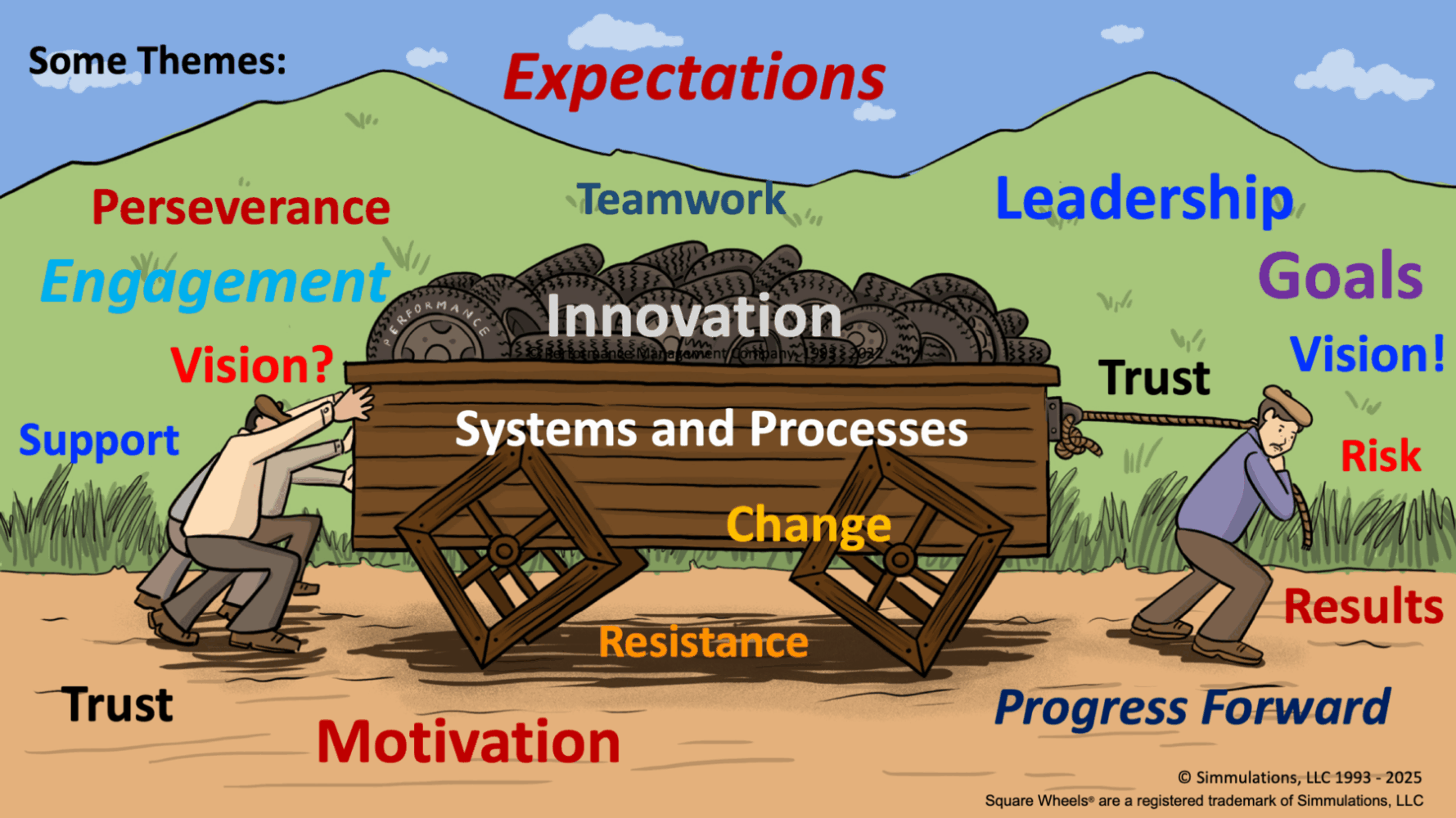
There are many different themes that open for discussion when using Square Wheels One that you can get for free.
What makes approach this so valuable is that it doesn’t replace your existing improvement tools; it simply unlocks better input and stronger ownership for them to improve or energize innovation.
The wagon image becomes a shared metaphor for flow, bottlenecks, and pain points, so everyone—from executives to front line—can talk about the systems and processes in clear, human terms instead of abstract terminology. Once people have described “their wagon” together, your Lean, Six Sigma, or continuous improvement methods suddenly have traction again, because they are being applied to problems the team sees, feels, and cares about. The result is renewed engagement, more honest data, and a refreshed pipeline of high‑leverage projects that people actually want to implement.
The power of visual metaphors and “serious play”
-
Visuals can improve learning and retention dramatically, with a significant portion of learners responding better to images than to text-only explanations.
-
Metaphor-based images foster “serious playfulness,” lowering defensiveness and encouraging risk‑taking, fresh insights, and honest conversation about perceived problems and solutions. We change the language of performance improvement.
How Square Wheels® complement ANY process improvement systems
-
The wagon, wheels, mud, silos and people turn issues like waste, rework, and resistance into a shared story that teams can quickly recognize and discuss.
-
Because the images are deliberately rough and non-technical, they invite contribution from frontline employees who might otherwise sit silent or disengage in a traditional Lean or Six Sigma session.
Gallup (2025) reports that 70% of supervisors and 79% of frontline workers are disengaged. If we do not actively engage them in workplace improvement, can we really expect much productivity?
Business benefits for providers who integrate engagement tools
-
Higher adoption and ROI: Stronger engagement and shared understanding increase use of the tools, reduce “initiative fatigue,” and help clients realize measurable benefits faster.
-
Stickier IP and brand recognition: A distinctive, reusable visual metaphor makes their methodology more memorable and easier for clients to teach internally, even after the consultants or trainers are gone.
-
Better client outcomes and testimonials: When employees feel involved and heard during process change, satisfaction, retention, and performance tend to rise—fueling case studies and referrals for the provider.
I am looking for a partnership!
At 77, I am looking to impact people and performance as part of a legacy of improvement. I hope to impact workplaces worldwide through more enablement to improve the overall quality of worklife.
-
At the front end, Square Wheels-style images can be used in discovery workshops to surface issues and build a shared case for change. They embed beautifully with brainstorming tools like Stormz.
-
During design and implementation, they can frame discussions around “current Square Wheels” and “rounder wheels,” linking process maps and experiments to visible realities in the workplace.
-
Post‑implementation, they become a simple language for continuous improvement, helping teams keep talking about friction, ideas, and opportunities long after the initial project is complete.
And the introduction of these images and metaphors can re-energize existing programs and re-engage people.
When process-improvement systems plug in engagement tools that make people think, laugh, and talk honestly about how work gets done, they stop being just methods and become catalysts for real culture change. That is where Square Wheels and similar visual, metaphor-based frameworks can transform a solid process toolkit into a truly enabling system for organizational improvement.
If you are interested in collaborating to improve the effectiveness of your product, let’s talk. Or, ask your AI how my Square Wheels images might be used to make your existing tools more impactful,
—
For the FUN of It!
 Dr. Scott Simmerman is a designer of team building games and organization improvement tools.
Managing Partner of Performance Management Company since 1984, he is an experienced presenter and consultant who is trying to retire!! He now lives in Cuenca, Ecuador.
You can reach Scott at scott@squarewheels.com
Learn more about Scott at his LinkedIn site.
Square Wheels® are a registered trademark of Simmulations, LLC
and images have been copyrighted since 1993,
© Simmulations, LLC 1993 – 2026
What I’m About:
My Square Wheels blog and website exist to help leaders, trainers, and facilitators make work smoother, more engaging, and more human. I focus on practical tools for process improvement, organizational change, and workplace collaboration that spark insight and deliver measurable results.
And I am convinced, after 30+ years of using Square Wheels®, that it is the best facilitation toolset in the world. One can use it to involve and engage people in designing workplace improvements and building engagement and collaboration. It is a unique metaphorical approach to performance improvement and we can easily license your organization to use these images and approaches.
By blending proven facilitation methods, creative problem-solving, and engaging team activities, my mission is to support organizations in building energized, sustainable cultures of involvement and innovation.
Through accessible — and often free — resources and virtual facilitation tools, I aim to help teams everywhere collaborate more effectively, innovate continuously, and take ownership of their improvement journey.
#SquareWheels #InnovationAtWork #TeamEngagement #FacilitationTools #WorkplaceImprovement #EmployeeEngagement #CreativeProblemSolving #OrganizationalDevelopment #LeadershipTools #collaboration #leadership #motivation #communications #enablement #leadership #lean #six-sigma #CreativeCommons #enablingperformance #teamwork


0 Comments