
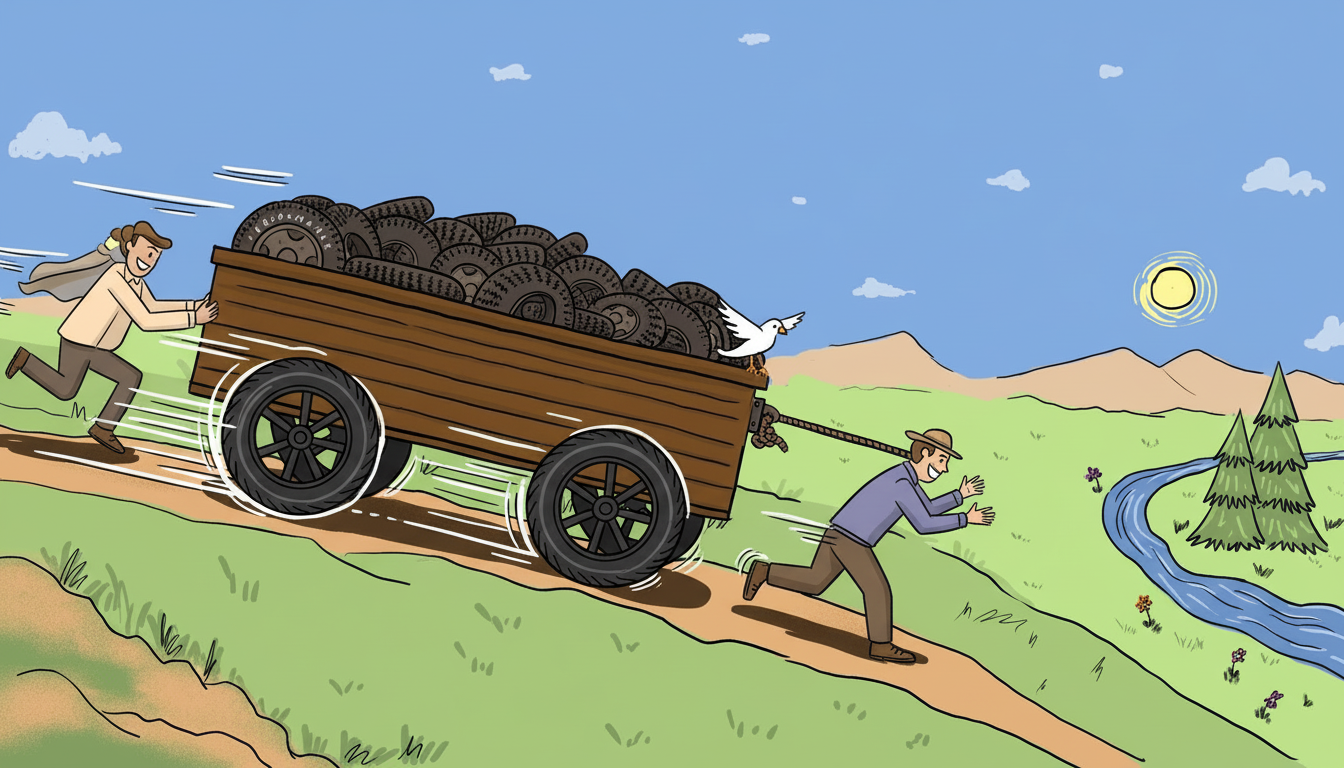
This article focuses on generating FLOW in your workplace by involving and engaging people with the Square Wheels paradigm of performance improvement.
We can readily use the Square Wheels metaphor and visual performance catalyst for helping people define and refine a flow state to enable high performance. Generally, a variety of things block one from accessing these tools, but we will share some simple reframing ideas to enable this positive resource state.
Firstly, a large body of research shows:
- Proactive behaviors show a much stronger association to Flow than other factors. Rolling faster forward is a key!
- Work-related flow is not only associated with both work and personal outcomes. Players need to take their behavior seriously. Performance improvement is a driving force.
- Fault-tolerance by the managers is a key to both continuous improvement and flow when the faults are identified and they tend to be corrected. People need to feel support for their efforts.
Results showed that several factors, including job characteristics, individual characteristics, individual behaviors, and leadership characteristics were significantly related to flow. Individual behavior displayed the strongest association with flow. In addition, flow was not only related to job outcomes but also to personal outcomes.
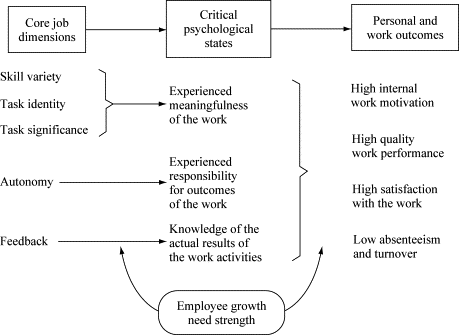 J. R. Hackman and Greg Oldham, 1976
- Skill variety refers to the abilities a worker uses to accomplish a job. Jobs that require a wider range of skills are generally more motivating.
- Task identity refers to the degree to which the worker sees the outcome of his or her efforts and
- Task significance relates to the impact of the job on others, both inside and outside the organization.
According to the theorists, three key aspects of skill variety, task identity, and task significance affect the worker’s assessment of the importance of his or her job. This relates to motivation to perform at high levels.
The other two factors in the model address the responsibility associated with the job and the worker’s perception of outcomes.
- Autonomy refers to the level of independence the worker has in deciding how to accomplish the tasks associated with the job, and
- Feedback describes the degree to which the worker receives information about his or her performance.
(You can find a powerful performance feedback checklist by clicking here.)
A final aspect of the job characteristics model addresses an important individual difference variable that affects job performance. Growth Need Strength refers to the worker’s need for personal growth through job performance. Growth need strength can affect job design in that workers with high growth need strength seek jobs that offer challenge and a variety of duties; workers with low growth need strength prefer more routine types of jobs.
If a job designer is dealing with jobs requiring a highly educated workforce, for example, growth need strength may require that jobs be made more complex and that levels of autonomy be higher.
Wang and Nei among others showed that when organizations actively tolerate mistakes and treat them as learning opportunities, they create the psychological conditions for employees to experience work-related flow and, in turn, to take more initiative in driving constructive change, especially among people with strong growth needs.
Core mechanisms you can readily leverage
-
Organizational fault tolerance (openly accepting dissent, experiments, and errors as input, not misconduct) boosts psychological safety and self-efficacy, which supports the “can do” side of Proactive Motivation Theory.
-
That a tolerant climate for trying new ideas increases the likelihood of work-related flow: deep absorption, enjoyment, focus and a sense that challenge and skill are well matched.
-
Flow then partially mediates the link to taking charge behavior: people who feel absorbed and energized at work are more likely to propose and implement round wheel improvements to processes, policies, and structures.
Using Square Wheels tools addresses the environmental realities that underlie generating flow states that impact performance.
Role of Growth needs for your “high-drive” people
-
Employees with high growth needs (having strong intrinsic desires to learn, develop, and achieve) are especially sensitive to whether the environment supports risk-taking and learning from failure.
-
For these people, fault tolerance more strongly increases flow, and flow more strongly translates into taking charge; statistically, growth need significantly moderates both the OFT→flow link and the indirect OFT→flow→taking charge path.
-
Employees with low growth needs show weaker or non-significant indirect effects: even in a tolerant climate, they are less likely to experience flow or translate it into proactive change behavior.
-
Organizational fault tolerance correlated positively with taking charge, flow, and growth need; flow also correlated positively with taking charge and growth need.
How this supports the Square Wheels “Flow” Proposition
-
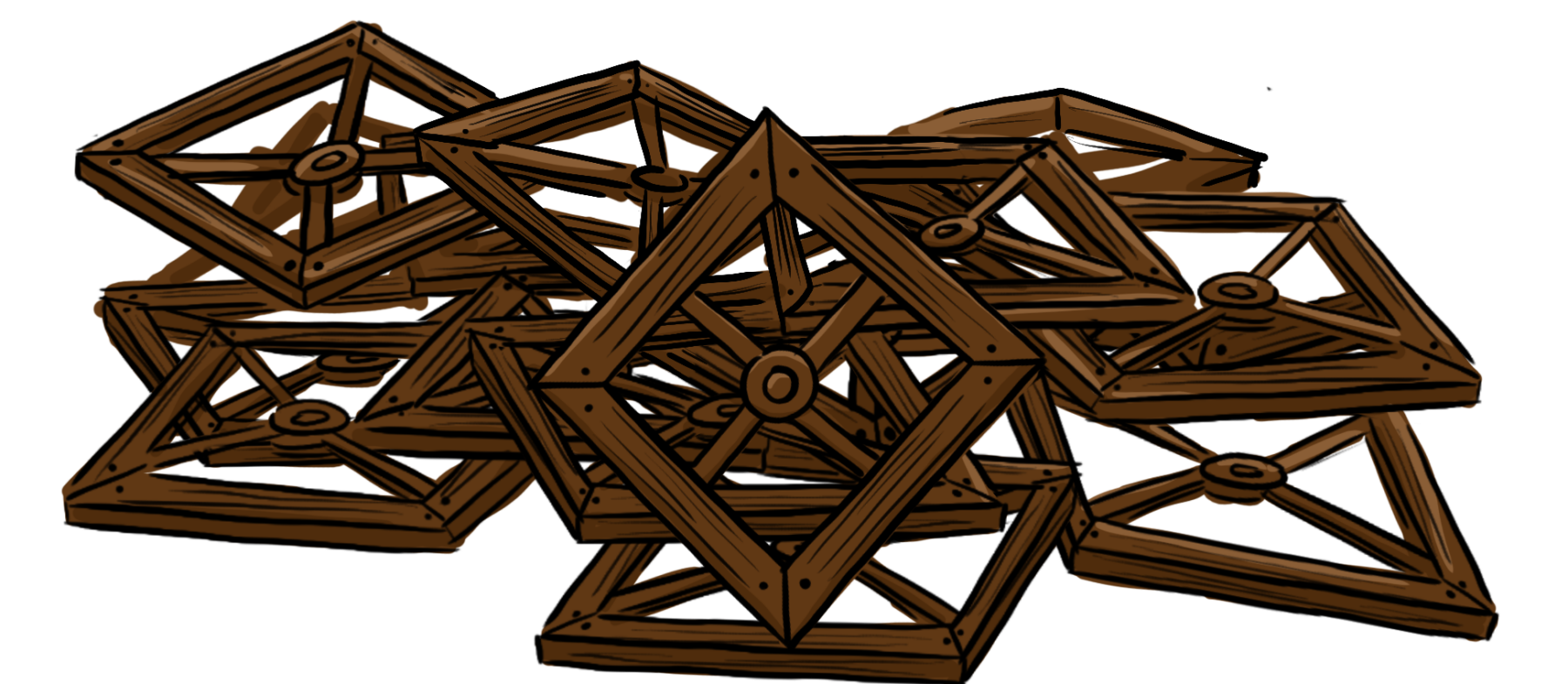
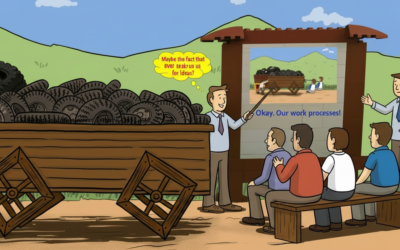
Square Wheels discussions visualize “fault tolerance” in action: the wagon, the obvious Square Wheels, and the available round wheels invite dissenting views and process critique without personal threat, operationalizing a tolerant climate. We generate disruptive engagement and cognitive dissonance to drive changes.
-
When groups explore better “Round Wheels” through various images, they are doing exactly what this paper measures as taking charge behavior: voluntarily proposing improvements to methods, workflows, and structures beyond formal role requirements. We can help people put aside the Square Wheels.
-
By making risk, experimentation, and incremental change discussable and safe, the imagery can help create the same psychological safety and challenge–skill balance that enable work-related flow, particularly for high–growth-need supervisors and teams.
Language and Images that can lift into your narrative
-
Tools like Square Wheels support the Proactive Motivation Theory triad — “can do” (safety and efficacy), “reason to do” (growth need and meaning), and “energized to do” (flow). Fault-tolerant climates drive proactive, change-oriented behavior via flow, especially for growth-oriented employees.
-
Your discussions around Square Wheels are a practical way to “design fault tolerance into everyday conversations,” thus increasing the chances that people move from simply seeing the Square Wheels to experiencing flow while they co-create and implement better Round Wheels.
Overall, the key findings underlying the ideas above come from this research and a body of literature collected over the past 20+ years.
The idea is that when work is designed so people can regularly experience a state where challenge and skill are in balance, goals are clear, and feedback is immediate, we can generate flow.
Both human well‑being and business performance can improve significantly. For managers, this means that systematically shaping jobs, goals, and feedback loops to enable flow is not a “nice to have” but a central lever for productivity, intrinsic motivation, and sustained high performance.
Read the post on giving people Superpowers here
“The key idea is that when work is designed so people can regularly experience a state where challenge and skill are in balance, goals are clear, and feedback is immediate, we can generate flow.”

Summary thoughts:
1 – What “flow” means at work
-
Flow is an optimal experience where people are deeply absorbed in a task, lose track of time, and feel that performance is almost effortless yet highly focused.
-
This state occurs when perceived challenges are high but matched by high skills, with clear goals and immediate feedback that guides action.
2 – Implications for managing people
-
Managers need to calibrate task difficulty to employee capability: too much challenge produces anxiety, too little produces boredom, and only the “sweet spot” produces engagement and growth.
-
Roles and projects should be structured so people have clear objectives, autonomy in how they work, and frequent, task‑relevant feedback, which together make flow more likely.
3 – Impact on performance and results
-
When individuals experience flow more often, attention and effort concentrate on value‑creating activities, improving quality, speed, and problem solving.
-
Organizations that intentionally foster flow (through job design, culture, and leadership behavior) see higher intrinsic motivation, persistence, and innovation, which translate into better business outcomes.
4 – Practical levers for leaders
-
Design work as meaningful challenges with clear success criteria, and then give people ownership over methods and sequence, rather than tightly scripting every step.
-
Remove unnecessary interruptions and friction (e.g., excessive meetings, unclear priorities, tool clutter) so people have extended, protected time blocks that allow deep concentration.
- Provide effective Performance Feedback. Note that most such systems are generally not effective. Read about the 14-item checklist here.
5 – People and performance takeaway
-
Treat flow as a core performance system variable—like cash flow for finance—by regularly asking where employees are stuck in anxiety or boredom and adjusting goals, support, or autonomy accordingly.
-
Teams that spend more time in flow not only feel better; they reliably produce better work, faster, and with less managerial push, making flow a direct driver of both engagement and business performance.
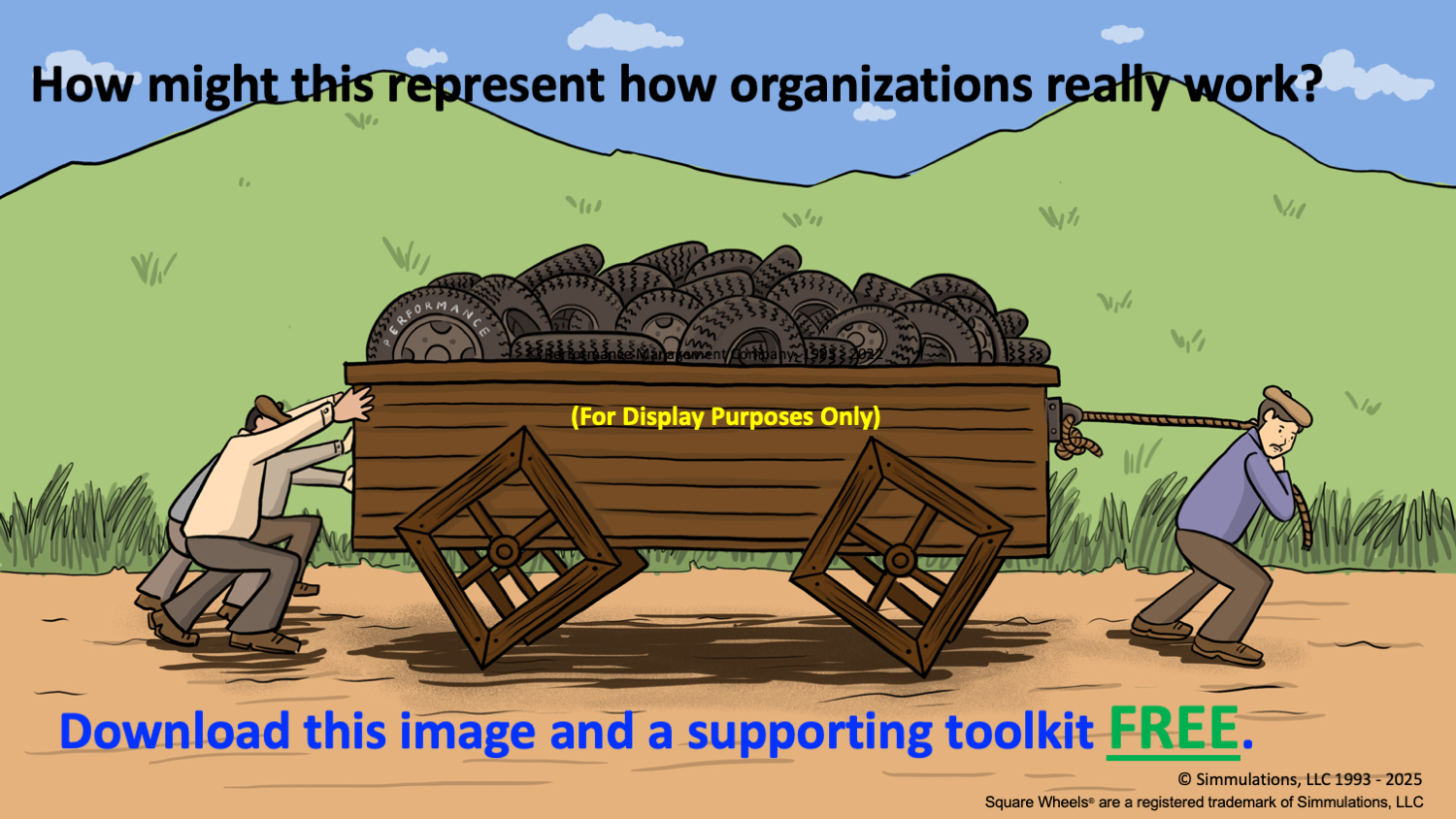
I intentionally made this a long post so that it can stand on its own legs. If you want the main Square Wheels® One image, you can get it with a toolkit for FREE by clicking on the image below:
—
For the FUN of It!
 Dr. Scott Simmerman is a designer of team building games and organization improvement tools. He has a doctorate degree in behavioral neurophysiology and has been focused on people and performance for over 40 years.
Managing Partner of Performance Management Company since 1984, he is an experienced presenter and consultant who is trying to write and retire!! He now lives in Cuenca, Ecuador.
You can reach Scott at scott@squarewheels.com
Learn more about Scott at his LinkedIn site.
Square Wheels® are a registered trademark of Simmulations, LLC
and images have been copyrighted since 1993,
© Simmulations, LLC 1993 – 2026
What I’m About:
My Square Wheels blog and website exist to help leaders, trainers, and facilitators make work smoother, more engaging, and more human. I focus on practical tools for process improvement, organizational change, and workplace collaboration that spark insight and deliver measurable results.
And I am convinced, after 30+ years of using Square Wheels®, that it is the best facilitation toolset in the world. One can use it to involve and engage people in designing workplace improvements and building engagement and collaboration. It is a unique metaphorical approach to performance improvement and we can easily license your organization to use these images and approaches.
By blending proven facilitation methods, creative problem-solving, and engaging team activities, my mission is to support organizations in building energized, sustainable cultures of involvement and innovation.
Through accessible — and often free — resources and virtual facilitation tools, I aim to help teams everywhere collaborate more effectively, innovate continuously, and take ownership of their improvement journey.
#SquareWheels #InnovationAtWork #TeamEngagement #FacilitationTools #WorkplaceImprovement #EmployeeEngagement #CreativeProblemSolving #OrganizationalDevelopment #LeadershipTools #collaboration #leadership #motivation #communications #enablement #leadership #CreativeCommons #enablingperformance #teamwork


0 Comments