
Engagement and UN-Dis‑Engagement: Impacting the Real Work of Enabling Performance in the workplace by removing the unengaging stuff.
Engagement and disengagement are everyday realities in most workplaces and frequent topics among senior managers. At mid‑management levels, people talk about these issues constantly, and we often measure “engagement” (somehow) as a KPI, yet we rarely talk concretely about how to actually enable people to perform at higher levels. The data and ideas are out there; the question is whether we are really implementing motivation effectively.
When Gallup shows 70% of supervisors and frontline managers to be disengaged, we probably answer our own question: we are not motivating people effectively.
I’ve been playing with the notion of empowerment for a long time, maybe 40 years, and I generally treated engagement and empowerment almost as synonyms because the two clearly go hand in hand. I remember my first presentation on this at an international quality conference in 1995 and we still hear leaders and consultants talk as if they could “empower” people by decree, as if they could pull people around on strings or flip a switch. It never worked that way, and it still doesn’t.
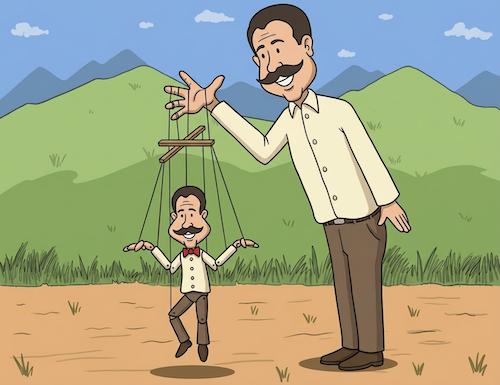
A supervisor pulling the strings to engage someone doesn’t work. Right? I mean, REALLY think about this!
On a practical level, I don’t believe you can ever empower another person. You can only enable the conditions where they choose to be engaged and act with more power. And, as a senior manager, your powers are quite limited in how the overall organization is actually motivating and enabling people to perform.
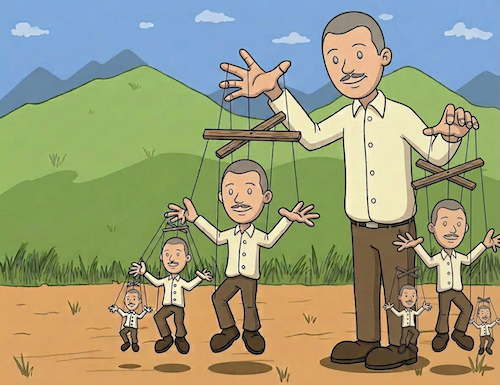
This may not actually work all that well to generate the desired culture and performance, ya think?
It is not my choice if someone is engaged. It is theirs.
And here is my core idea:
“Nobody ever washes a rental car.”
Engagement is a Choice, Enablement is a Design
“Managers don’t create engagement by telling people they’re empowered; they create it by removing the roadblocks that keep people from doing their best work. If you want different results, stop trying to ‘empower’ people and start un-dis‑empowering them.”
The same logic that applies to empowerment applies to engagement. People decide whether to care, contribute, and connect with the work based on what they experience day to day. Gallup’s research in recent years shows that only about 20% of employees are engaged, with about 17% actively disengaged in U.S. workforces, and around 70% of supervisors report being disengaged as well. (More data on the Supervisor Hellscape are here.)
So, when managers say “we’re going to drive engagement,” what we should really mean is that we’re going to redesign the environment so that more people choose to engage more often.
Engagement is the outcome.
Enablement is the managerial work.
Engagement and empowerment are not actions that managers do to others; they are outcomes that people choose for themselves when the conditions are right. Managers cannot force either. They can only enable people by creating an environment of clarity, trust, and support where people feel safe to take risks, do things differently, share ideas, and own results.
I now anchor a lot more to the word ENABLE. Enablement is action-oriented. It is about removing friction, clarifying expectations, and giving people line‑of‑sight and support so they actually perform better. Engagement shows up when the system is no longer blocking people from doing their jobs well. (Some ideas here about generating FLOW.)
Engagement and empowerment are not actions that managers do to others; they are outcomes that people choose for themselves when the conditions are right. Managers cannot force either. They can only enable people by creating an environment of clarity, trust, and support where people feel safe to take risks, do things differently, share ideas, and own results.
Engagement and empowerment are not actions that managers do to others; they are outcomes that people choose for themselves.
Enablement is a deliberate managerial decision: to shape culture and operations so that individuals can choose to bring their best selves and best ideas to the table.
The Reality: Most People Are Un‑Engaged and Un‑Enabled
Organizations love to talk about engagement and empowerment. They embed the words in mission statements, design engagement initiatives, and add related metrics into appraisals and incentive plans. Leaders tell managers, “Go out and empower your people,” as if that were a simple, teachable action.
Why not just ask them to fly to the moon?
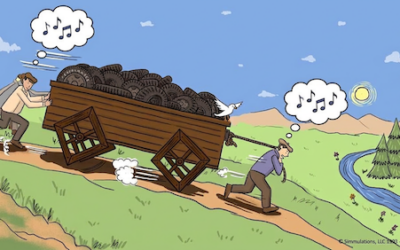
Most senior managers believe that things really work like this image, below.

(Note that the Butterfly probably represents Strategy or maybe Hope.)
The truth is that most people are un‑engaged and un‑enabled, operating well below their potential because of the way work is structured. Surveys consistently show that only a minority of employees feel emotionally connected to their work and confident they can remove obstacles and make improvements. When 17% of workers are actively disengaged, you can be sure their sense of enablement is low.
It is easy to talk about empowering or engaging people. It is much harder to alter the environment so that people can actually act differently. You can tell me that I’m “empowered,” but if I still have to fight approvals, navigate unclear priorities, and work around broken processes, my behavior won’t change.
Go ahead: try to engage or empower your spouse or child to do something—anything—by force of your will alone. You can’t. It is not your choice, and your influence is limited. One person cannot directly inject engagement into another person’s head.
But one person can remove a barrier that makes engagement more likely.
From Engagement Talk to Enabling Action: UN‑Dis‑Engagement
This is where my oddly named, but practical concept comes in: UN‑Dis-Engagement.
If many people are un‑empowered and un‑engaged, what can managers actually do? They can identify and remove the things that people perceive are getting in the way of them acting with more ownership, initiative, and performance.
UN-Dis‑Engagement is simply this: the removal of those performance‑influencing factors—real or perceived—that people experience as un‑ or disengaging.
Instead of trying to “empower” people by telling them they have power, enabling managers work on eliminating the constraints that make people feel stuck, frustrated, or ignored.
In practice, that means shifting attention from motivational speeches and stories to roadblock management. It means asking, “What’s in your way?” and then actually doing something about it.
When you remove obstacles that people care about, three things tend to happen:
-
People see that someone is listening and acting, which increases trust and emotional engagement.
-
Work becomes easier, more productive, and less frustrating, which enables higher performance.
-
Employees feel more confident in their ability to make changes, which feels a lot like empowerment because they can now actually do more.
You’re not handing them power; you are unblocking the power they already have.
Roadblock Management as the Engine of Engagement
One simple and powerful approach to Dis‑Un‑Empowerment is to make Roadblock Management a core part of how you lead. Instead of focusing primarily on attitudes, you focus on the tangible and perceptual obstacles that shape those attitudes.
The process is straightforward:
-
Ask people to identify the specific roadblocks that make it hard for them to do great work.
-
Sort those roadblocks into types (policies, procedures, resources, skills, relationships, etc.) so you can pick appropriate strategies for each.
-
Work with the team to remove, reduce, bypass, or reframe those roadblocks in ways that are visible and meaningful.
Discussing perceived and actual roadblock will often just make them go away. The best performers often do things differently so that they face less impediments to performing.
Research and field experience show that performance differences often come down to employees’ perceptions about their power to remove obstacles, not just the obstacles themselves. People working in the same conditions can perform very differently depending on whether they believe they can influence those conditions.
By managing roadblocks deliberately, you change both the reality and the perception of what’s possible. That is the essence of enabling performance: designing work so that people can actually succeed.
When you do that, engagement tends to follow. People are much more willing to bring energy, ideas, and discretionary effort when they are not constantly tripping over organizational Square Wheels. If you want a simple framework for this, I share a model for managing workplace roadblocks in another post, focused on helping prevent employees from “quitting before quitting.”
Actually Have FUN Un‑Dis-Engaging People
If you’re a manager, team leader, or facilitator, think of your role less as “driving engagement” and more as dis‑un‑engaging people. Focus your energy on identifying and removing the roadblocks that keep people from doing their best work.
-
Make it easier for people to say “yes” to involvement.
-
Remove the hassles that make it tempting to disengage.
-
Use tools, metaphors, and conversations that help people see how work could roll more smoothly.
When you systematically remove the things that un‑empower and disengage people, you feel the benefits of a more involved and engaged workplace. The culture becomes more collaborative, ideas flow more freely, and performance improves—not because you ordered engagement, but because you enabled it.
Have FUN out there, dis‑un‑engaging people and feeling the benefits of a more involved, enabled, and engaged workplace. Lead out from a better place.
—
For the FUN of It!
 Dr. Scott Simmerman is a designer of team building games and organization improvement tools.
Managing Partner of Performance Management Company since 1984, he is an experienced presenter and consultant who is trying to retire!! He now lives in Cuenca, Ecuador.
You can reach Scott at scott@squarewheels.com
Learn more about Scott at his LinkedIn site.
Note that I often use Perplexity AI to help research and generate ideas for my posts.
Square Wheels® are a registered trademark of Simmulations, LLC
and images have been copyrighted since 1993,
© Simmulations, LLC 1993 – 2026
What I’m About:
My Square Wheels blog and website exist to help leaders, trainers, and facilitators make work smoother, more engaging, and more human. I focus on practical tools for process improvement, organizational change, and workplace collaboration that spark insight and deliver measurable results.
And I am convinced, after 30+ years of using Square Wheels®, that it is the best facilitation toolset in the world. One can use it to involve and engage people in designing workplace improvements and building engagement and collaboration. It is a unique metaphorical approach to performance improvement and we can easily license your organization to use these images and approaches.
By blending proven facilitation methods, creative problem-solving, and engaging team activities, my mission is to support organizations in building energized, sustainable cultures of involvement and innovation.
Through accessible — and often free — resources and virtual facilitation tools, I aim to help teams everywhere collaborate more effectively, innovate continuously, and take ownership of their improvement journey.
#SquareWheels #InnovationAtWork #TeamEngagement #FacilitationTools #WorkplaceImprovement #EmployeeEngagement #CreativeProblemSolving #OrganizationalDevelopment #LeadershipTools #collaboration #leadership #motivation #communications #enablement #leadership #CreativeCommons #enablingperformance #teamwork #storytelling #storyasking

0 Comments