
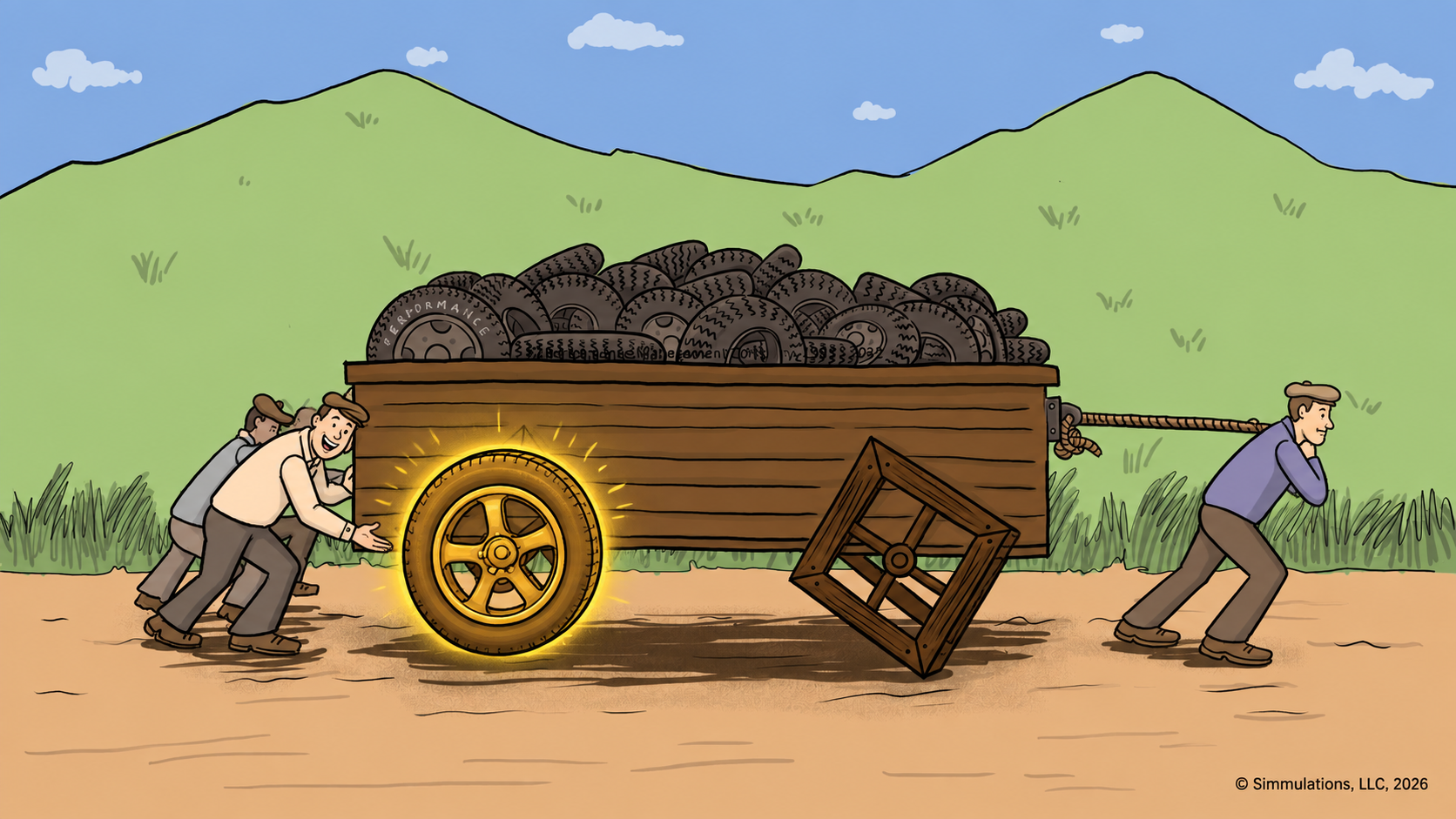
Un-Dis-Engagement is a framework for impacting dis-engaged people, about and removing the beliefs that are getting in the way of performing. Improving motivation is but one outcome.
Sometimes, solutions to performance improvement issues are not obvious and apparent and selecting an optimizing approach often requires careful analysis and planning. But sometimes, it is simply about choosing an implementation strategy that is more effective in supporting workplace behavior change and generating active involvement and active ownership of ideas to change. This post is about divergent thinking and impacting motivation.
(Note that I bounce back and forth about calling the ideas UN-Dis-Engagement or DIS-Un-Engagement.
Wordplay. And I am not sure which idea is clearer or more memorable, but both refer to the same approach.)
In the case of workplace engagement initiatives, we have been spending billions of dollars annually in surveys, measurement and training that is supposed to improve the workers and managers feelings of involvement on the part of employees. Yet nearly every research study shows that many organizations and many people in most every organization are dis-engaged and un-involved.
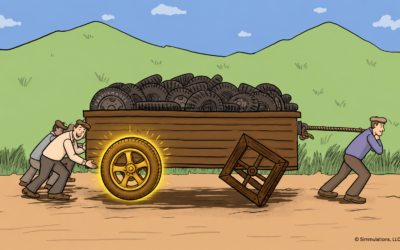
Engaging disengaged people is REAL Gold in its impacts
My key point is that we need to understand that engagement is about CHOICE and we need to help our supervisors help their people to choose differently! (more on this here)
Some simply suggest that firing and hiring is the best solution to the issue of un-engaged workers. Jim Clifton, CEO of Gallup, suggested firing the 7,000,000 managers who are toxic and are poisoning 70,000,000 workers. That is a lot of toxic managers — just look at the continuing problems with turnover. (I joke about using drones to deal with toxic managers here.)
A 2023 Fortune article had this to say:
“Our recent poll found that 64% of respondents have experienced a toxic work environment–and 44% blamed leadership. Not just their direct manager, but the entire leadership team. Respondents defined a toxic workplace as one that was disrespectful (55%), abusive (34%), non-inclusive (30%), unethical (29%), or cutthroat (21%). Female respondents were most likely to report toxic experiences, compared with males or people who are nonbinary. White respondents were 10% more likely to say they’ve been able to move on from a toxic job, compared with Black, Hispanic/Latinx, Asian, and other respondents of color. Leadership was most often to blame over direct managers, coworkers, or one’s team–and respondents also identified leadership and management training as the top way to fix toxic work situations.”
Yes, some managers blame the workers for the problem and suggest that hiring new people is the solution. The costs of that, given the reality of performance in the workplace, would be truly astounding and doing such an initiative would gut your organization of an amazing amount of talent that you’ve already trained. Remember that these people now being blamed were good hires t the beginning and many were above average performers when they started.
Let me propose a somewhat different framework:
“Could managers do a better job of engaging if their life depended upon it?” also makes engagement sound like a single act someone can perform on command. This stronger question is just more specific: Could a supervisor ask employees what is getting in their way, listen, and follow through tomorrow—without another training course?
This is an old thinking test attributed to Bob Mager and Peter Pipe that I first heard back in the 1970s. It is at the core of the issue of whether training is required for some behavior to occur. And this is what we accomplish through the use of the Square Wheels One image that you can get for FREE.
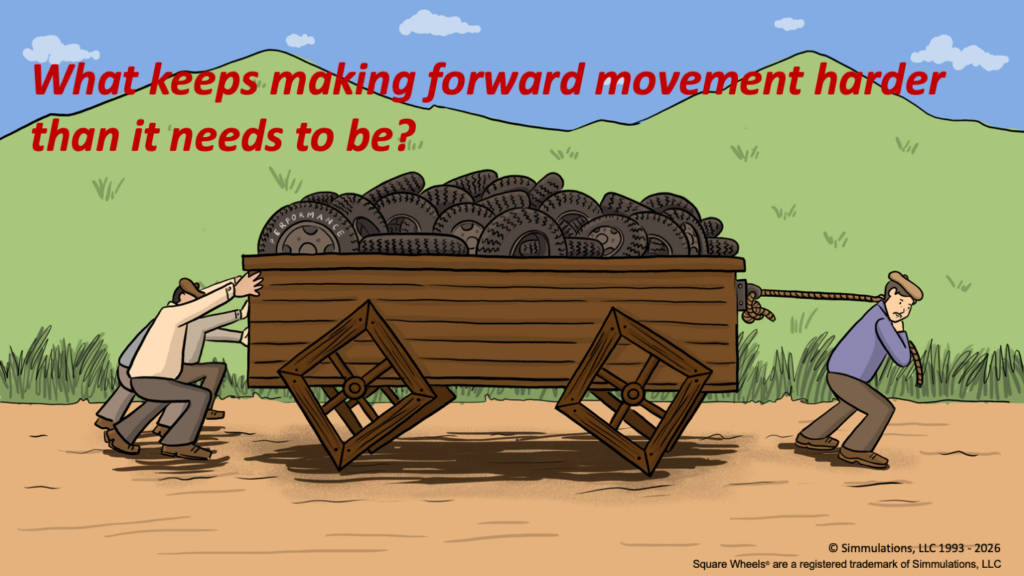
My thinking is clearly YES and OF COURSE. And it seems very evident, looking at statistics, that these managers are choosing not to do so.
So, another simple reframing question is a simple one:
Can Each One Reach One?
Can each supervisor reach one non-engaged person in their workforce and take some action to involve and engage them? Without waiting for extensive training done by some outside organization or Human Resources? Can every single individual supervisor simply choose to do something differently?
Won’t people in the workplace naturally coalesce around the simple theme of making things better? Don’t most people have issues they would like to correct and ideas for improvement? Don’t most people like to solve puzzles and problems?
My approach is anchored with an illustration and a process of involving and engaging people to share their thoughts and ideas and we have been playing with these themes and tools for a long time.

Without detailing the very simple training around how to facilitate the discussion and process the ideas for identifying and prioritizing the Square Wheels or designing approaches to successfully implement the Round Wheels and celebrate the successes and impacts, the basic concept is that any supervisor can be taught the facilitation skills and frameworks to make such a discussion process easy and straightforward. By getting managers to facilitate a discussion about workplace improvement ideas, they are acting to better involve and engage their people. And, with some clear ideas about what the Square Wheels might be and what Round Wheel solutions might be implemented, the end result is workplace improvement and better communications. A facilitators guide is included with the free materials.
AND, if managers are not acting in a way to better involve and engage their people,
they are clearly demonstrating that they may be among those 7,000,000 toxic
managers that Jim Clifton suggested should be fired!
Summary of Ideas
The conversations around workplace issues and opportunities for improvement also set up the reality of continuous continuous improvement, since The Round Wheels of Today will inevitably and invariably become The Square Wheels of Tomorrow.

I see this issue of Un-Dis-Engagement as a specific approach to dealing with the less than involved and engaged employees, a group thought to represent roughly 70% of all workers across organizations. Your best managers may have higher levels of engaged people; your worse ones have more opportunities for improvement.
Note: Square Wheels® are the protected intellectual property of Simmulations, LLC (Jeff Simmerman) and we have three decades of experience in using them for a wide variety of organizational development purposes. We think that the possibilities for improvement will only and always increase when people “step back from the wagon” and look for what can be improved and what can be done differently. Actively involving people in discussions like this will go a long way to help remove many of the roadblocks that workers often feel when it comes to discussing issues and opportunities. We are wide open to collaborating with organizations to design effective performance management solutions that mesh with the existing and desired cultures.
YOU can improve workplace facilitation of ideas, generate higher levels of intrinsic motivation, and do a better job of innovating. Try it!
FAQs on Helping supervisors facilitate conversations that identify and remove the Square Wheels getting in people’s way.
What is Un-Dis-Engagement?
Un-Dis-Engagement is my term for removing the things that make people less willing or able to contribute. Instead of asking yourself and your peers, “How do we motivate these workers?” ask, “What are we doing that makes it harder for them to do good work?” The answers may include unclear priorities, frustrating processes, missing resources, or ideas that never receive a response.
How can a supervisor improve employee engagement without another survey?
Start a conversation about the work itself. Ask the team what slows them down, which obstacles they can address together, and which need help from elsewhere in the organization. Agree on one change to test, name who will follow up, and report back—even when the answer is “not yet.” A survey can reveal a pattern; a well-facilitated conversation can help a team act on it. And a supervisor does NOT need survey data to start the conversations about improvement.
What does facilitation have to do with employee engagement?
Facilitation gives employees a practical way to contribute to decisions about their work. The supervisor’s job is not to arrive with every answer; it is to ask useful questions, make room for different perspectives, and help the group turn observations into action. Gallup’s engagement research includes actionable conditions such as having the resources to do the job and feeling that one’s opinions count. The ideas for improvement are often surprisingly numerous and actionable.
How can a supervisor use Square Wheels to start a team discussion?
Simply, show the Square Wheels One illustration and ask, “How might this represent the way work gets done around here?” Then ask what the team’s Square Wheels are—the procedures, handoffs, assumptions, or missing resources that make progress harder than it needs to be. Finally, ask what Round Wheels might already be available and choose one improvement to try. The image gives people a way to discuss the system before the conversation turns into blame.
How should supervisors respond when employees raise problems they cannot fix?
Acknowledge the issue and be clear about who can act on it. Separate what the team can change, what the supervisor can influence, and what must be escalated. Give employees a date for an update, then close the loop. Asking for ideas and disappearing is a quick way to make the next conversation harder. Your article already proposes collecting issues beyond the supervisor’s authority for resolution at higher levels.
Does employee engagement actually affect performance?
YES. Gallup’s latest published Q12 meta-analysis found that engagement was related to all 11 outcomes it studied. Across companies, top-quartile engagement teams had median differences of 23% higher profitability, 78% lower absenteeism, and 10% higher customer loyalty or engagement than bottom-quartile teams. Those are relationships between engagement and outcomes and not guaranteed returns from any particular workshop or management program. But the opportunities for improvement already exist.
What should a supervisor measure after an engagement conversation?
Measure whether the team’s chosen change happened, whether the obstacle became less disruptive, and whether a relevant work outcome improved. Depending on the issue, that might mean fewer handoff errors, less rework, faster service, or fewer recurring complaints. Also ask the team, “Did we make this easier to do?” That keeps the emphasis on improving work, not merely collecting suggestions.
—
For the FUN of It!
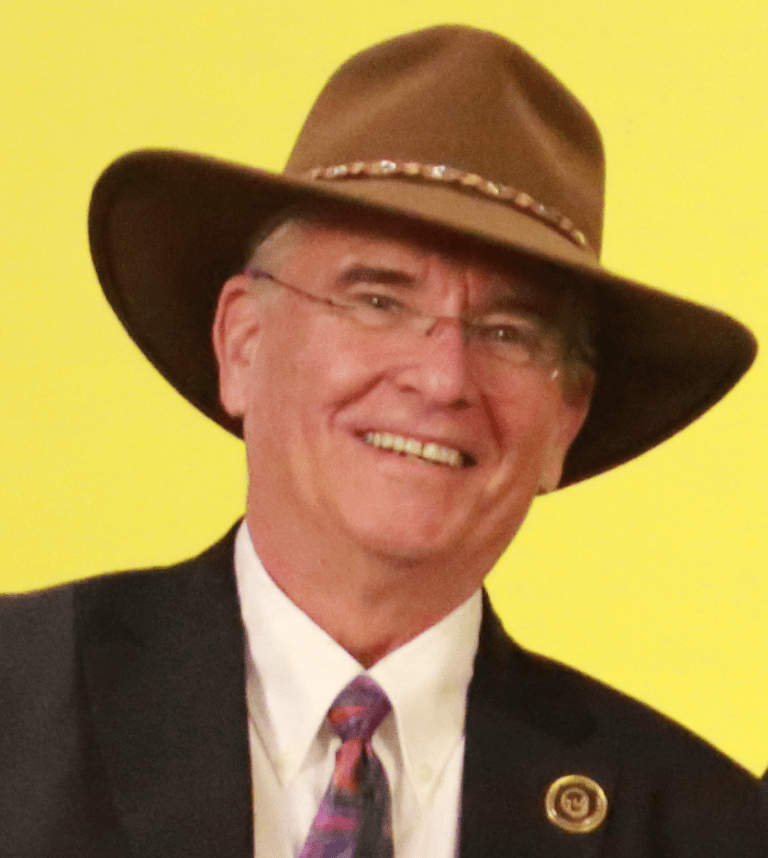 Dr. Scott Simmerman is a designer of team building games and organization improvement tools.
Managing Partner of Performance Management Company since 1984, he is an experienced presenter and consultant who is trying to retire!! He now lives in Cuenca, Ecuador.
You can reach Scott at scott@squarewheels.com
Learn more about Scott at his LinkedIn site.
Note that I often use Perplexity AI to help research and generate ideas for my posts.
Square Wheels® are a registered trademark of Simmulations, LLC
and images have been copyrighted since 1993,
© Simmulations, LLC 1993 – 2026
Note: Please do not take my images and think about using them. It can generate a whole heap of problems given international copyright law and trademark law. Read this article for more information.
See a detailed overview of my tools, background and experiences here.
What I’m About:
My Square Wheels blog and website exist to help leaders, trainers, and facilitators make work smoother, more engaging, and more human. I focus on practical tools for process improvement, organizational change, and workplace collaboration that spark insight and deliver measurable results.
And I am convinced, after 30+ years of using Square Wheels®, that it is the best facilitation toolset in the world. One can use it to involve and engage people in designing workplace improvements and building engagement and collaboration. It is a unique metaphorical approach to performance improvement and we can easily license your organization to use these images and approaches.
By blending proven facilitation methods, creative problem-solving, and engaging team activities, my mission is to support organizations in building energized, sustainable cultures of involvement and innovation.
Through accessible — and often free — resources and virtual facilitation tools, I aim to help teams everywhere collaborate more effectively, innovate continuously, and take ownership of their improvement journey.
#SquareWheels #InnovationAtWork #TeamEngagement #FacilitationTools #WorkplaceImprovement #EmployeeEngagement #CreativeProblemSolving #OrganizationalDevelopment #LeadershipTools #collaboration #leadership #motivation #communications #enablement #leadership #CreativeCommons #enablingperformance #teamwork #storytelling #storyasking #enablement #disruptiveengagement #un-dis-engagement #un-dis-empowerment #innovation

0 Comments