
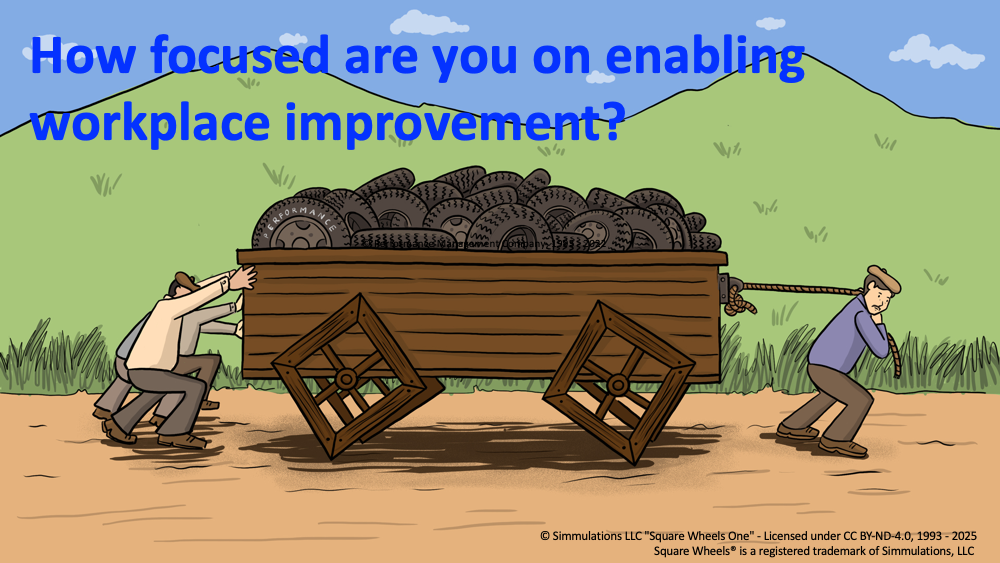
An Enablement and Engagement Quiz for Managers: How much attention are you giving to support intrinsic motivation and innovation?
I like stupidly simple surveys that make me think about issues and opportunities. I designed this one to be fast and furious, but also to generate some reflection on the choices you make that impact the people you influence and manage.
This nothing-fancy self-assessment is designed as a simple reflection tool for managers, supervisors, and team leaders. Use it to think about how much attention you are giving to enabling employee engagement, idea generation, day-to-day improvement and the removal of workplace friction. Consider it an unscientific reflection tool anchored to the best practices of top-performing managers.
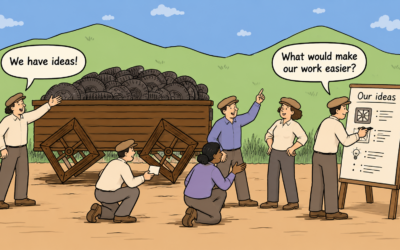
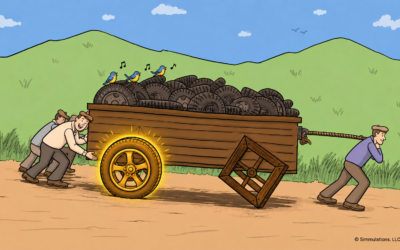
And think about this image as a reflection of how things really work in most organizations, something we can build on with a bit more enablement and active involvement.
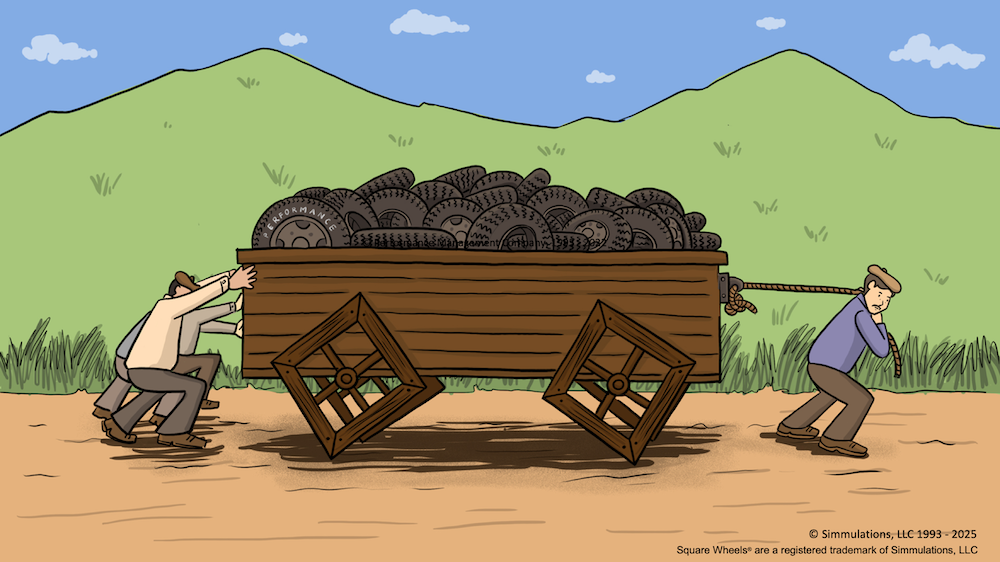
How things really work in most organizations
Instructions: Score each item using the response choices. Consider your response from an everyday, every person perspective. Count the numbers of your choices and add up your total score after answering all 15 questions (from 15 to 60). Then use the interpretation guide to review what your score suggests.
Quiz items:
1. I make time to talk with my people about what helps them do their best work.
- Almost never
- Occasionally
- Regularly
- Consistently and intentionally
2. When people seem frustrated or disengaged, I try to understand the cause instead of assuming it is a personal issue.
- Rarely
- Sometimes
- Usually
- Almost always
3. I actively look for obstacles, mixed messages, and outdated practices that make work harder than it needs to be.
- Not really
- From time to time
- Fairly often
- As a normal part of managing
4. I ask employees for ideas about improving service, teamwork, quality, efficiency or other issues around their performance.
- Almost never
- Occasionally
- Frequently
- Very consistently
5. When someone offers a useful idea, I respond in a way that encourages more suggestions from them or others in the future.
- Rarely
- Sometimes
- Usually
- Almost always
6. I recognize effort, progress, and contribution in ways that feel meaningful to the people involved.
- Seldom
- Now and then
- Often
- Consistently
7. I create enough psychological safety that people can raise concerns or propose changes without fear of embarrassment or backlash.
- Very little
- Some
- A good amount
- A strong norm on my team
8. I follow up on employee suggestions so people know whether ideas were used, delayed, or declined.
- Rarely
- Sometimes
- Usually
- Consistently
9. I pay attention to whether meetings, policies, and daily routines energize people or drain them.
- Not much
- A little
- Quite a bit
- A great deal
10. I treat innovation as something practical and everyday, not just a big breakthrough event.
- Rarely
- Sometimes
- Usually
- Very consistently
11. I encourage small experiments to test better ways of working.
- Almost never
- Occasionally
- Frequently
- As a regular practice
12. I use setbacks or failed attempts as learning opportunities instead of reasons to shut down initiative.
- Rarely
- Sometimes
- Usually
- Almost always
13. I make connections between engagement, performance, customer outcomes, and innovation.
- Seldom
- Sometimes
- Often
- Consistently
14. I notice the ‘Square Wheels’ in my workplace, the things that do not work smoothly, and work with my people to smooth them out.
- Rarely
- Sometimes
- Often
- As an ongoing management priority
15. I see part of my job as helping my people pull together, think better, and improve how our work gets done.
- Not really
- Somewhat
- Definitely
- Absolutely
Score interpretation
15–25: Square Wheels Everywhere
Your workplace may be running with a lot of thumping and bumping. Engagement and innovation are probably being left to chance, and people may be working around frictions instead of improving it. You have opportunities to involve and enable your people to implement ideas for improvement.
26–40: Rolling, But Roughly
You are paying some attention to engagement and innovation, but the effort is inconsistent and not influencing your people consistently. People likely see pockets of support mixed with habits or systems that still slow progress. Some are enabled and some are not. Motivation is spotty and inconsistent across the workgroup.
41–52: Getting the Wheels Rounder
You are doing many of the right things to involve and engage people for workplace improvement. Employees likely experience more support, more voice, and more practical improvement activity than in the average workplace. Disengagement levels are below normal. And you are obviously demonstrating your engagement.
53–60: Round Wheels Leadership
You are creating conditions where people can contribute ideas, stay engaged, and improve performance together. The next opportunity is to spread those practices systematically and help other managers do the same.
Analysis guide
This is designed to be thought-provoking and not some scientific personality inventory or any such thing, Just consider your answers in the context to how people perform and engage with work and leadership. Use the total score as a starting point to generate some considered alternatives, but also look at patterns across the questions. A manager can earn a decent total score and still have blind spots in one or two areas that matter a great deal. Ask for ideas.
What low scores often mean
-
Low scores on listening, recognition, and follow-up usually suggest an engagement problem: people may not feel heard, valued, or included in improvement discussions.
-
Low scores on experimentation, response to failure, and idea seeking usually suggest an innovation problem: people may conclude that it is safer to keep their heads down than to suggest better ways of working.
-
Low scores on friction, routines, and square wheels usually point to systems issues: the work itself may be loaded with avoidable hassles, unclear expectations, poor coordination, or outdated habits.
Reflect on your reality and any possibilities:
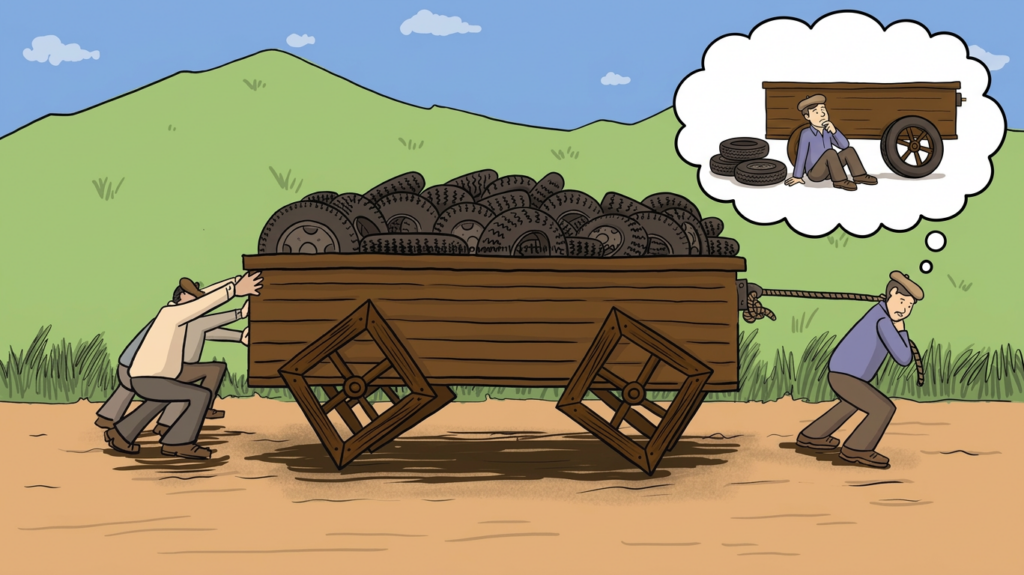
What stronger scores usually indicate
-
Higher scores suggest that the manager is paying attention not just to output, but also to the conditions that shape output.
-
Strong managers generally connect people, process, and performance; they notice that engagement is not a soft side issue, but a driver of quality, retention, learning, and innovation.
-
Healthy scores also imply that employees are more likely to speak up, contribute ideas, and help solve operational problems before they become larger ones.
Discussion prompts for consideration:
-
Which items scored lowest, and what does that reveal about current management habits? How do you feel about those things?
-
Which one or two changes would make the biggest difference over the next 30 days? What changes are you most comfortable making? What concerns might you have to discuss with your manager? (And should you get them to take this survey?)
-
Where are the obvious Square Wheels creating unnecessary effort, frustration, or lost performance? What do you see as things that you want to address?
-
What would employees say about the team’s openness to ideas, candor, and continuous improvement?
- What would employees say about the organization’s openness to ideas, candor, and continuous improvement?
-
How could recognition, feedback, and experimentation become more consistent parts of everyday leadership?
Team or workshop use
This quiz can be used in a blog post, leadership session, coaching conversation, or team development workshop. It works especially well when managers score themselves first and then compare their self-ratings with employee perceptions or peer observations.
Suggested caution
This is a discussion tool, not a validated psychometric assessment. Its value comes from reflection, conversation, and follow-up action rather than from the score alone.
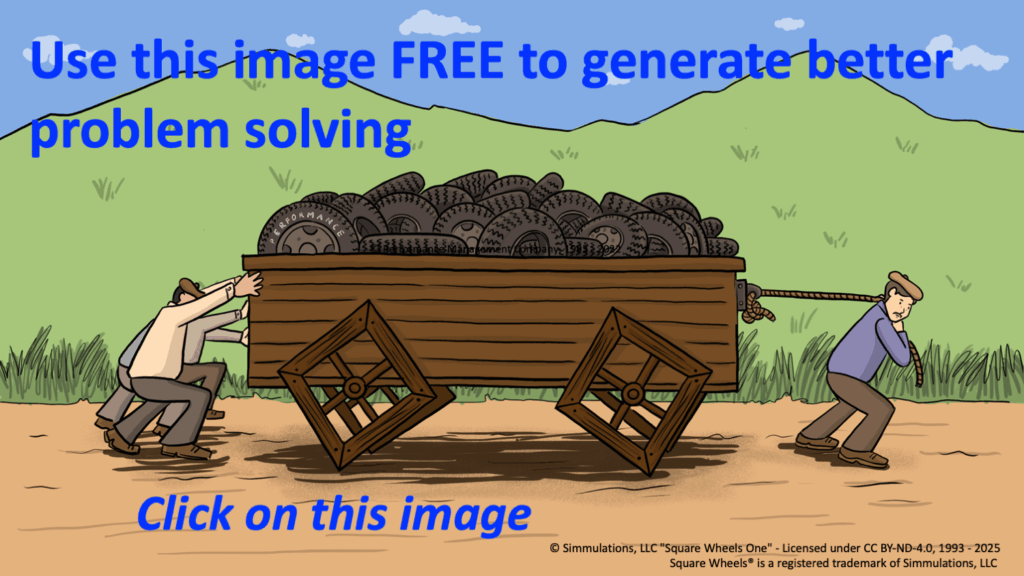
And my Square Wheels tools exist to enable better workplace conversations. You can get the MAIN image for free by clicking on the image below:
—
For the FUN of It!
 Dr. Scott Simmerman is a designer of team building games and organization improvement tools.
Managing Partner of Performance Management Company since 1984, he is an experienced presenter and consultant who is trying to retire!! He now lives in Cuenca, Ecuador.
You can reach Scott at scott@squarewheels.com
Learn more about Scott at his LinkedIn site.
Note that I often use Perplexity AI to help research and generate ideas for my posts.
Square Wheels® are a registered trademark of Simmulations, LLC
and images have been copyrighted since 1993,
© Simmulations, LLC 1993 – 2026
What I’m About:
My Square Wheels blog and website exist to help leaders, trainers, and facilitators make work smoother, more engaging, and more human. I focus on practical tools for process improvement, organizational change, and workplace collaboration that spark insight and deliver measurable results.
And I am convinced, after 30+ years of using Square Wheels®, that it is the best facilitation toolset in the world. One can use it to involve and engage people in designing workplace improvements and building engagement and collaboration. It is a unique metaphorical approach to performance improvement and we can easily license your organization to use these images and approaches.
By blending proven facilitation methods, creative problem-solving, and engaging team activities, my mission is to support organizations in building energized, sustainable cultures of involvement and innovation.
Through accessible — and often free — resources and virtual facilitation tools, I aim to help teams everywhere collaborate more effectively, innovate continuously, and take ownership of their improvement journey.
#SquareWheels #InnovationAtWork #TeamEngagement #FacilitationTools #WorkplaceImprovement #EmployeeEngagement #CreativeProblemSolving #OrganizationalDevelopment #LeadershipTools #collaboration #leadership #motivation #communications #enablement #leadership #CreativeCommons #enablingperformance #teamwork #storytelling #storyasking

Scott, this is a great discussion starter. Thank you for letting us, the readers, use this in our lives.